
Shop
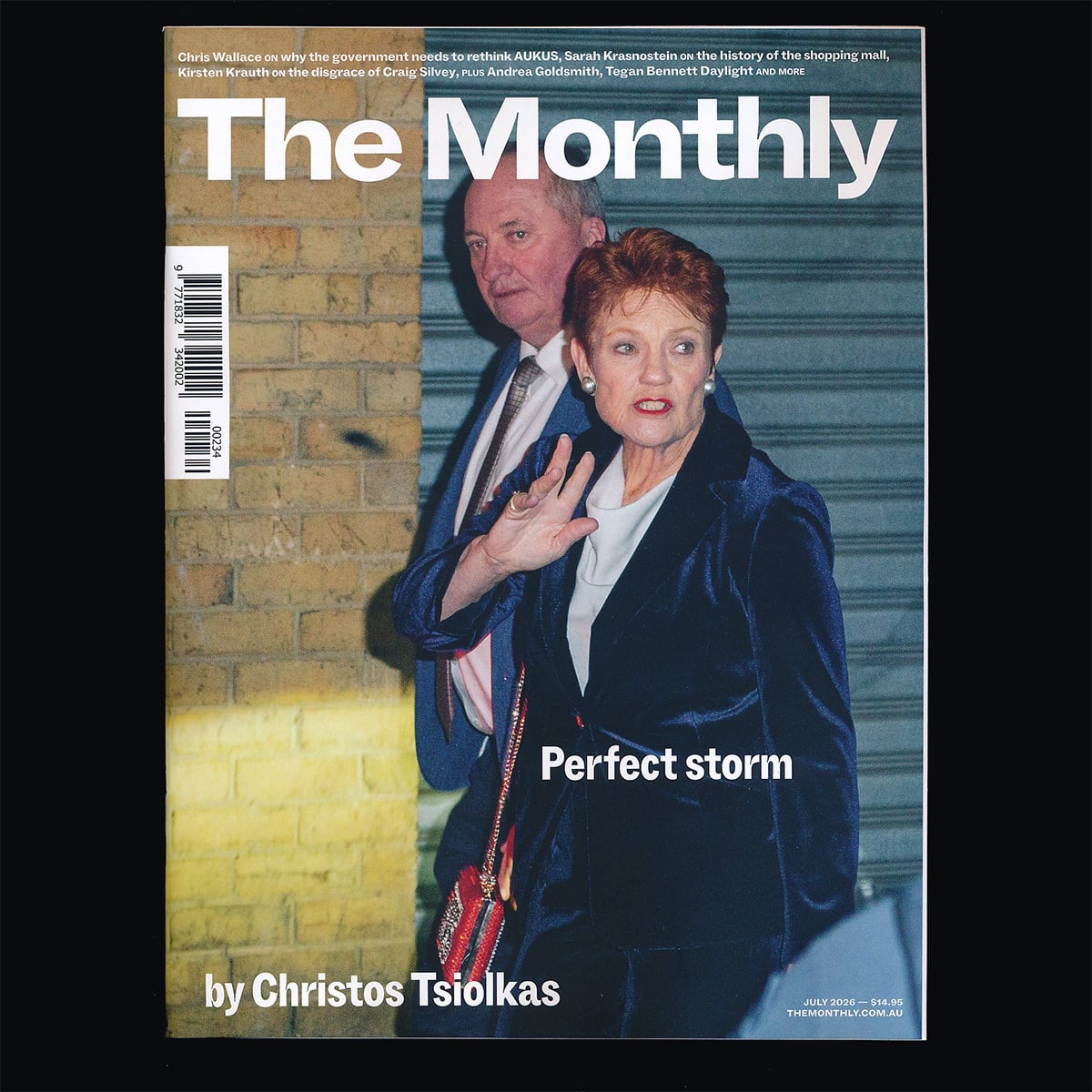
The Monthly July issue 2026
$14.95
The July issue of The Monthly provides context for the world at large, offering closer looks, wider views and deeper consideration. Christos Tsiolkas assesses the circumstances that have led to One Nation’s ascendency in the polls, trying to make sense of how and why – and what it tells us about the kind of politics that is succeeding in contemporary Australia. Kirsten Krauth offers her assessment of the catastrophic disgrace of novelist Craig Silvey, who pleaded guilty to possessing and distributing child-exploitation material. She contemplates the breach of trust, a loss of a friendship, and the loss of a writer whose work mattered to her. And Sarah Krasnostein provides a personal, cultural and psychological history of that modern phenomenon: the shopping mall.
Plus there’s Chris Wallace on AUKUS; Elizabeth Finkel on Australia’s dinosaur history; horses and bookshelves; ’80s British sex romps on the telly; reviews, personal reflections and more besides.
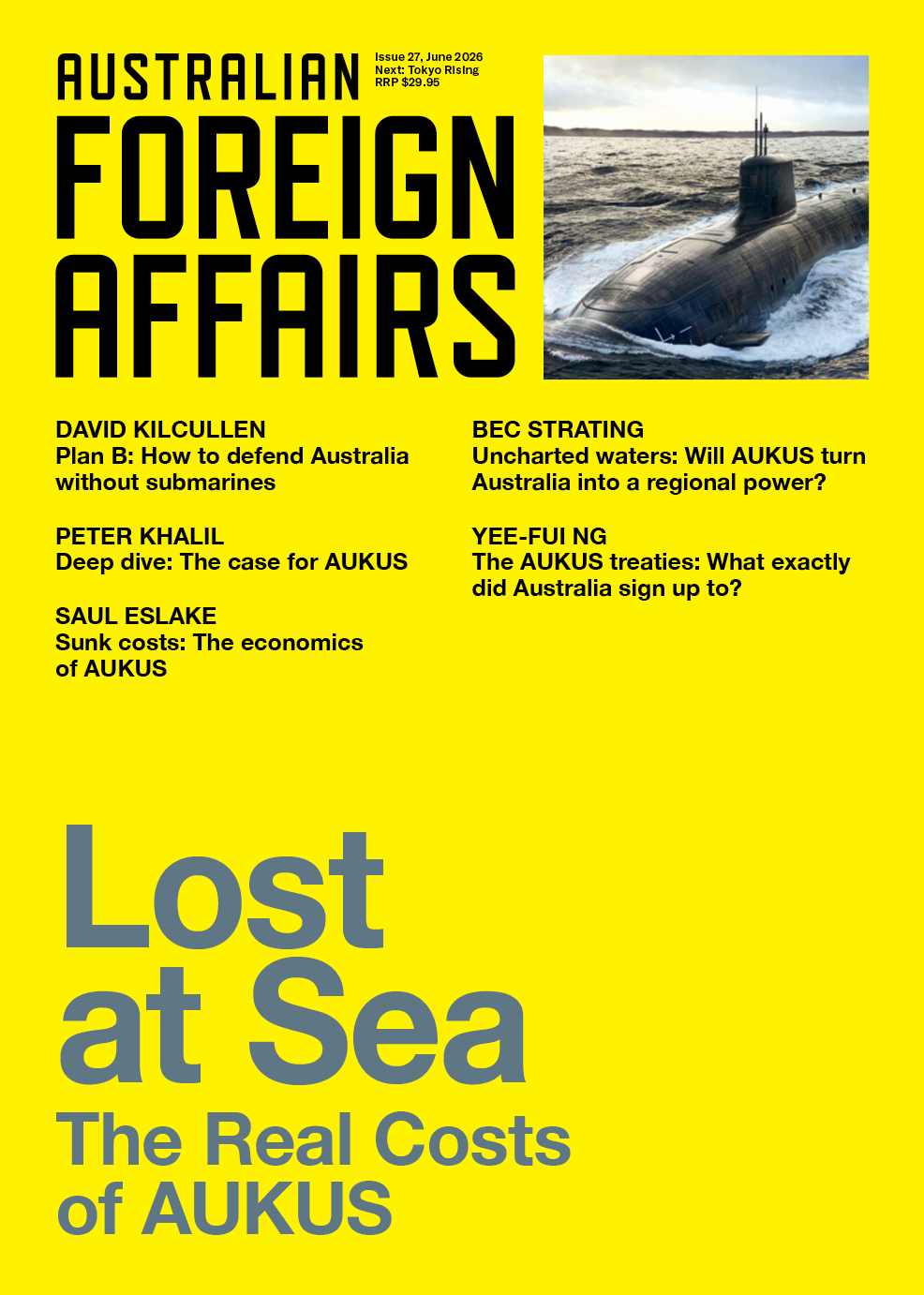
AFA27 Lost at Sea
$29.95
The next issue of Australian Foreign Affairs explores the costs, risks and potential benefits of Australia’s plan to buy, build and operate a fleet of nuclear-powered submarines.
"Lost at Sea" looks at the ways in which the AUKUS undertaking is set to reshape the nation’s military, economy, diplomacy and foreign relations, and at the consequences and alternatives if the project does not go according to plan.
Essays include:
Sunk costs: The economics of AUKUS, by Saul Eslake
Uncharted waters: Will AUKUS turn Australia into a regional power?, by Bec Strating
Plan B: How to defend Australia without submarines, by David Kilcullen
Deep dive: The case for AUKUS, by Peter Khalil
The AUKUS treaties: What exactly did Australia sign up to?, by Yee-Fui Ng
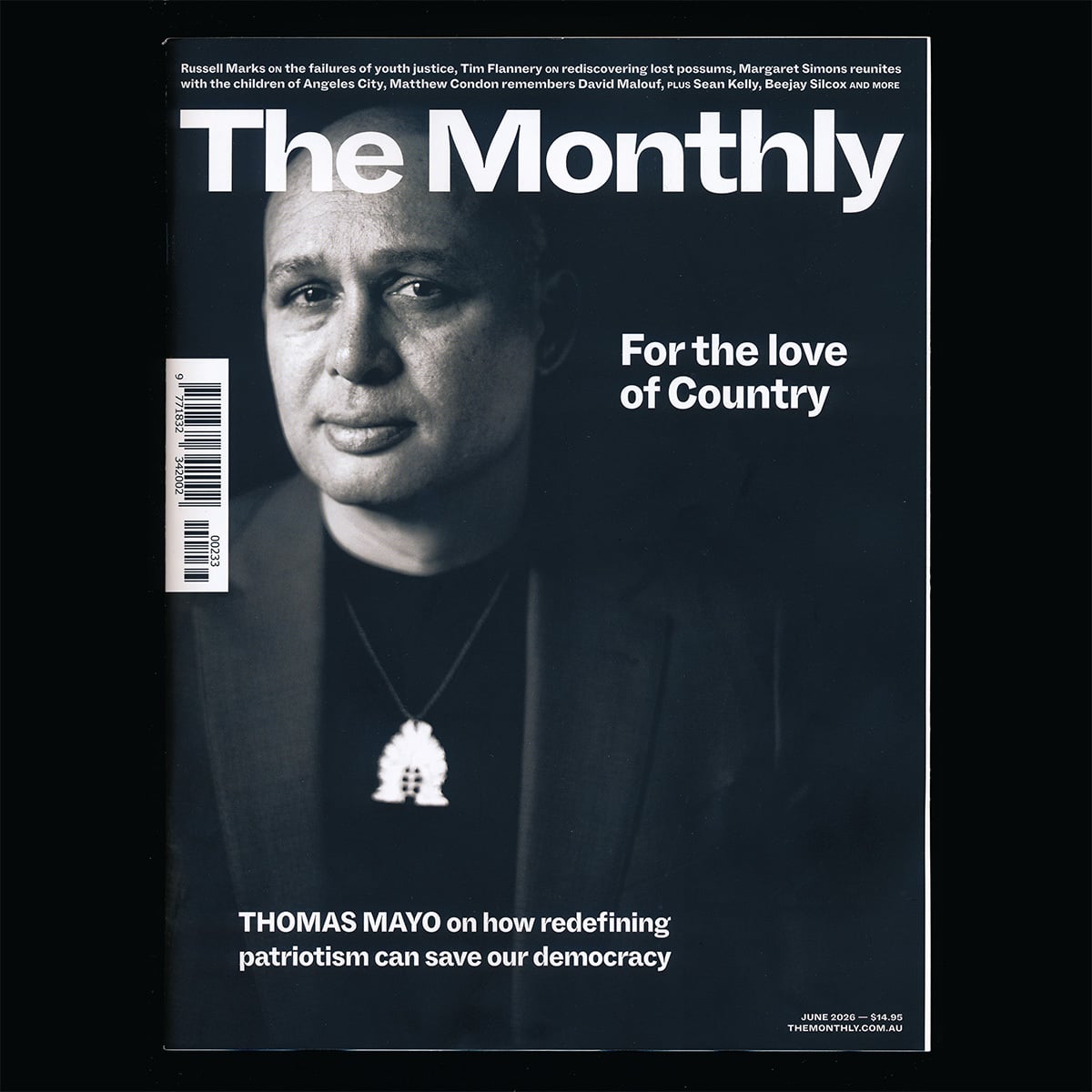
The Monthly June Issue 2026
$14.95
The year is halfway through, and the June Monthly considers the past, makes sense of the stormy present and proposes a path into our uncertain future. After a leading role in the unsuccessful referendum for an Indigenous Voice to Parliament, Thomas Mayo took his bearings, making sense of the deep conversations he’d taken part in across the country and considering how best to move forwards with a new model of First Nations advocacy. His cover essay for the June issue of the magazine makes a rhetorical case for embracing the prime minister’s call for “progressive patriotism”. Love of Country, as Mayo argues, should be an inclusive concept rather than a cruel and exclusive one.
Russell Marks takes in the state of youth justice around Australia, seeing in the “tough on crime” rhetoric in the NT and Queensland elections a harbinger of how the conversation has so radically moved from evidence-based policy to punitive saber rattling.
Margaret Simons returns to the Philippines to catch up with the story that won her a Walkley back in 2015: finding justice and repair for the children of Australian sex workers.
And esteemed scientist Tim Flannery recounts the expeditions into West Papuan forests that have uncovered two species of possum, long thought extinct. (Turns out they weren’t dead, just playing possum.)
All that plus books, TV, cinema, the federal budget, 1960s Italian-Australian communists, remembering the late David Malouf, and more. That classic Monthly mix.
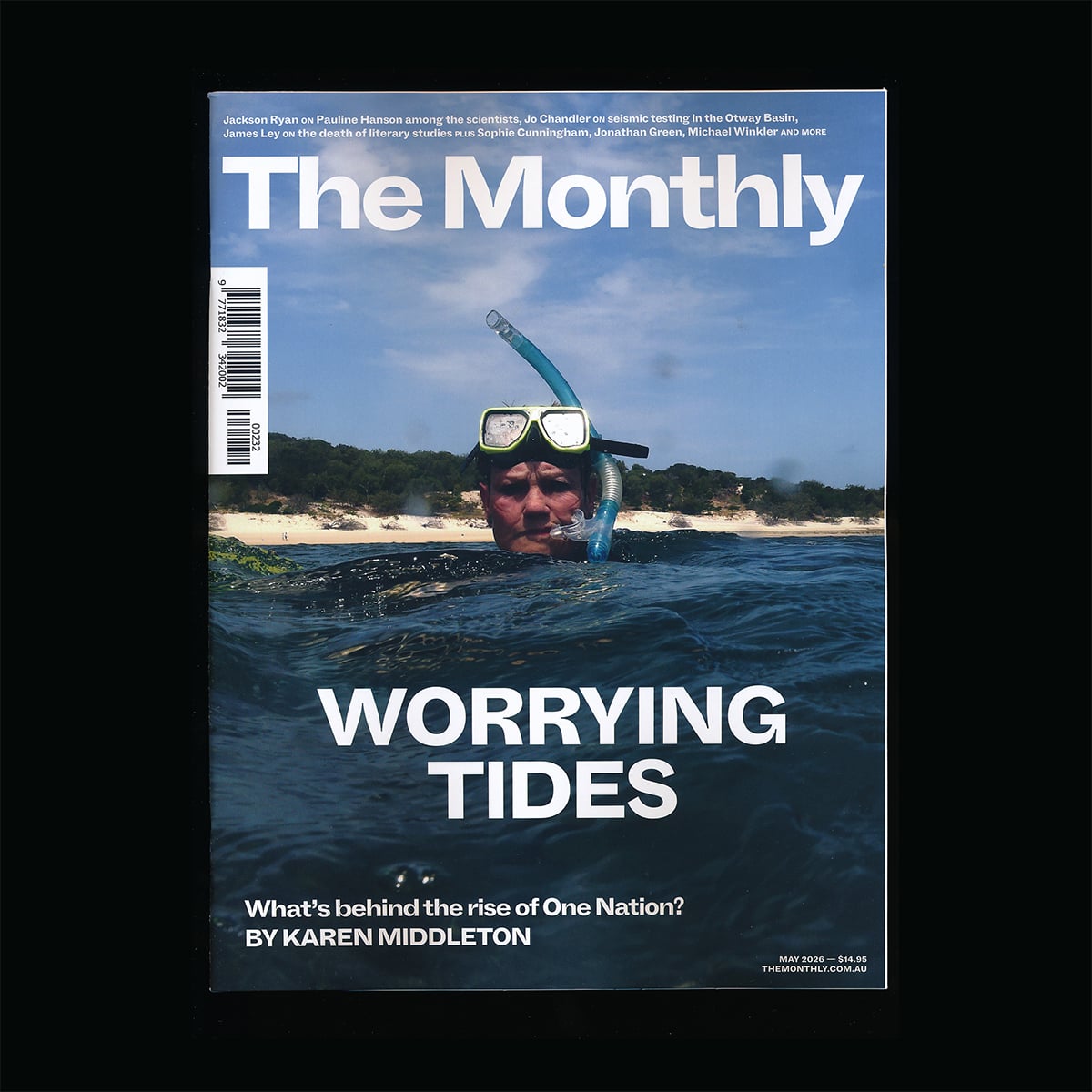
The Monthly May issue 2026
$14.95
It’s hard to regard the world at large without a sense of significant worry. From war to cost of living, from AI to the fracturing of the social contract, contemporary life seems defined by a rising tide of anxiety – cultural, financial and existential. The May issue of The Monthly digs into this worry, and into the effect it’s having on our politics. Karen Middleton looks at the rise of One Nation, a party whose history of stoking grievance and division may have found its natural moment. Jackson Ryan attends the annual “Science Meets Parliament” event, and considers the unease surrounding the attendance of science-sceptic Pauline Hanson. With the federal budget imminent, Richard Denniss highlights the growing pressure on the government to introduce a 25 per cent tax on exports of Australian gas, and Jo Chandler considers the environmental impacts of further gas exploration in the Otway Basin.
Plus there’s a fine art mystery and the 40th birthday of a Melbourne institution, the death of literary studies and a look at the changing attitudes to perinatal depression. Personal essays from Jonathan Green and Michael Winkler, and our customary mix of reviews of film, books and television round out this month’s issue. It may not cure your worries, but it will certainly make them better informed.
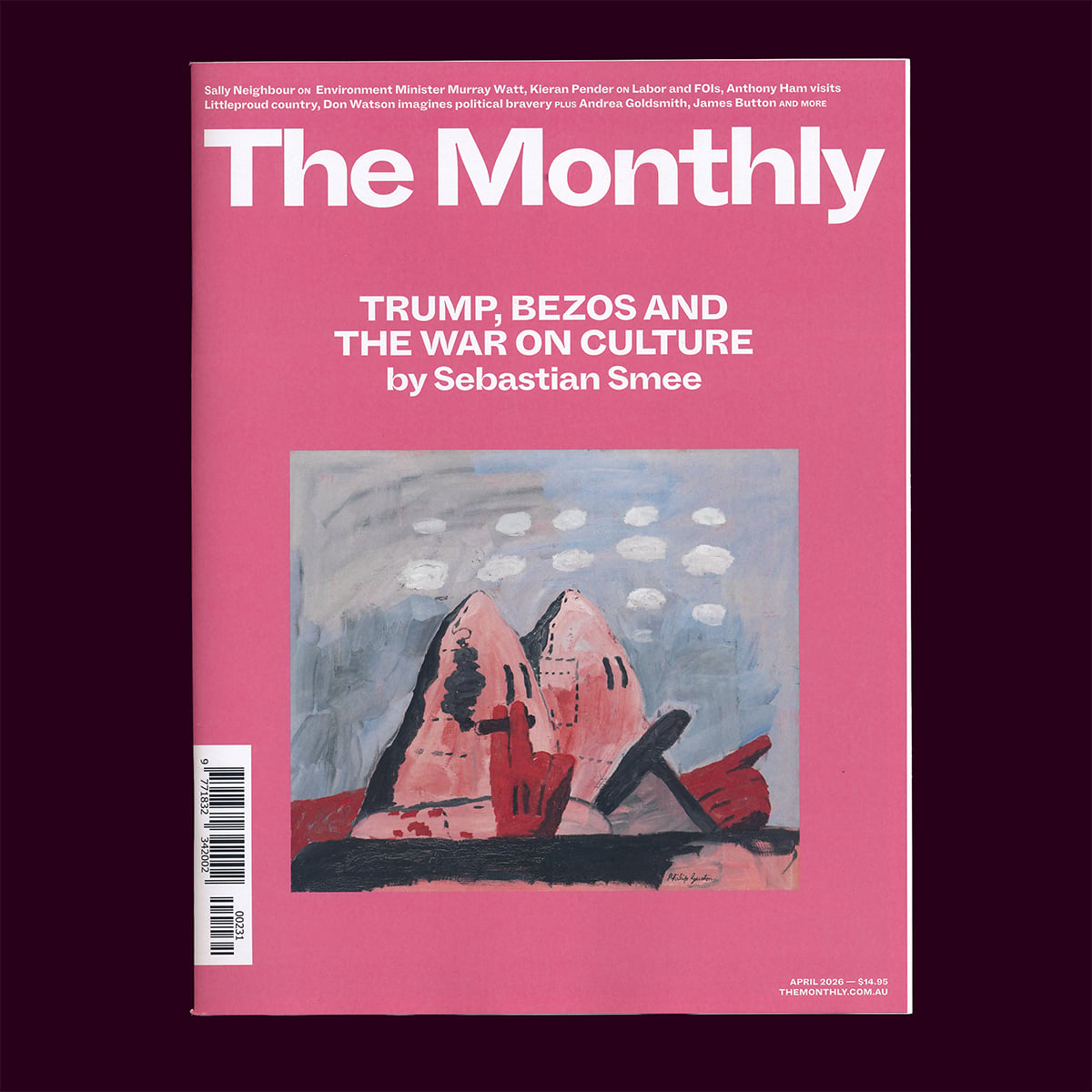
The Monthly April 2026
$14.95
April’s Monthly looks at multiple fronts in the worldwide war on culture, led by Sebastian Smee’s cover essay on the recent purges at The Washington Post. Smee was the paper’s Pulitzer Prize–winning art critic, and one of many staff laid off in wide-ranging cuts and sackings. Alongside an increasingly partisan editorial stance, the mass firings were the latest symptom of the Trump administration’s attacks on arts and culture, free expression and journalism, under the capitulation of the Post’s billionaire owner Jeff Bezos. This is an essential and powerful essay.
Closer to home, commitment to free expression and transparency in government is much articulated but rarely in evidence. Kieran Pender looks at Labor’s track record with secrecy and its latest unsuccessful efforts to prosecute changes to freedom of information laws. Walkley Award–winning journalist Sally Neighbour writes for The Monthly on federal environment minister Murray Watt, a man whose deal-making and compromises have divided the many constituents invested in his portfolio. Neighbour asks whether the characteristics that make Watt a trusted party lieutenant will translate to results for environmental laws. Anthony Ham travels to the regional Queensland electorate of Maranoa: a place where National Party loyalty is now facing a challenge from an ascendant One Nation, a process perhaps hastened by the district’s longstanding member, David Littleproud, stepping down as party leader. And Don Watson offers a fever dream of what a different, bolder version of the Albanese government might look like.
Plus Andrea Goldsmith climbs some imaginary mountains, Santilla Chingaipe checks her star signs, James Button follows a musical cue back to years gone by, and reviews of film, TV, theatre and books.
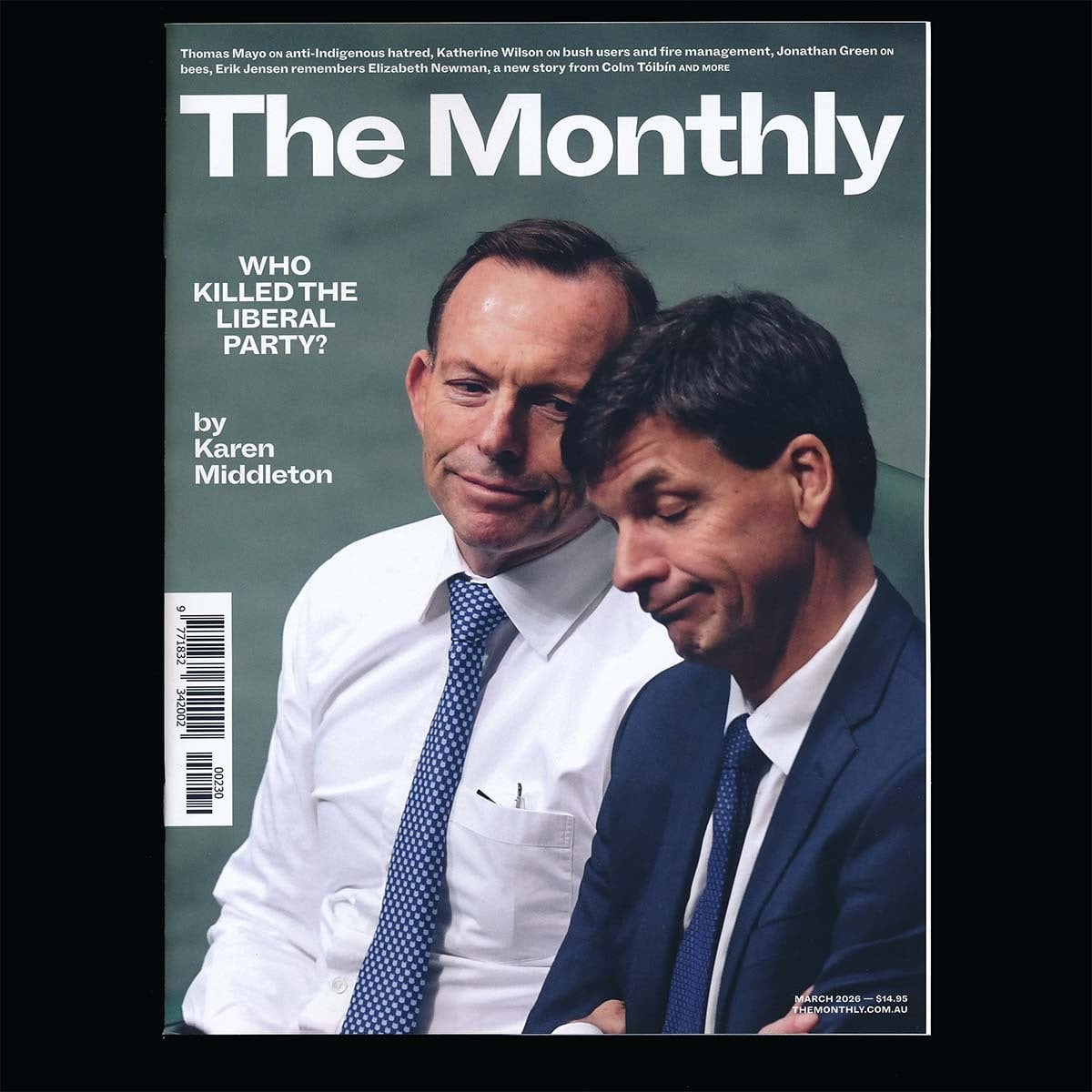
The Monthly March issue 2026
$14.95
The March Monthly is here, and is full of critical thought, investigative journalism, pithy analysis and eloquent rumination. Our cover story poses a question: Who killed the Liberal Party? Karen Middleton talks to former prime ministers and ongoing powerbrokers in the Liberal Party about how its electoral position got to its current record weak state, and, as Angus Taylor takes the reins, asks if the party and its prospects are already dead. Elsewhere across the magazine: Thomas Mayo despairs at ongoing state indifference to racist violence against Indigenous Australians; Margaret Simons travels to Laos and explores the unfinished legacy of war that lies beneath the world’s newest World Heritage areas; Katherine Wilson looks at the blokey subculture of bush users, whose influence can be felt in bushfire management; and Jonathan Green is away with the bees.
Plus, your first chance to read a new story from international great Colm Toíbín, whose “Barton Springs” appears in our pages exclusively ahead of a new short-story collection to be released next month. And our usual stellar arts writing, including David Neustein on the St. Thomas More Columbarium in Perth, Erik Jensen remembering the late Elizabeth Newman and more besides.
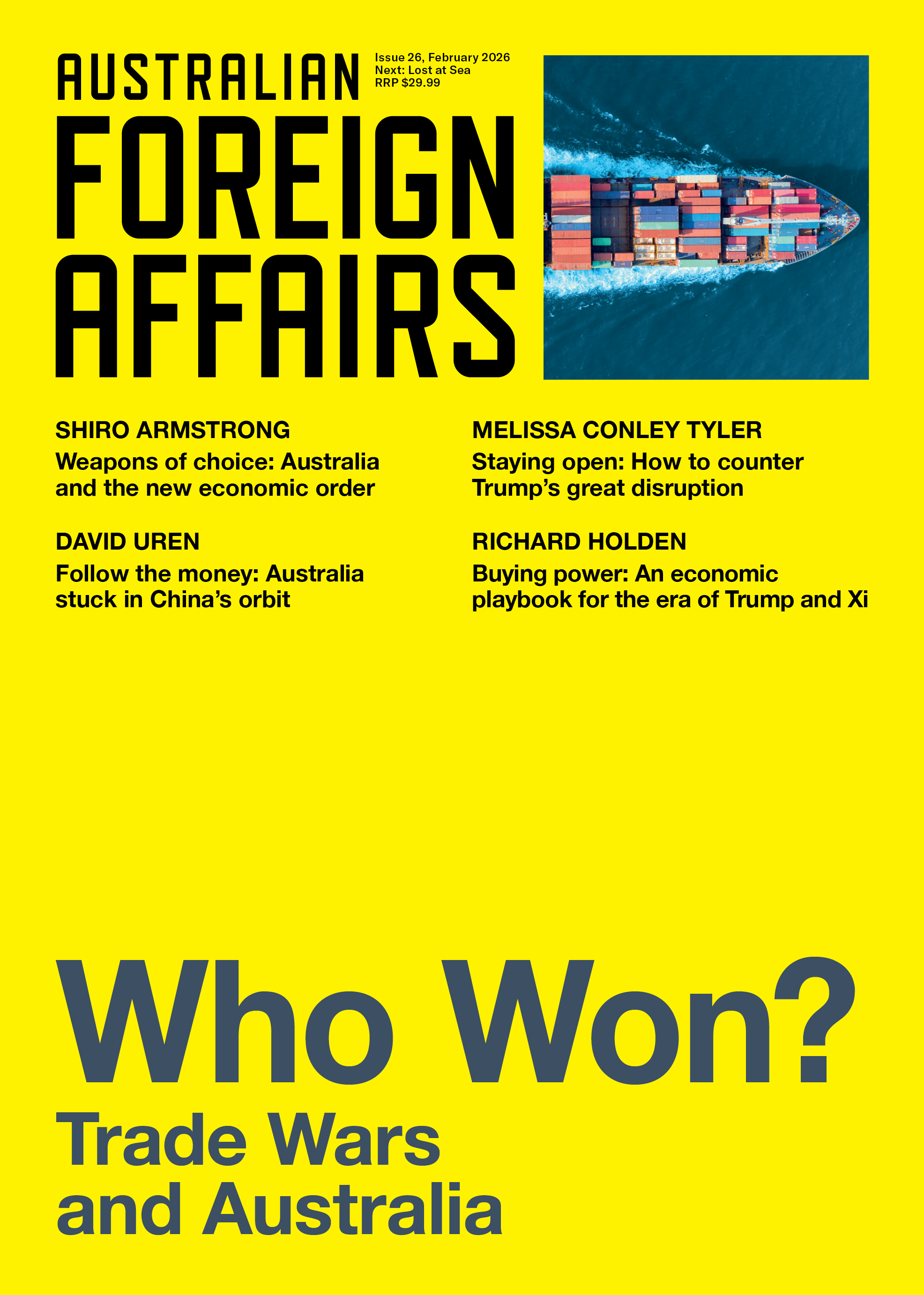
Australian Foreign Affairs issue 26
$29.99
Who Won?
Trade Wars and Australia
This issue of Australian Foreign Affairs explores the decline of global free trade and the emergence of a new economic order in which nations view trade as a tool for gaining strategic advantage.
As Donald Trump’s tariffs reshape the international marketplace, "Who won?" looks at the unfolding era of weaponised trade and the ways in which Australia can respond, adapt and resist.
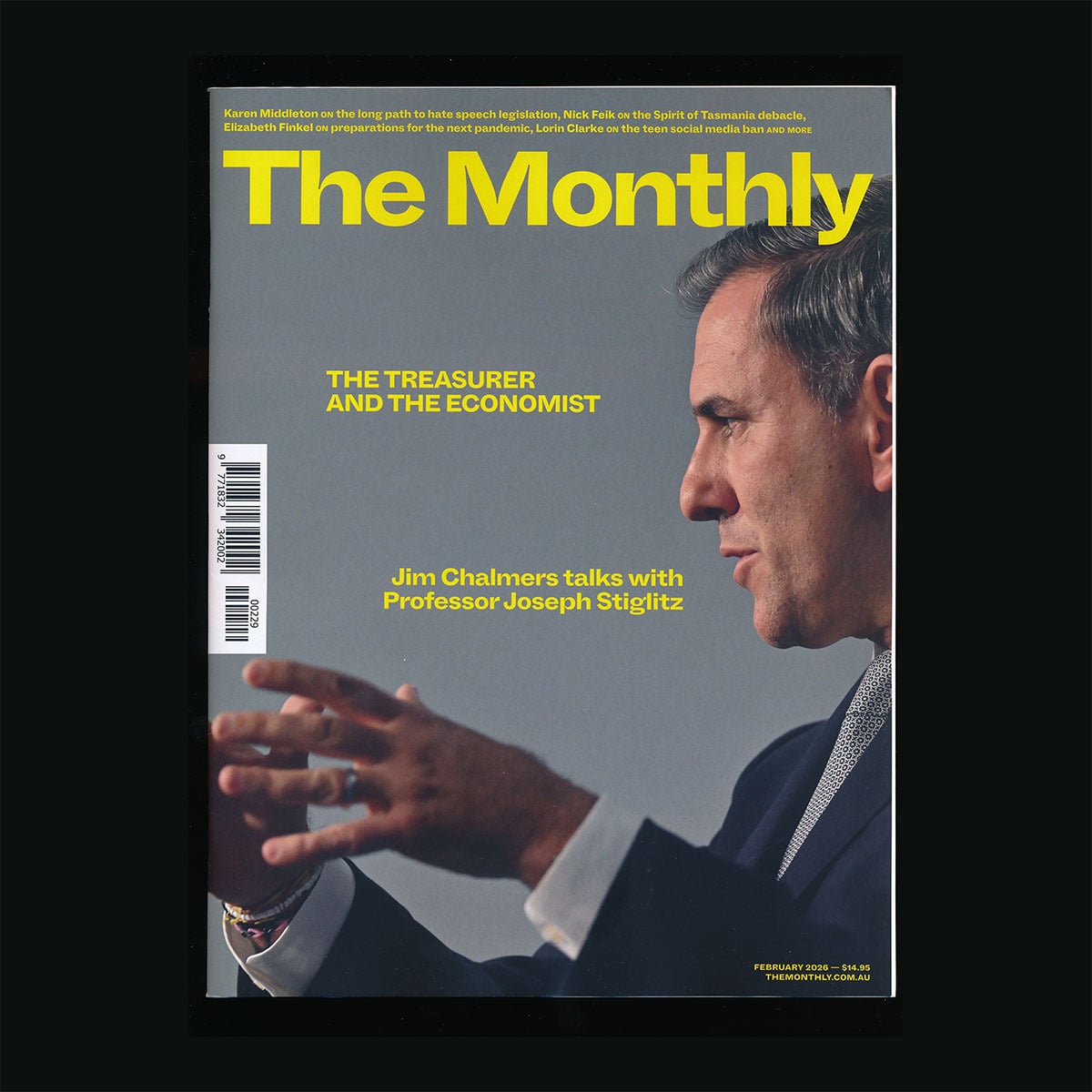
The Monthly February issue 2026
$14.95
New year, new Monthly, and the February issue is full of thoughtful, entertaining and considered takes on where the nation is at in 2026. Three years ago this month, Treasurer Jim Chalmers wrote our cover essay, offering a balance between the big-picture philosophy that he brought to the role and the granular detail of the day-to-day challenges of government. Now, at the beginning of the second year of the Albanese government’s second term, the treasurer is back in our pages, this time in conversation with Nobel Prize–winning economist Joseph Stiglitz. The pair talk through the prevailing economic conditions – from tariffs to housing, tax reform and regulation – to unpick the task ahead.
Beyond the economy, across the magazine we have a surplus of great offerings: Nick Feik explores the rolling infrastructure disaster around replacing and updating the Spirit of Tasmania fleet; Anthony Ham considers the effects of the North West Shelf gas project on millennia-old rock art on the Burrup Peninsula; Hannah Bambra looks into the ethics and practicalities of fertility support, with record demand for donor eggs and widespread supply challenges; Elizabeth Finkel sees hope in international efforts to prepare us for the next pandemic; and Karen Middleton travels down the long path to hate speech legislation.
Plus Lorin Clarke on the teen social-media ban, Quentin Sprague on Hany Armanious, Beejay Silcox on reading Halldór Laxness, and more.
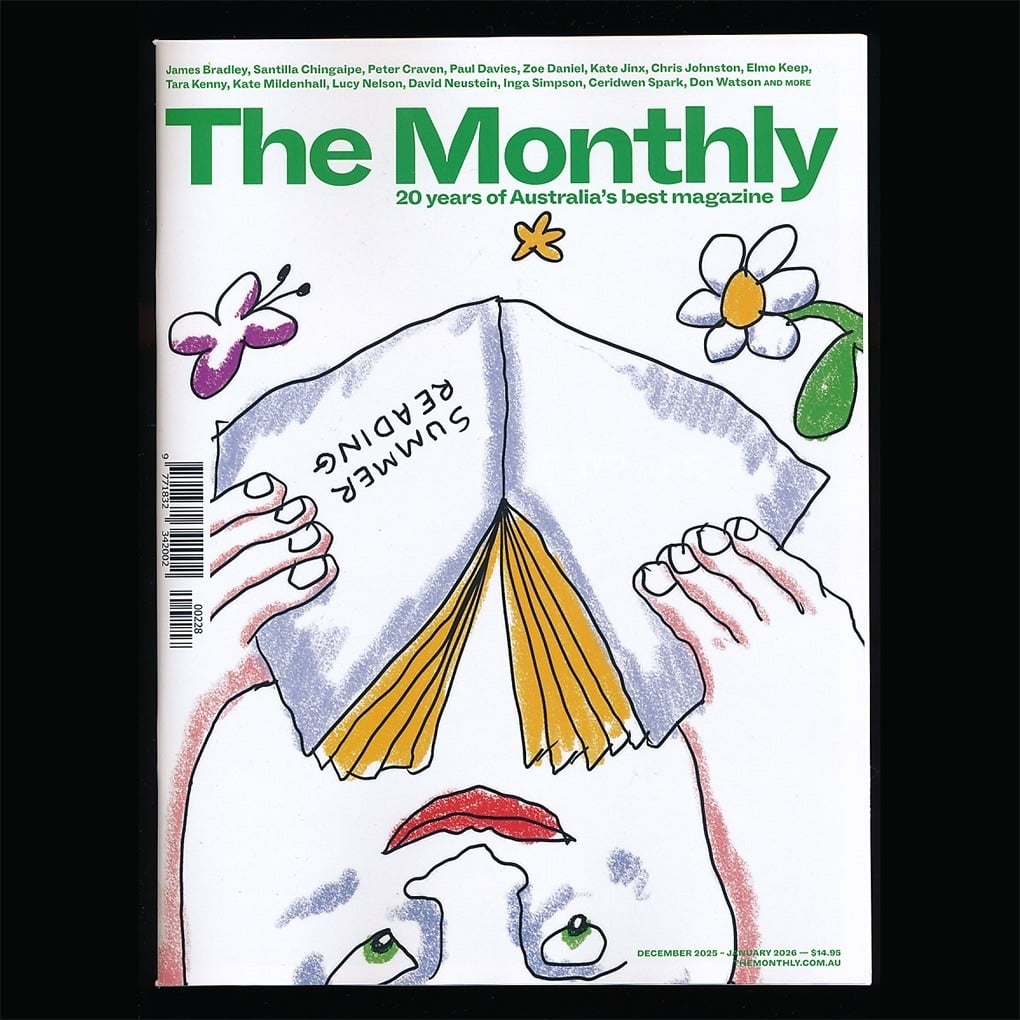
The Monthly December 2025 – January 2026 issue
$14.95
Summer is here, and with it long days, longer weekends, and – hopefully – more time to sit back and have a long, luxurious read. And, as tradition dictates, The Monthly has you covered, with our bumper summer reading issue: a great mix of journalism, essays, criticism and personal reflection, plus some new fiction thrown in for good measure.
Don Watson travels to the north-east of Victoria to explore the region that has given rise to Dezi Freeman and a wave of citizen dissatisfaction.
James Bradley goes beyond the panic and politicking to better understand the science behind South Australia’s devastating algal bloom.
Zoe Daniel re-litigates the case for gambling-advertising reform and asks why inertia continues to rule when the argument for change is so clear.
In the United States, the influence of tech titans and techno-libertarians is being felt in the destruction of government institutions. Elmo Keep examines whether Australia might avoid a similar trajectory.
Ceridwen Spark asks if we’re failing in water safety, and what roles culture and gender play in our national drowning numbers.
Plus there’s quantum science, understanding the First Nations traditions underpinning a beloved art space, the collision of fashion and climate action, David Byrne, popular history, the late John Marsden, jazz, new fiction and much more besides. A bumper summer read.
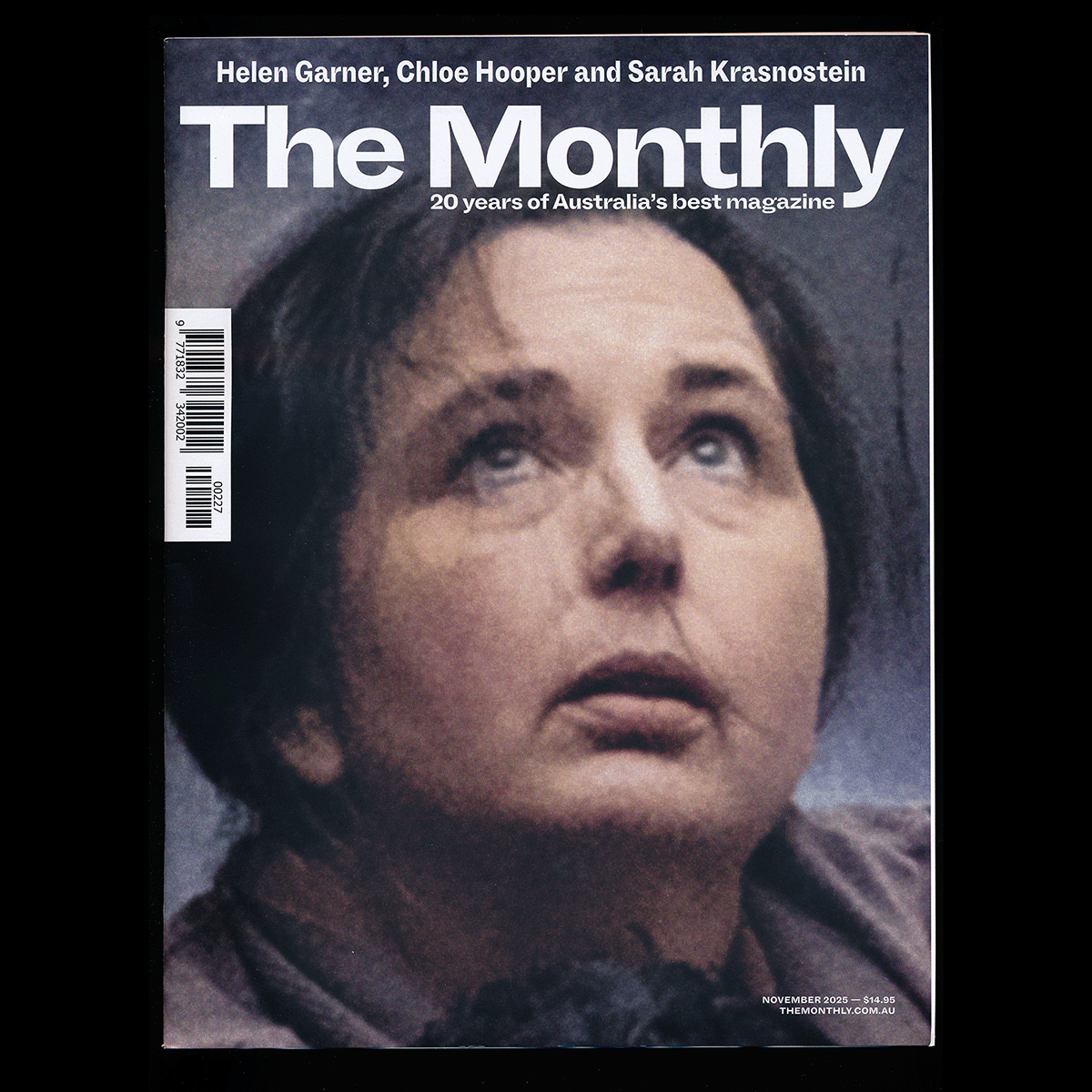
The Monthly November issue 2025
$14.95
The November issue of The Monthly is packed with great journalism and writing.
Our cover story gives a taste from the nonfiction book of the year – Helen Garner, Chloe Hooper and Sarah Krasnostein’s series of conversations driving to and from the magistrates’ court in Morwell to watch the trial of Erin Patterson. The story captured the national imagination, but to read these three keen observers and chroniclers of human misery grapple with the nuances of the case is a privilege. Madison Griffiths grew up in a horseracing family, and she’s written an excoriating look at the repressive, violent and abusive culture in that industry. It’s a horrifying story of decades of pain and an industry unwilling or unable to honestly reckon with the damage done, but Griffiths’ conversations with victim-survivors and her commitment to laying out the abuses of power and system are powerful and necessary.
The assistant minister for productivity, competition, charities and Treasury, Andrew Leigh, is the author of several books, and a rare kind of politician: one committed to interrogating ideas and process to find ways to better govern and represent his electorate. Here, he considers the role randomised trials could and should play in improving our politics.
In the arts pages, Abi Stephenson reports from the London premiere of the new Bruce Springsteen biopic Deliver Me from Nowhere, with the Boss himself in attendance, and Beejay Silcox delivers an uncompromising assessment of the state of Australian rural noir to coincide with the publication of Jane Harper’s new novel, Last One Out. Robbie Arnott’s “Life Sentence” is a cricketing sledge to make a career author’s blood run cold, and there’s much more besides.
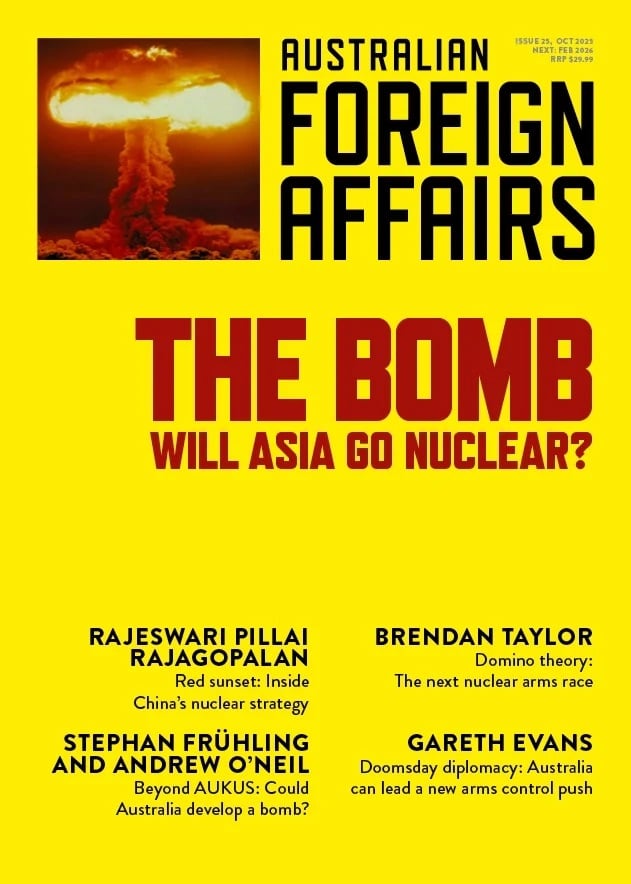
Australian Foreign Affairs issue 25 The Bomb
$29.99
Will Asia go nuclear?
The next issue of Australian Foreign Affairs explores the prospect of countries in Asia starting to develop nuclear weapons as the region’s changing balance of power poses new questions about their future security.
As anxieties grow about the reliability of the United States as a partner, The Bomb looks at the possibility of a nuclear arms race breaking out in Asia that would likely start with South Korea, and then Japan, and would leave countries such as Australia contemplating previously unthinkable options.
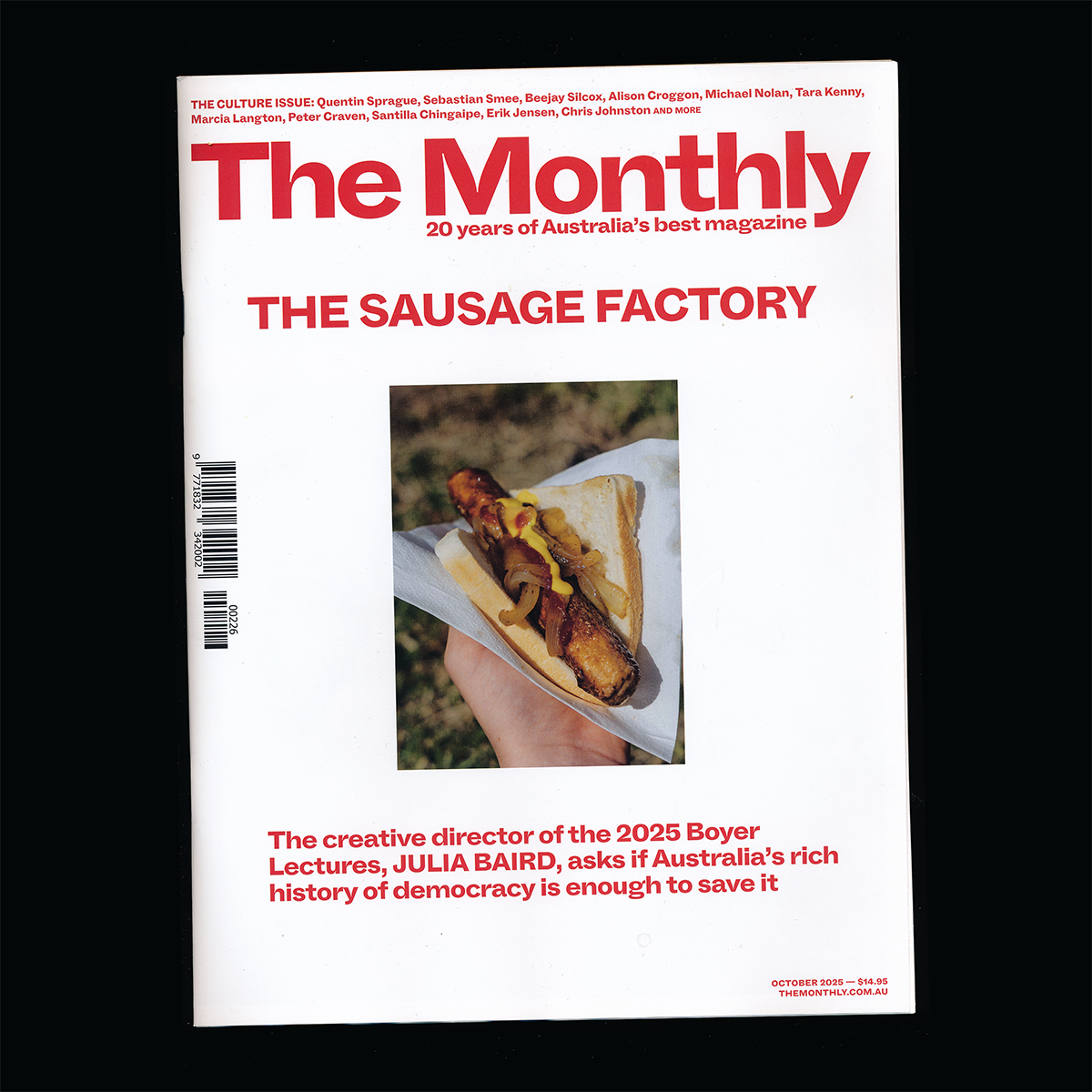
The Monthly October issue 2025
$14.95
October is The Monthly’s Culture issue: a space for considered reflection on the places where our politics, our art and our society intersect. The centrepiece of the issue is the annual Monthly Awards, where we ask some of our top critical voices – Santilla Chingaipe, Peter Craven, Alison Croggon, Erik Jensen, Chris Johnston, Tara Kenny, Marcia Langton, Michael Nolan, Beejay Silcox and Sebastian Smee – to reflect on the cultural highlights of their year. Each has identified two works – one a new Australian work, the other from wherever or whenever they like – that moved, surprised and inspired them in 2025.
Elsewhere, The Monthly’s senior art critic Quentin Sprague considers the state of critical culture in 2025, asking whether the age of the public critic-at-large may be behind us as the conversation fragments. And our cover essay, from Julia Baird, announces and celebrates a major new cultural and intellectual partnership for The Monthly – beginning this October, we’ll be working with the ABC to support and amplify the annual Boyer Lectures.
Plus there’s criticism and commentary, reviews and reflections, as well as new writing from Ashley Hay, Robert Skinner, Bri Lee and more.
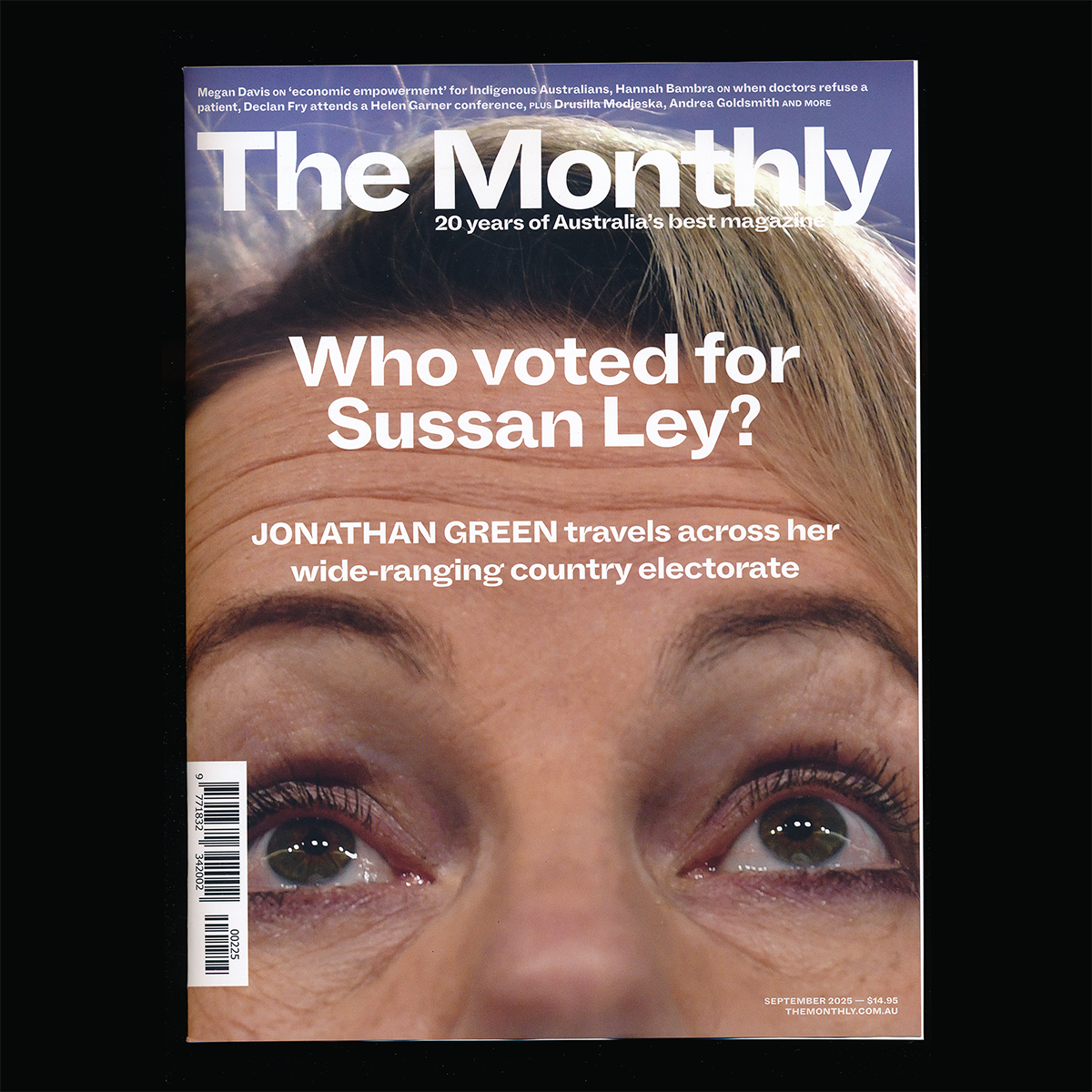
The Monthly September issue 2025
$14.95
The September Monthly is here, and it sees in the arrival of spring with a full crop of new writing, insights and journalism. Jonathan Green drove across some of the 126,000 or so square kilometres of the electorate of Farrer in south-west New South Wales. It’s a fascinating part of the country for several reasons – diverse in the landscapes it contains, the communities it houses and the beliefs and priorities that animate it – but perhaps most notably because it is the electorate represented by the leader of the federal Liberal Party, Sussan Ley. Green asks what we might understand about the opposition leader if we explore the vast patch of country that has voted for her as its representative for a quarter of a century. And what does it mean for a political party in desperate need of regaining the cities, to be led by a woman whose constituency is very different indeed?
Penny van Oosterzee mounts a defence of carbon credits. For years now, advocates for better, more robust protections against the climate crisis have been anywhere between sceptical and outright contemptuous of the mechanisms and people behind credits and offsetting. But van Oosterzee, herself a seller of carbon credits, believes that this response is in danger of throwing the baby out with the bathwater, arguing that reforestation is an essential tool – at least until something better comes along. Hannah Bambra considers the role and dangers of conscientious objection in our healthcare system, pointing to the pressures that can be faced by people in need when medical professionals choose to withhold treatment because of their beliefs. From voluntary assisted dying to abortion and beyond, the consequences of this leeway are considerable and personal.
Megan Davis considers the perils of “economic empowerment” as the new mantra in Indigenous policy; Santilla Chingaipe examines the legacies of the White Australia policy through the story of a boxer known as “The Alabama Kid”; the left’s failure to tackle defence policy is interrogated by Andrew Carr; and Drusilla Modjeska attends the “Dangerously Modern” exhibition at the Art Gallery of South Australia.
All that plus memory and smell, a Helen Garner convention, film and book reviews, and more. September is upon us.
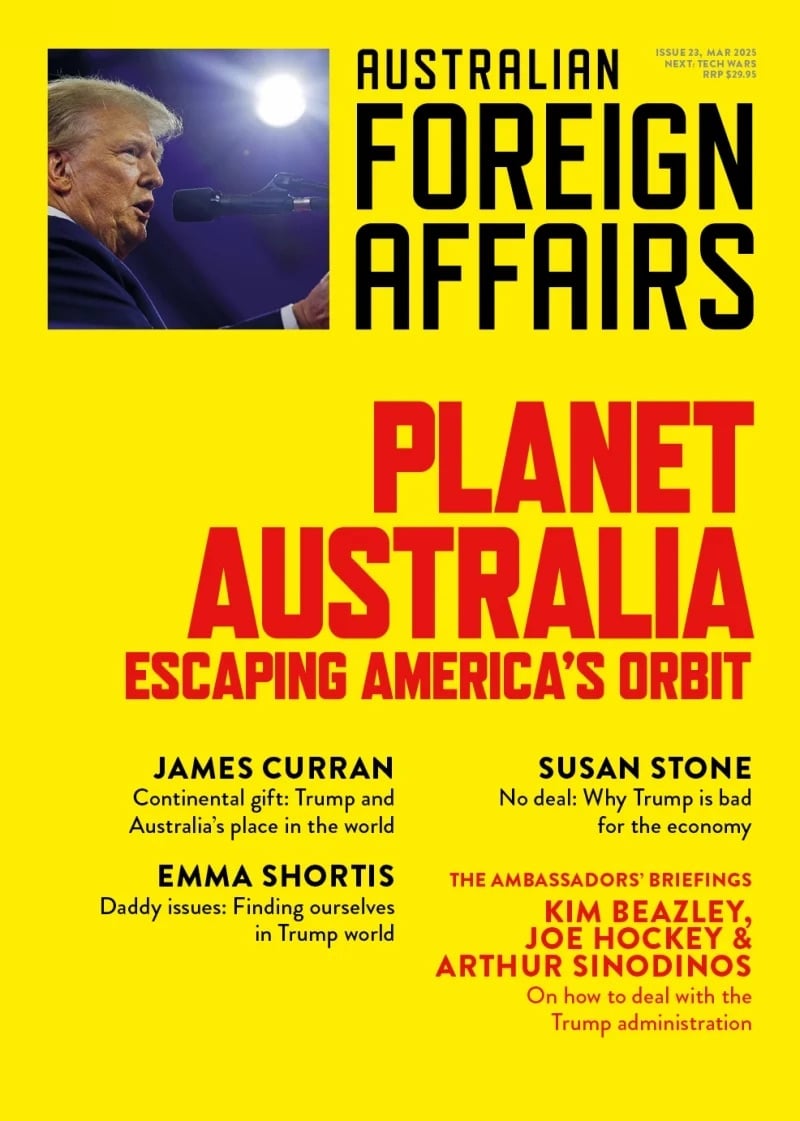
Australian Foreign Affairs issue 23
$29.99
Planet Australia
Escaping America's Orbit
This issue of Australian Foreign Affairs explores Australia’s changing fortunes as Donald Trump returns to the White House and threatens to dismantle the diplomatic, economic and defence foundations on which Canberra has long built its security and prosperity. Featuring special contributions from our three most recent ambassadors to the United States, "Planet Australia" looks at how Australian leaders and diplomats should deal with Trump and prepare for looming challenges to the alliance, open trade, and a secure and stable Asia.
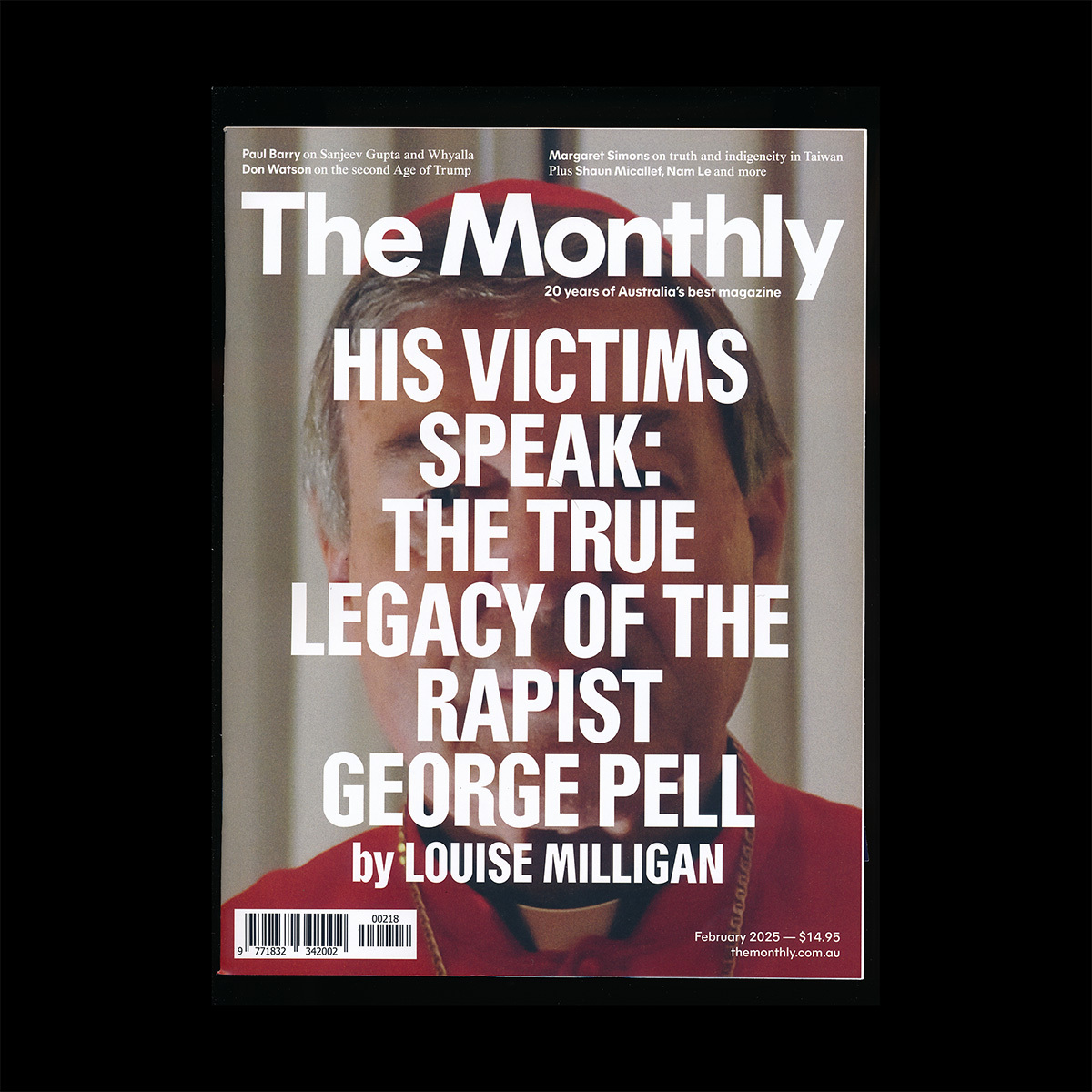
The Monthly February issue 2025 (re-released)
$14.95
Our cover story for the February 2025 issue of The Monthly was an extraordinary and incendiary essay by award-winning journalist Louise Milligan, telling the story of some of the forgotten victims of the late Cardinal George Pell.
In between when we went to print with the issue and when it went on sale, we were made aware of a parallel civil case that was going through the courts. As a consequence, and in the interests of protecting the legal process, we made the decision to remove all reference to the essay from the website, and copies of the magazine from Victorian newsstands.
Now, following a settlement on that case, we are finally – proudly – in a position to share Milligan’s journalism and the victims’ stories with subscribers to The Monthly again.
At his funeral, church leaders, supporters and dignitaries (including former prime ministers) declared that his legacy was best understood as the work of a great man, a great Catholic – and a martyr who had been hounded unjustly by enemies, but who died vindicated in the High Court. Walkley-winning journalist Louise Milligan had closely observed Pell in the past decade, as his public role was increasingly played out in the courts and legal machinations, amid allegations of child sex abuse, both perpetrated and covered up.
When the High Court found, last November, that the church could no longer be found to be vicariously liable for the actions of priests in its employment, Milligan and others saw this as the true legacy of George Pell: a legal strategy that avoided blame and denied victims the justice they sought. Some of these victims – ignored and forgotten – felt driven to speak up and correct the record, and offer their testimony to Louise Milligan and The Monthly about the man who used his power to pervert the law and protect abusers, and who, himself, committed countless crimes for which he will never face the consequences.
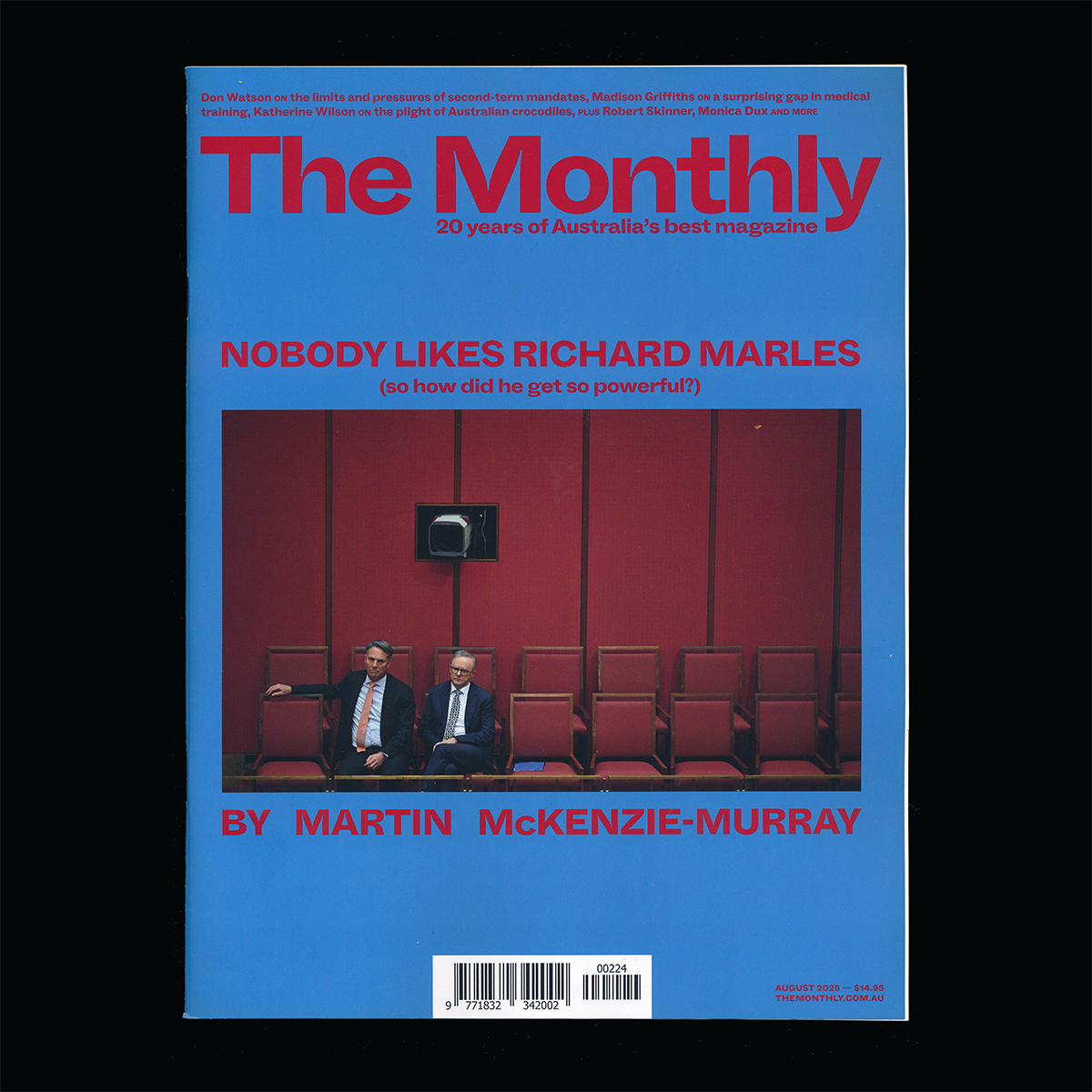
The Monthly August issue 2025
$14.95
The August issue of The Monthly is on newsstands, and there’s no shortage of enquiry and challenge to the second-term Albanese government as parliament sits for the first time since the election. Our cover story interrogates the power and influence of Deputy Prime Minister and Defence Minister Richard Marles. From the ubiquity of conversations about his portfolio – which encompasses AUKUS – to his key role in factional skullduggery earlier this year, Marles is one of the more impactful members of this government. So, when Martin McKenzie-Murray spoke to his parliamentary colleagues, why were many of them so candid with their dislike and their assessment of his limitations?
Don Watson turns his keen attention to Anthony Albanese’s much postponed meeting with Donald Trump, and looks to history to make a case for how the PM might achieve the much-desired cut-through. What words might be necessary for both the public perception and the lasting impact he desires? And Max Ogden reminisces about the 1983 Prices and Incomes Accord, arguing that a failure to learn its lessons might doom the union movement to greater irrelevance.
Outside federal politics, Katherine Wilson looks into the messy story and even messier motivations of the Northern Territory’s saltwater-crocodile trade, Madison Griffiths explores attempts to address a gap in medical training, and Peter Craven reflects on the 25th anniversary of Peter Carey’s True History of the Kelly Gang.
Plus there’s new writing from Robert Skinner, Kate Mildenhall, Monica Dux and more. Available to subscribers now or available for purchase widely.
The Monthly July issue 2025
$14.95
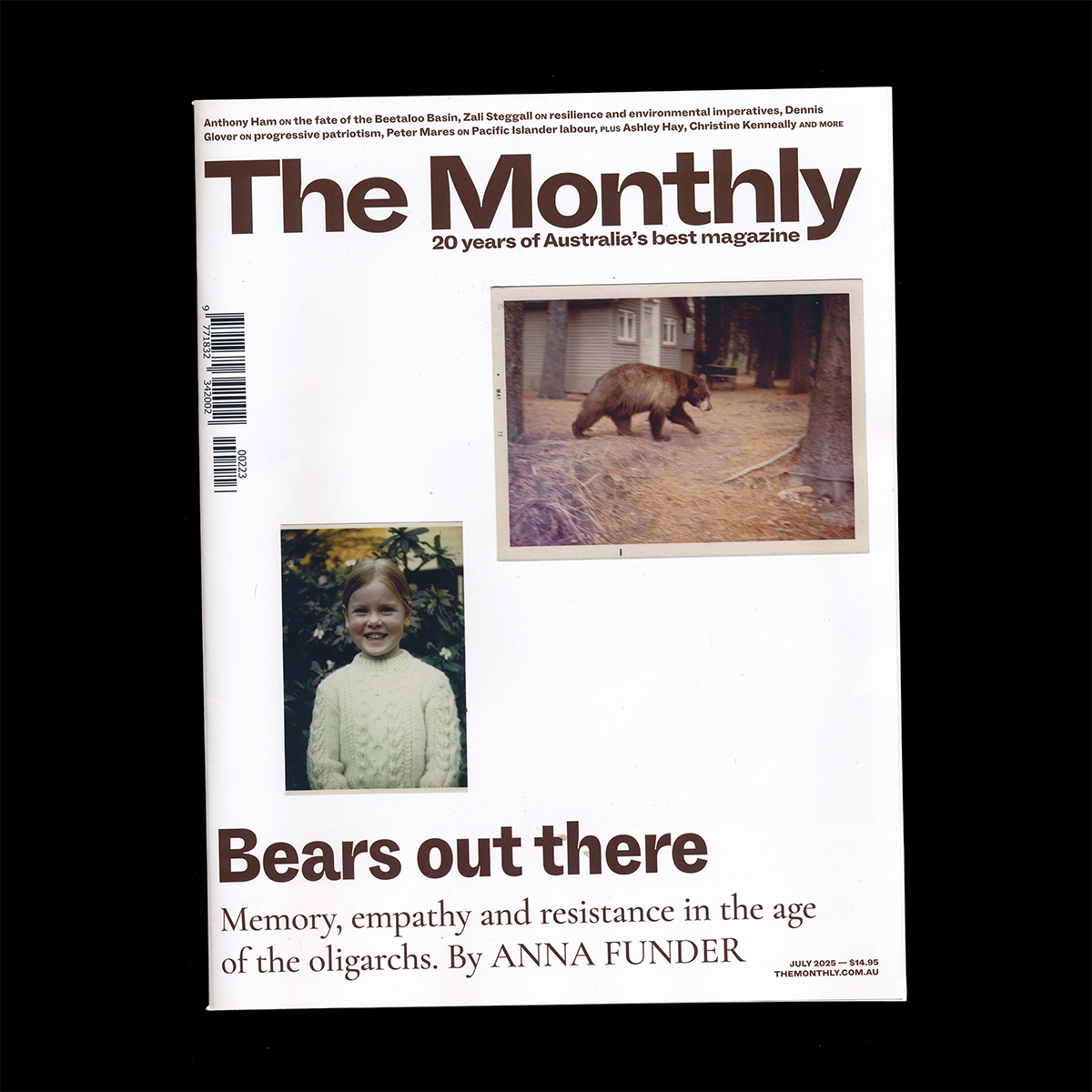
The cover of The Monthly’s July issue has two photos plucked from a family album. One of them shows a bear strolling past a cabin, in no particular hurry but a menacing presence nonetheless. The second picture shows the author of our cover essay, Anna Funder, at age five. The photographs capture a moment in time that forms the basis for a set of recollections and reflections on the nature of writing in the present moment. Funder’s career has been defined by her interest in humanity in the face of systems of unbridled and monstrous power, so her thoughts on the age of the oligarchs that we find ourselves in are, unsurprisingly, insightful, thoughtful and searching. An essay about memory and empathy, and about the role that writing can – and must – play in any ideas about resistance.
Elsewhere in the magazine, Anthony Ham offers a deeply concerning analysis of the current prospects for the Beetaloo Basin, with the relatively new NT government opening the door to levels of fracking that present an existential threat to the region. Dennis Glover places Anthony Albanese’s mantra of “progressive patriotism” in a tradition going back to George Orwell. Christine Kenneally attends the Melbourne flower show and asks what the current state of floristry looks like. And Beejay Silcox assesses two recent novels that reconceive and re-energise the tradition of the American boxing novel.
There is also more politics, culture, reviews, criticism and great reads.
The Monthly June Issue 2025
$14.95
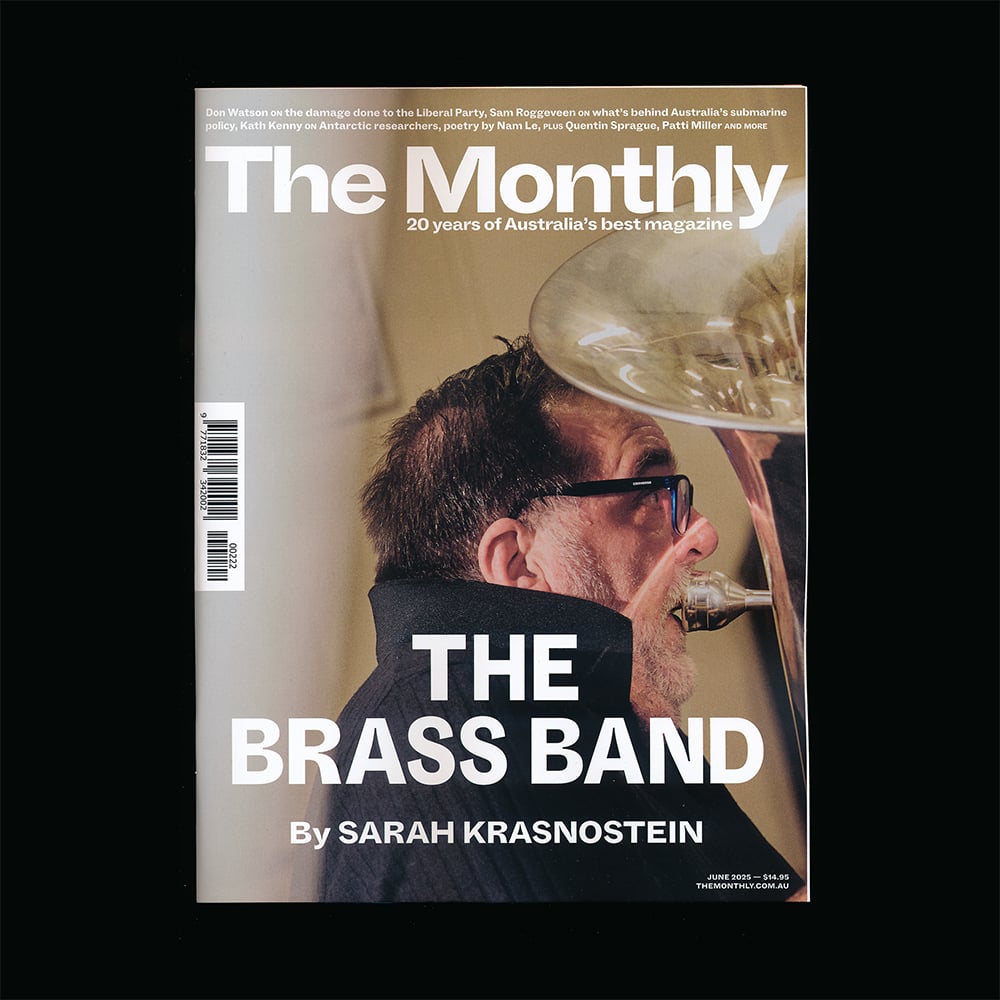
Not to blow our own horn, but the June edition of The Monthly is Australia’s best magazine at its best. With the dust settling on the 2025 federal election, we have a long-form essay on a different kind of national reckoning. Like a political contest, it’s one concerned with questions of who we are, as individuals and collectively; it’s an exploration of the role of idealism and a search for perfection in an imperfect world. When Sarah Krasnostein visited the rehearsal rooms of Preston Band, in Melbourne’s inner-north, she expected a small story about a treasured community ritual. She wound up following them to the 2025 Australian National Band Championships, with a story that is moving, surprising and deeply joyous.
“Regardless of the material through which the breath blows, the clarion call is always petitionary. From celebration and commemoration to war and its oppo- sites, the sounding horn summons that which is capable of making us greater than our parts. Whether, and how, we answer that call is a different matter.”
Elsewhere in the issue, Sam Roggeveen turns his attention to Australia’s submarine policy – AUKUS and beyond – to ask what it tells us about our foreign policy in general, and our capacity (and inclination) to stand alone as Trump’s America becomes an ever-less-reliable ally. Don Watson surveys the wreckage of the Liberal Party in the wake of its electoral drubbing, curious about the platitudes around the need to rebuild and what the party wants to rebuild into. Kath Kenny checks in with Antarctic researchers on the state of the ice shelves on the land mass to our south. There’s a new poem by recent NSW Premiers’ Award–winner Nam Le. Plus the classic mix of cultural coverage and review, political and social insights and more great writing.
The Monthly May issue 2025
$14.95
The May issue of The Monthly represents a milestone: it marks 20 years – to the month – since the magazine first hit newsstands.
A federal election shows us the best and brightest political leadership this country has to offer and, sadly, once again, election 2025 has been an unedifying display. We are at a singular (and singularly terrifying) historic moment – in geopolitics, in the climate, even in technology – and it’s hard not to feel like our leaders may not be equal to it.
But not for the first time in the past two decades, The Monthly is here to demonstrate that our writers are equal to the moment: to naming it, to making sense of it and to transcending it.
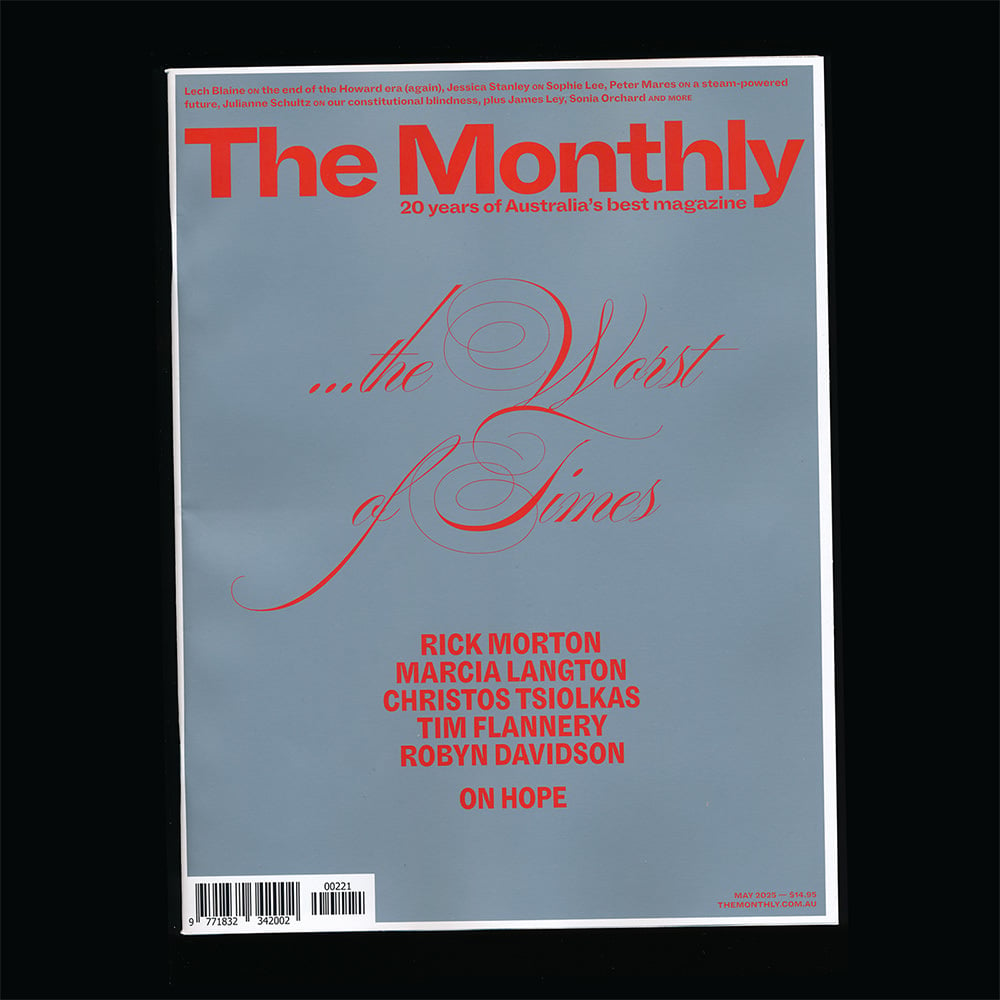
Rick Morton, Marcia Langton, Christos Tsiolkas, Tim Flannery and Robyn Davidson address the fears and injustices of these “worst of times”, and sound a note of hope for what might come next.
Julianne Schultz warns that our Constitution doesn’t protect us against Trump-like politicians who might seek to undermine the democratic principles we take for granted, and James Ley ponders the rise of AI and its impact on our humanities and humanity.
There’s Lech Blaine, Jessica Stanley, Sonia Orchard and Peter Mares, as well as The Monthly’s unparalleled coverage of the arts, poetry, essays and more. Our birthday treat to ourselves and our readers is an issue full of the things that have made The Monthly an institution for 20 years, and will make it essential for many years to come.
The Monthly April issue 2025
$14.95
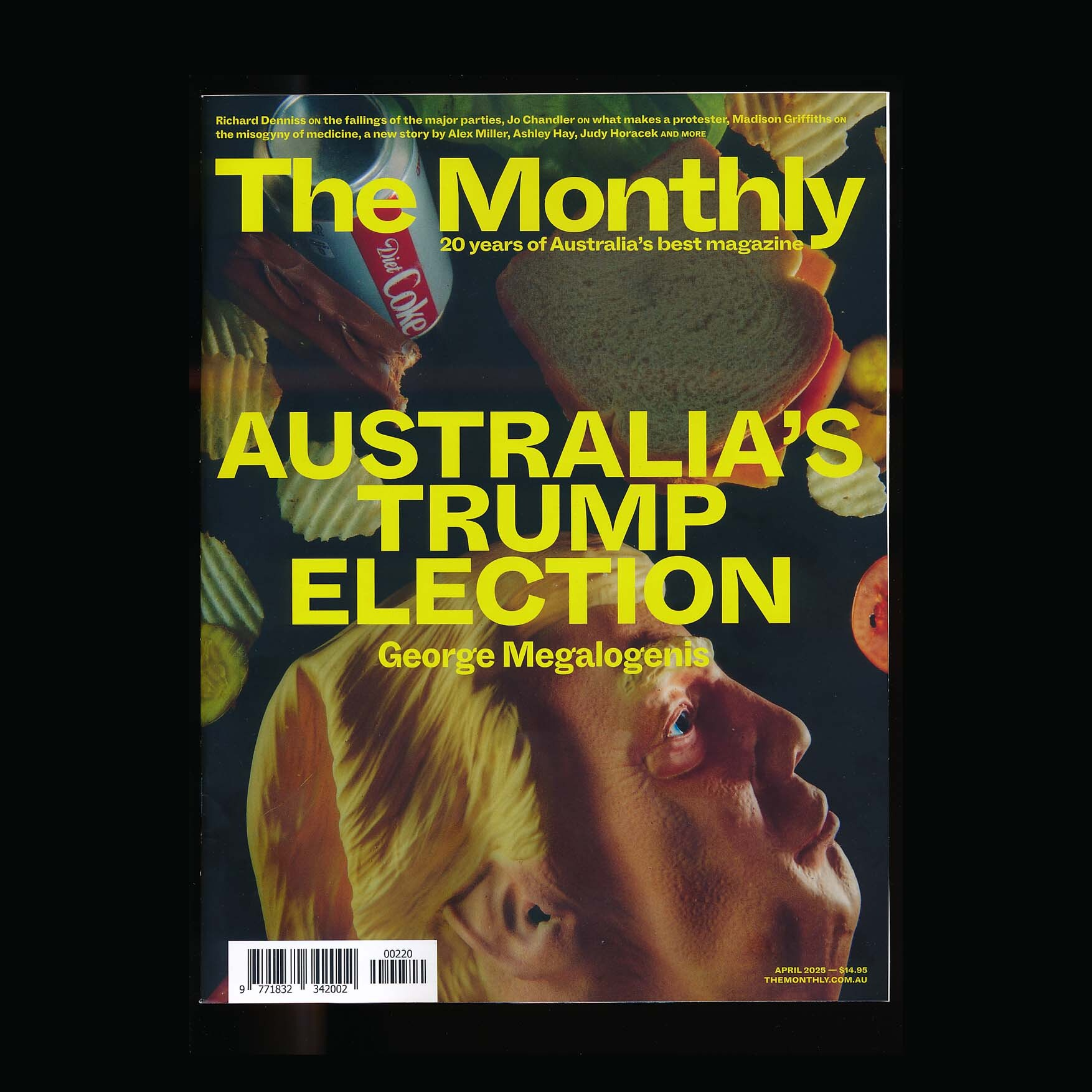
Just in time for a federal election campaign, the April Monthly is full of stories of politics and protest – the ways both inside and outside the system we can have a stake in our democratic outcomes. The man Annabel Crabb once dubbed “Australia’s explainer-in-chief”, George Megalogenis, offers a valuable insight into the election, and he places the budget promises, and the back and forth of the Albanese and Dutton camps, in the context of trends and traditions that might explain much about the likely outcomes. But overwhelmingly, he argues, the determining factors this May are going to be external influences and shocks. More than anything else, the effect of Donald Trump’s chaotic second term in the US will play a part in deciding what kind of government we have next.
Richard Denniss also offers his insights, asking why it is that the major parties seem unwilling or unable to engage with the issues that the electorate are most concerned with. Is the further rise of independents and minor parties inevitable?
Among those issues, the environment and the climate crisis continue to exercise voters, without the level of engagement from federal politics that concerned citizens want to see. Jo Chandler looks at what drives people from climate anxiety to direct action, with a surprisingly hopeful story of civic engagement and dedicated protest.
Elsewhere in the issue, we have John Stephenson on nuclear policy, Jenny Sinclair on bullying, Madison Griffiths on medical misogyny and Ashley Hay on Tropical Cyclone Alfred. Plus the usual mix of film, TV, music and book criticism, a new short story from Alex Miller and more. All in the April Monthly.
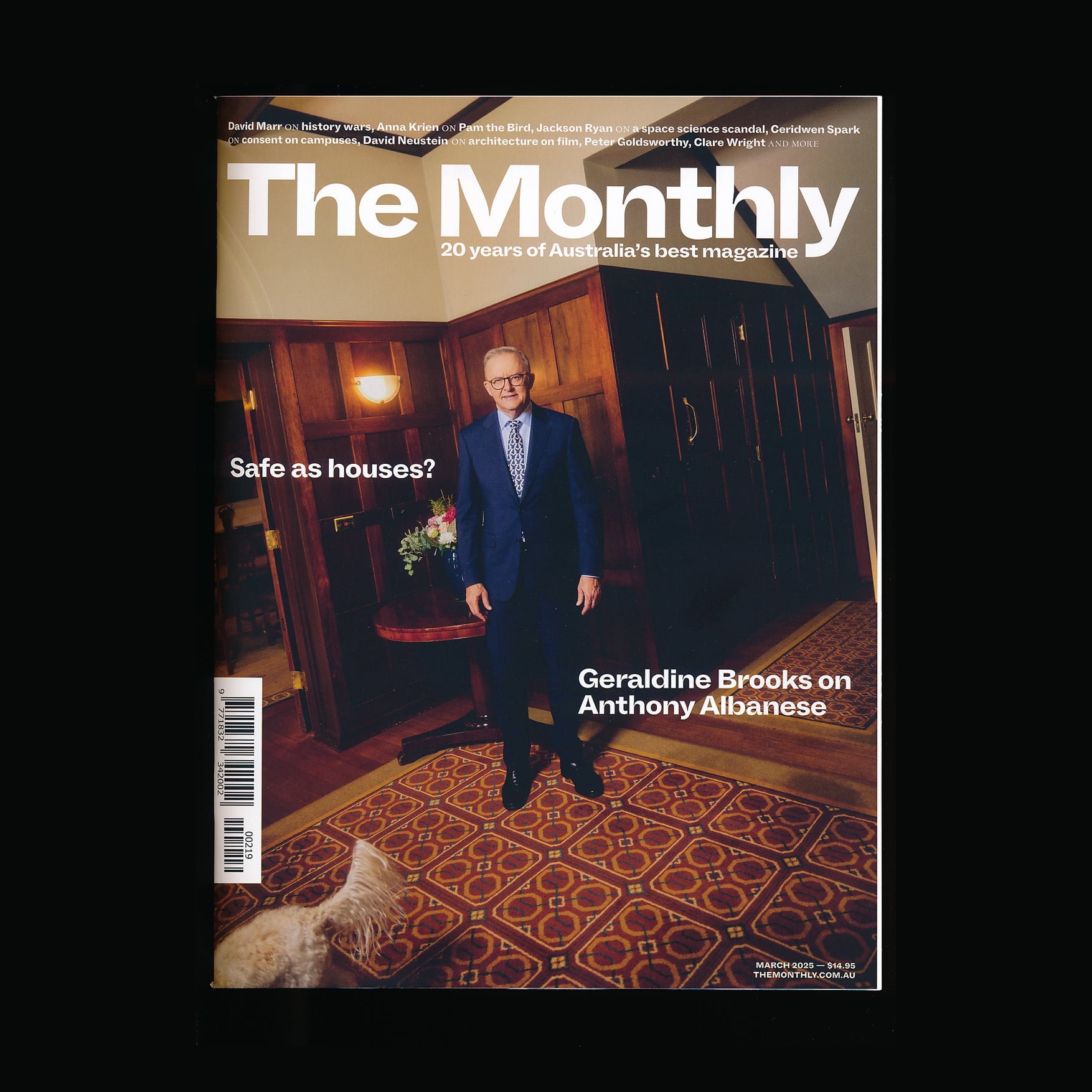
The Monthly March issue 2025
$14.95
The March Monthly is here, and our cover story finds a Pulitzer Prize–winner spending time with the prime minister on the eve of a federal election. Anthony Albanese discusses his first term with Geraldine Brooks: the highs, the lows, the general state of Australia’s democracy. It’s a clear-eyed account from a writer famed for her ability to balance the personal narrative and the grand narrative. Back in Australia over Christmas, from her base in the US, Brooks sat down with the PM in the Lodge, and then spent a day with him as he swore in a new ministry and fine-tuned his approach to the upcoming election.
It’s 30 years this year since the publication of Helen Garner’s divisive classic The First Stone, and the conversation and social mores around consent, power and sex have become a mainstream consideration. Ceridwen Spark returns to the specific milieu of the university campus, asking how much – in the wake of the #MeToo movement – things have changed and our understanding of power dynamics might have grown.
When, last year, David Marr published his latest book, Killing for Country, an account of his family’s involvement in atrocities through Queensland’s brutal Native Police, he anticipated an outcry from the usual suspects on the right of Australian politics. This seemed a reasonable assumption: for year’s Marr had seen his work – particularly his writings on the Stolen Generations – co-opted and pilloried as part of our so-called history wars. What he discovered instead was that in 2025 the culture wars, and the politicisation of history, are being fought in different ways, on different frontiers. Federal politics is now home to such skirmishes, and truth-telling is the biggest casualty.
If you’ve driven on Victorian roads in the past few months, and your gaze has tended upwards, to billboards and silos, buildings and random structures, you may well be acquainted with the unmistakable shape of Pam the Bird. Jack Gibson-Burrell is the 21-year-old behind the high-flying, widely distributed bird, and he’s been in court this month defending himself against multiple charges. One person’s street art is another’s “graffiti vandalism”, and the debate has raged in court and out about whether it constitutes a threat to the city. Anna Krien explores the story of Pam the Bird.
And The Monthly’s architecture critic David Neustein turns his attention to the big screen, with new release The Brutalist attracting Oscar buzz. While we’ll find out today whether that was warranted, Neustein’s more interested in what this depiction of architecture on film tells us about current attitudes – social, artistic and political – towards the building of public edifices and our physical cities.
All this and Jackson Ryan on a scandal in space science, Margaret Simons continues to chase up the death of a think tank, Clare Wright goes electric, Peter Craven mentions the Scottish Play and more besides. All in the March issue of Australia’s best magazine.
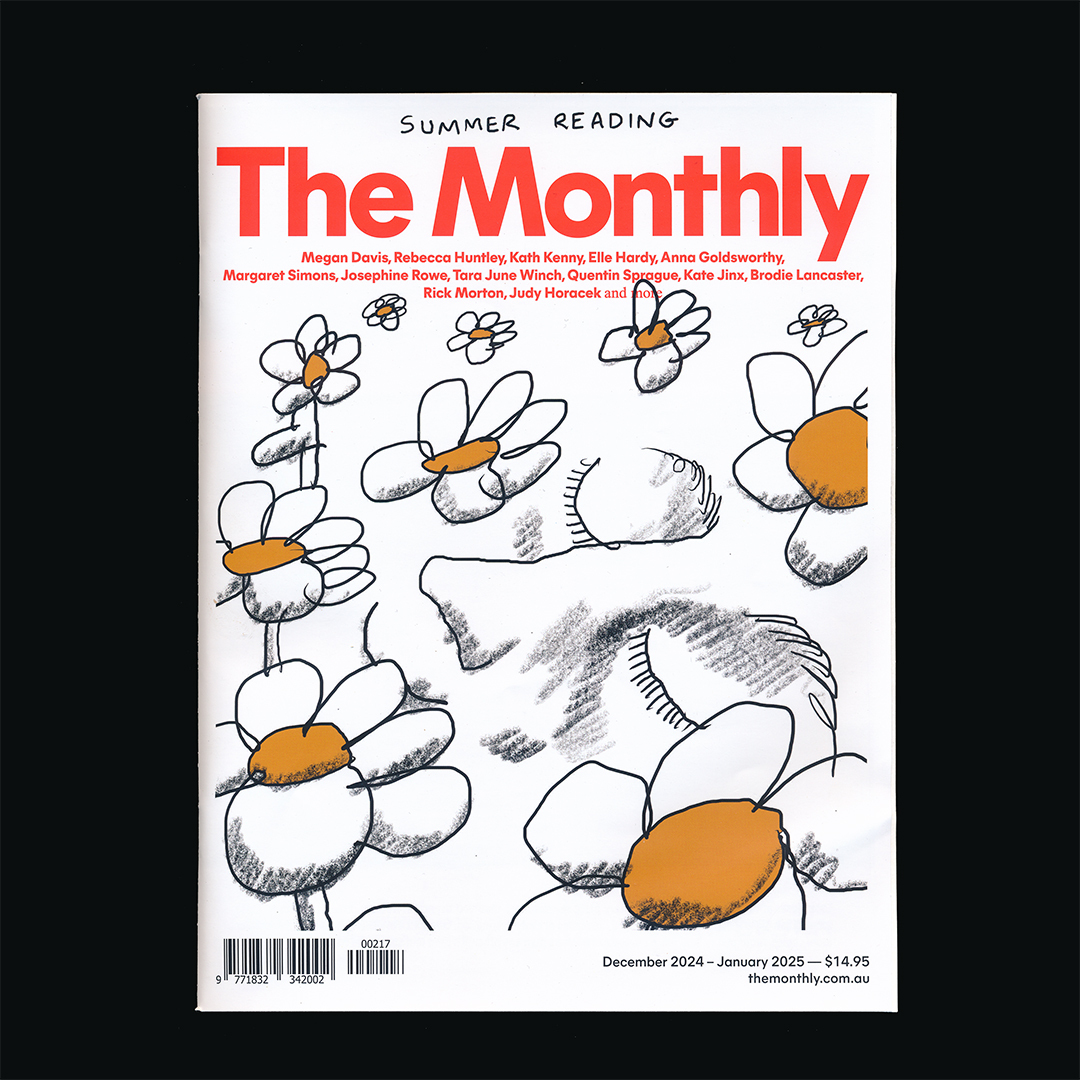
The Monthly December 2024 — January 2025 issue
$14.95
Each year, The Monthly’s December – January bumper double issue offers a treasure trove of long reads and indulgent pleasures to get readers through their summers. Twice the length, it’s well suited to sit dog-eared on the coffee tables of many Australian beach houses while the cricket burbles on the radio, and the smells of sunscreen and insect repellent jostle for supremacy.

The Saturday Paper x Celeste Mountjoy mug
$29
Read The Saturday Paper while sipping from our ceramic mug, made in collaboration with local illustrator Celeste Mountjoy aka “Filthyratbag”.

The Monthly November issue 2024
$14.95
The November issue of The Monthly is full of writing that considers the kinds of communities – cultural, technological, political and social – that we build around ourselves, and the successes and failures in how they operate and serve us. The cover essay comes from Anna Krien, who is considering the odd case of the digital frontier: once loaded with promise and hope for a more connected future; now the home of dislocation and isolation. Krien takes in a generation’s worth of predictions and analysis, asking what we’ve lost in our willingness to subjugate our entire lives to the devices in our hands.
Failures of government, such as those revealed in the robodebt royal commission, tell us much about not just the motivations and blindnesses of our political leaders but also the systems and expectations of public service that underpin their approach to the business of governing. When it comes to setting the tone and protecting our institutions, perhaps no role in the public service is more responsible than the head of the Department of the Prime Minister and Cabinet. For his essay, Jason Koutsoukis asks around about the person currently in the role: the intellectual, thoughtful Glyn Davis.
Don Watson’s reputation as one of Australia’s foremost and most consequential speechwriters means that when he suggests a speech for Kamala Harris on the eve of a US election, it’ll be worth reading. And this is a speech with a difference. Watson’s not in the prognostication business: this is neither concession nor victory speech. There are, he suggests, words that need to be spoken by an American leader regardless of the election outcome. It’s part mea culpa, part promise for what may yet come. Fresh from his Quarterly Essay tracking the race between Harris and Trump, Watson is at his acute best.
Sebastian Smee declares himself a longstanding fan of the late Canadian writer Alice Munro, one of the undisputed geniuses of the short story form. Following revelations after her death that fundamentally changed how the public understood Munro, Smee reconsiders her work – not despite the uncomfortable facts revealed about her personal failings, but in light of them. It’s an extraordinary and thoughtful work of literary analysis.
Plus Marieke Hardy and Andrea Goldsmith, Virginia Trioli and Kate Fitz-Gibbon, personal essays and criticism, native rodents and musical appreciation. The November Monthly has it all.
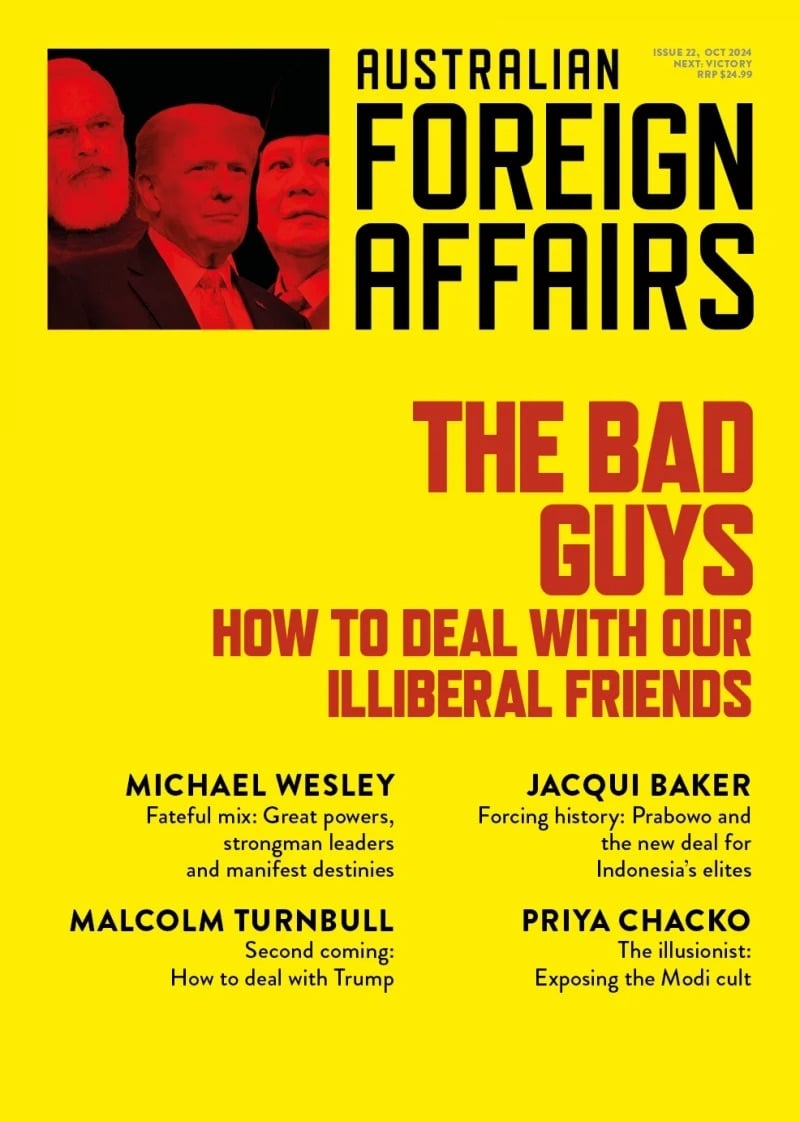
Australian Foreign Affairs issue 22
$24.99
The Bad Guys
How To Deal With Our Illiberal Friends
This issue of Australian Foreign Affairs examines the consequences for Australia as some of its most important friends and partners - including India, Indonesia and the United States - shift towards authoritarianism and illiberalism. As Donald Trump seeks to return to the White House, "The Bad Guys" looks at how Australia should deal with ostensibly like-minded countries which are sliding away from democracy and how to respond to the leaders overseeing this dangerous and unpredictable turn.
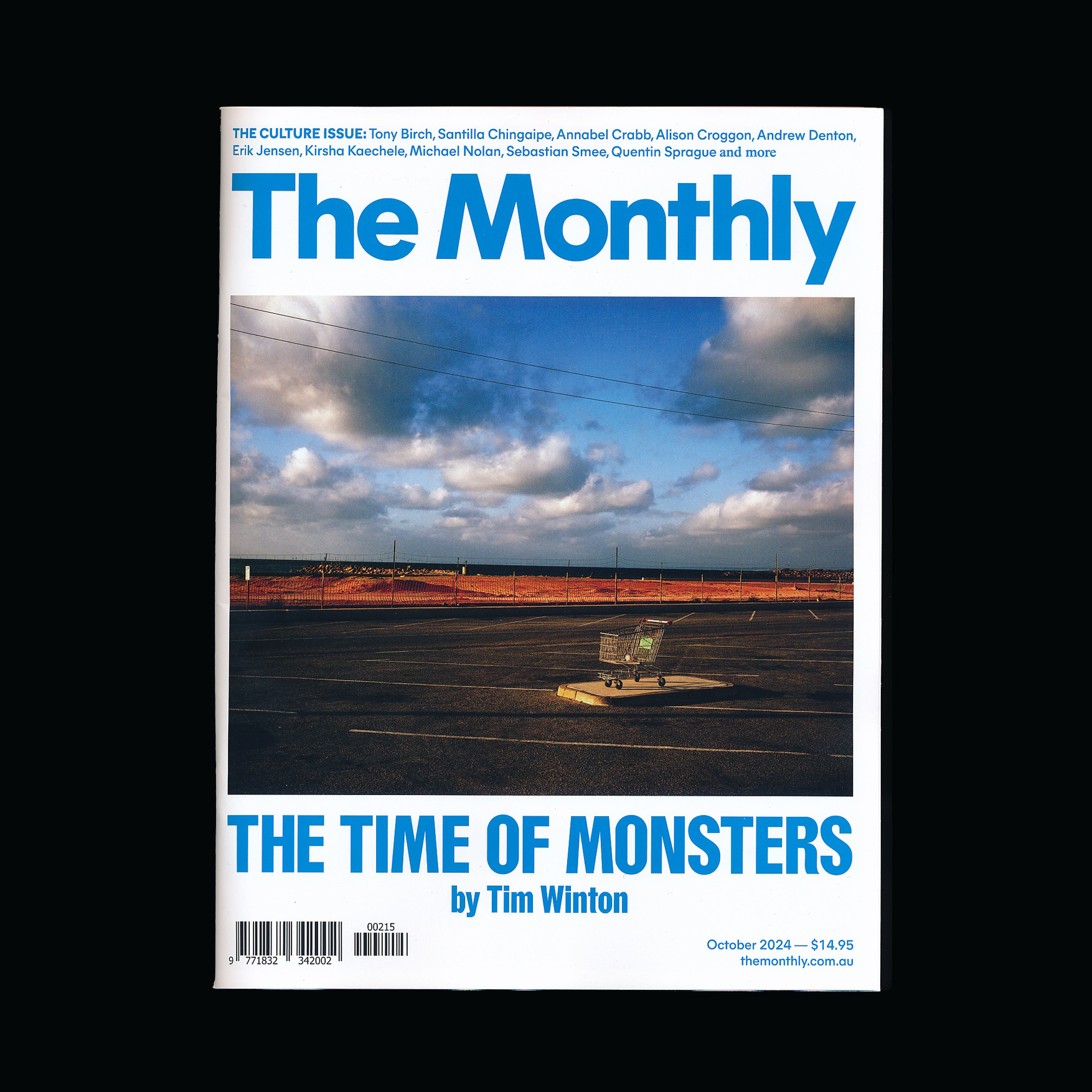
The Monthly October issue 2024
$14.95
Italian philosopher Antonio Gramsci famously observed: “The old world is dying, and the new world struggles to be born: now is the time of monsters.” In our politics, our technology, the planet’s very climate, we often find ourselves stuck between the old world and the new. While this liminal space may give us monsters, our hope is that it can also be a breeding ground for great art, for ideas and conversations, for meaningful journalism.
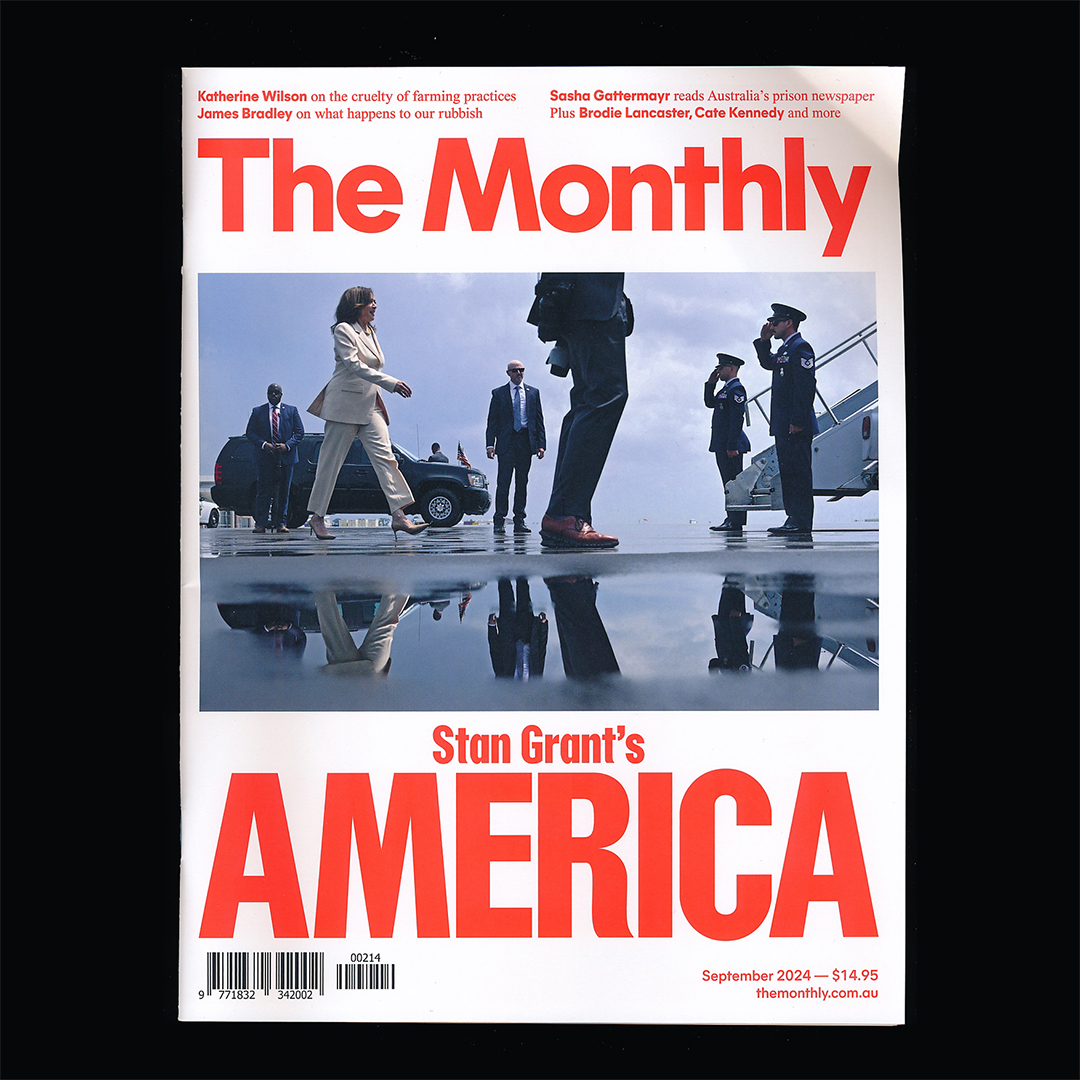
The Monthly September issue 2024
$14.95
In our September cover essay, Stan Grant unpacks the story of America: its promise, its self-belief and, to his mind, its collapse. In a wide-ranging reimagining, Stan tackles the self-serving lies of national exceptionalism that underpin the Trump/Harris showdown, and reckons with what the rhetoric of the Great American Experiment means, and what it might mean if it has already failed.
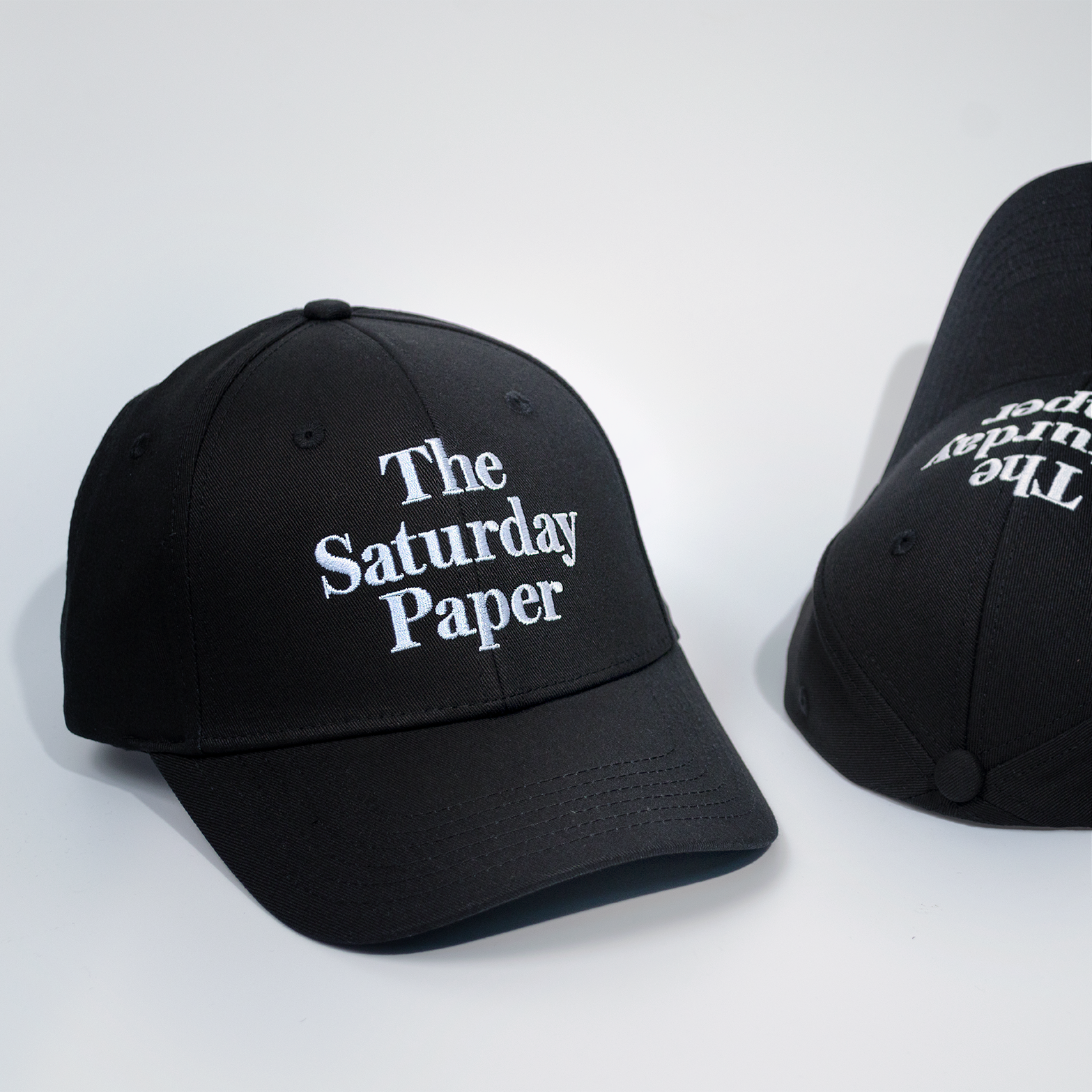
The Saturday Paper cap
$49
Show your love for The Saturday Paper with this classic, embroidered cap designed in collaboration with Alpha60.
The Saturday Paper cap is made from 100 per cent cotton and is available in black with a white, stacked masthead. Enjoy one-size-fits-all comfort with an adjustable backstrap and steel clasp.
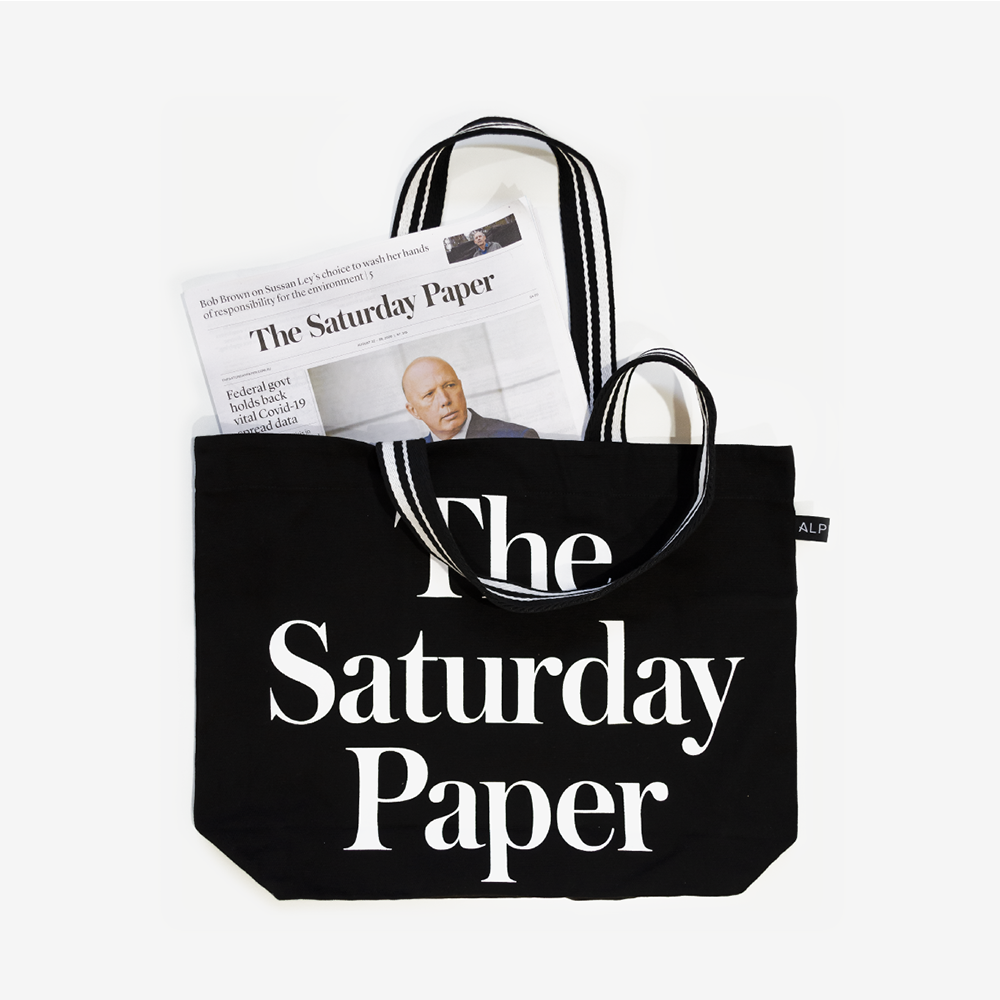
The Saturday Paper tote
$49
In collaboration with Alpha60, The Saturday Paper has designed a limited-edition tote bag.

The Monthly August issue 2024
$14.95
The news that, after more than 14 years of public overtures and backroom negotiations, Julian Assange was finally to be freed and sent home to Australia felt not just momentous but like the end of an unhappy chapter for our notions of public speech and journalistic freedoms. It was an impression bolstered by the alacrity with which our lawmakers publicly celebrated the outcome: prime ministers past and present, attorneys-general and other ministers lined up to herald this as a consequential moment. In the August issue of The Monthly, we consider the question of how earnt that feeling might be, from two distinct but parallel perspectives. Kieran Pender looks as the fortunes of whistleblowers and whistleblowing laws under the Albanese government, while Malcolm Knox asks whether lovers of serious journalism have cause for confidence about what comes next.

The Monthly July issue 2024
$14.95
This July, The Monthly has the context and the inside word on recent movement at News Corp Australia. The arrival at the Holt St offices of executives Lachlan Murdoch and Rebekah Brooks signalled that the much-anticipated cutbacks were imminent. As the company moves to its post-Rupert era, Jonathan Green considers what the changes signal about a shift in culture at the media behemoth, and the ways in which they reinforce business as usual.
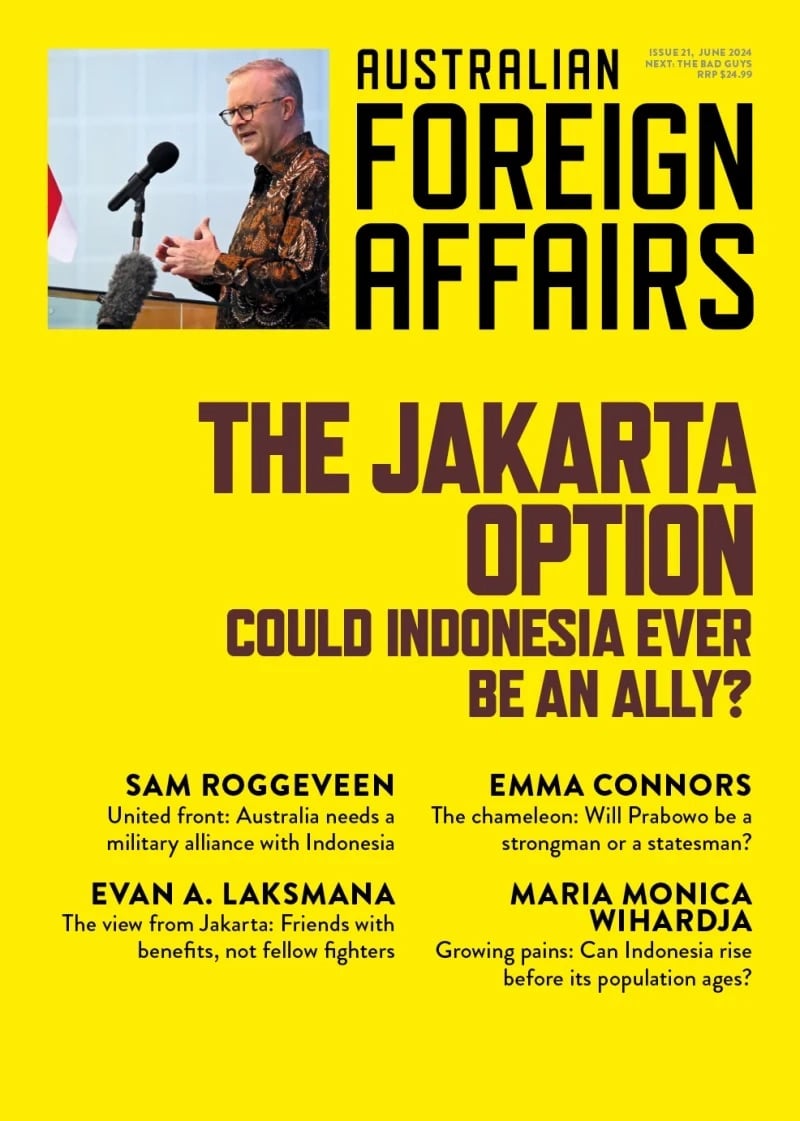
Australian Foreign Affairs issue 21
$24.99
The Jakarta Option
Could Indonesia Ever Be an Ally?
Canberra and Jakarta face similar threats in a changing Asia. Could this lead to closer ties?
This issue of Australian Foreign Affairs examines Australia’s relationship with Indonesia and the prospects of the two neighbours working together to boost their collective security as tensions in Asia increase.
"The Jakarta Option" looks at how Canberra should adapt to a changing Indonesia as the world’s fourth-most populous nation enters a new era under its next president, Prabowo Subianto.

The Monthly June issue 2024
$14.95
The June issue of The Monthly is full of smart, urgent essays that speak to the current moment: Laura Tingle on the failures of civility in public discourse; Katherine Wilson on a story about intimidation, surveillance and standover tactics in the fight over NSW’s forests; and for our cover story, Kate Manne writes about the future of misogyny in the aftermath of the Bondi Junction attack.
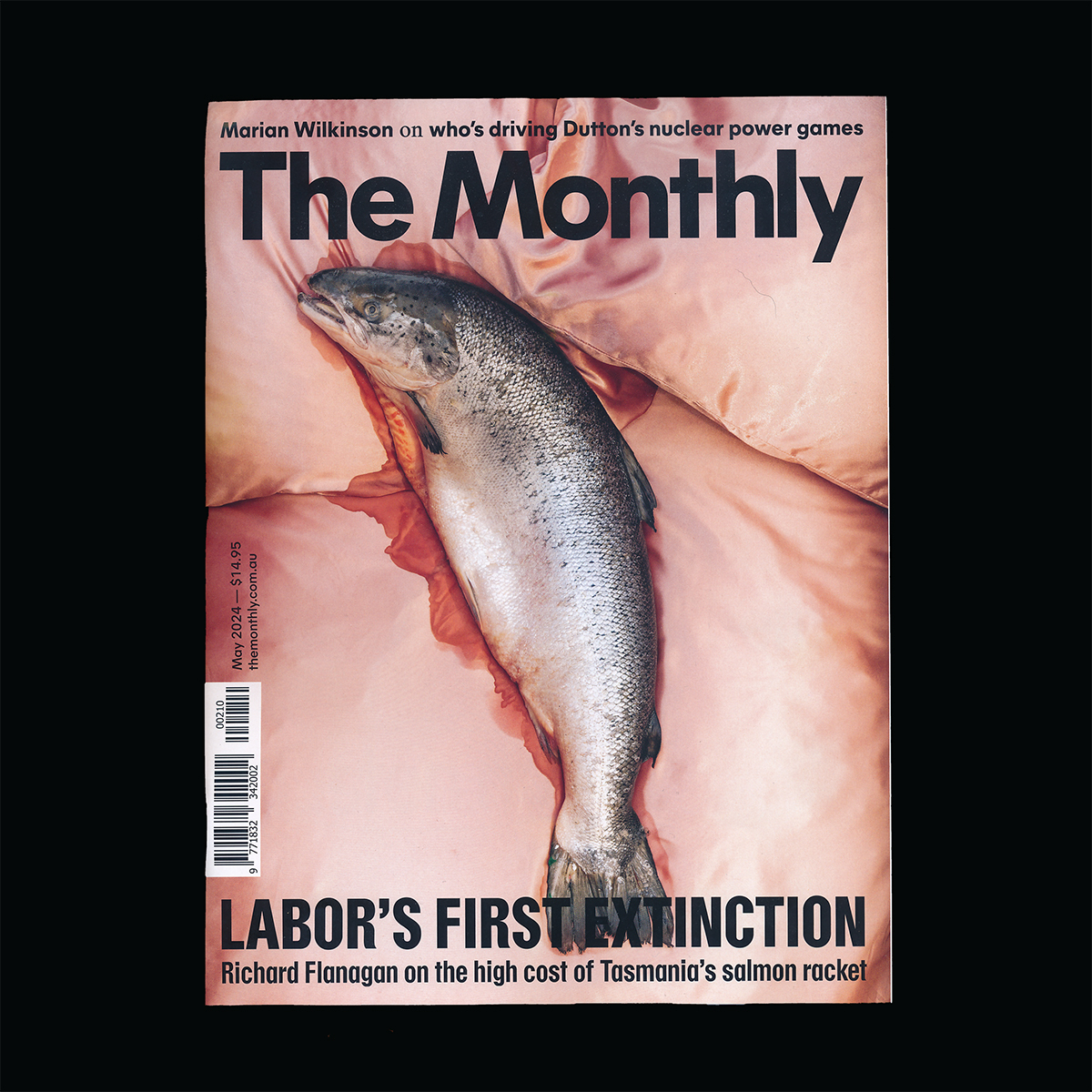
The Monthly May issue 2024
$14.95
The May edition of The Monthly is here, and it brings with it groundbreaking essays from two of Australia’s most respected writers, illuminating the dark corners of environmental and energy politics that have plagued industry and poisoned public discourse.
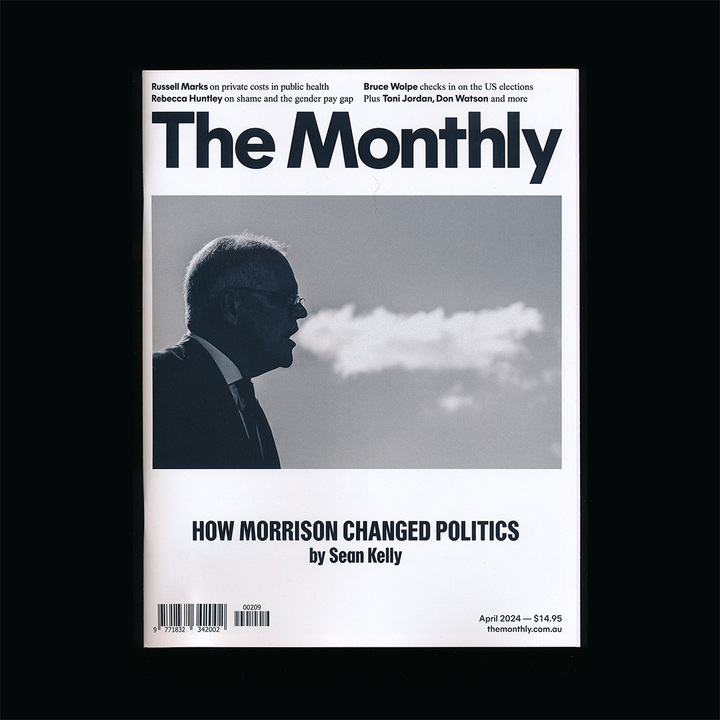
The Monthly April issue 2024
$14.95
The April issue of The Monthly is on newsstands, featuring Sean Kelly on how Scott Morrison changed our politics, Rebecca Huntley on what the gender pay gap really means, and Russell Marks on whether public hospitals should allow patients to pay for reduced waiting times, as well as Jock Serong on the remarkable story of menswear retailer Fletcher Jones and Ceridwen Spark’s profile of Samoa’s first female PM, Fiamē Mata‘afa.
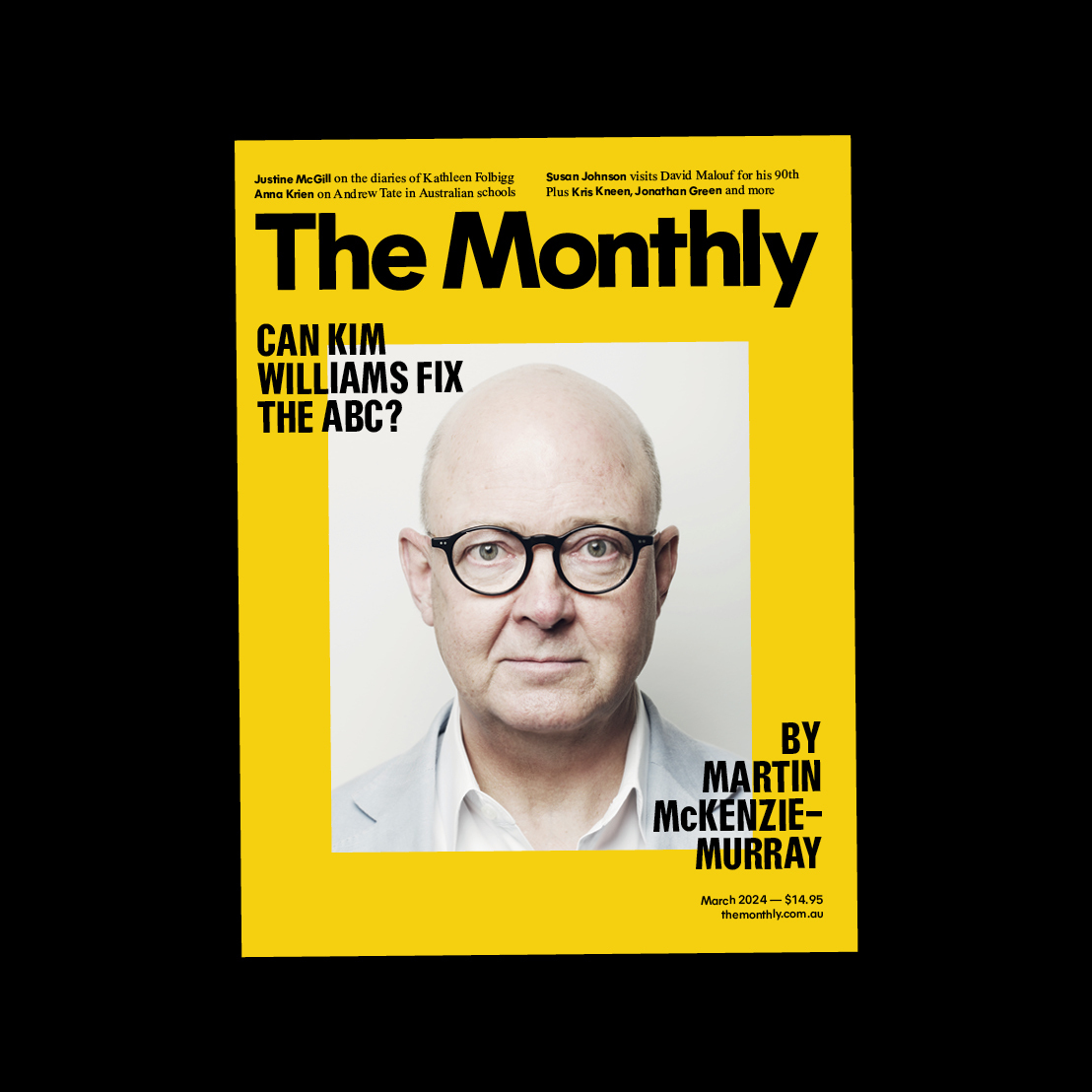
The Monthly March issue 2024
$14.95
Our cover story for The Monthly’s March issue, courtesy of Martin McKenzie-Murray, is a profile of the new ABC chair, Kim Williams. With the ABC facing both internal and external headwinds, is Williams the right man for the job of protecting and strengthening the national broadcaster?
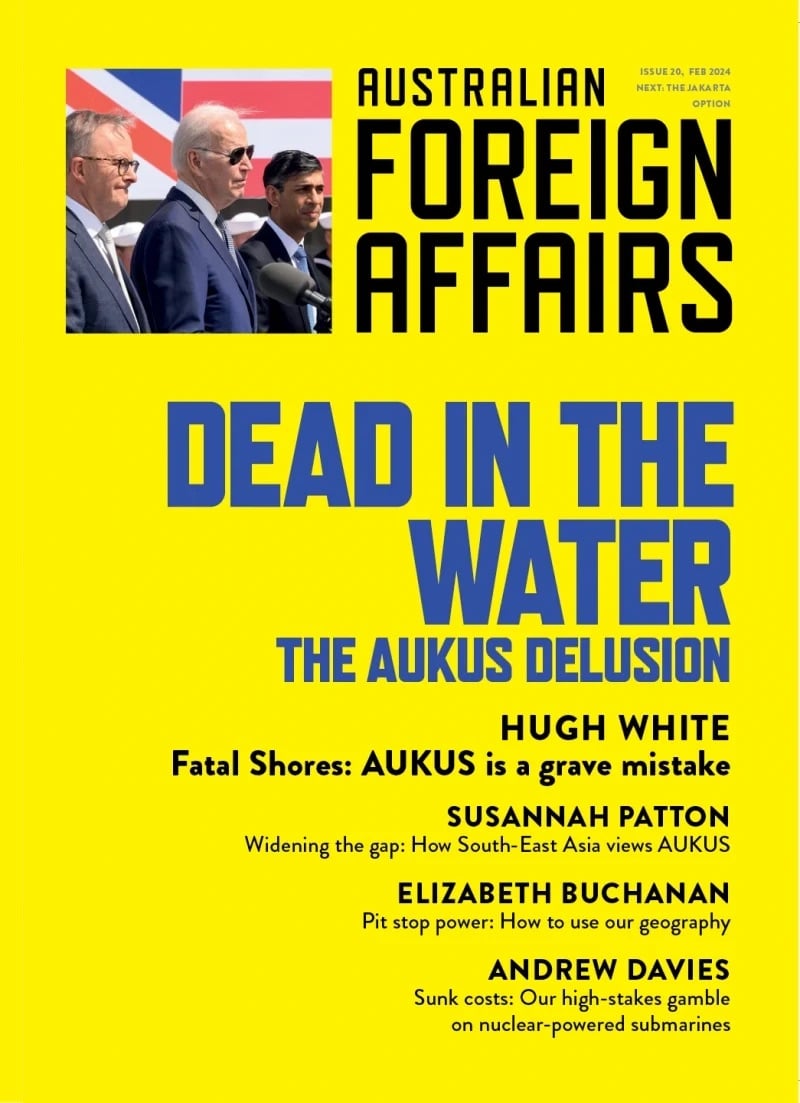
Australian Foreign Affairs issue 20
$24.99
Dead in the Water
The AUKUS Delusion
This issue of Australian Foreign Affairs examines Australia’s momentous decision to form a security pact with the United States and the United Kingdom that includes an ambitious, expensive and risky plan to acquire nuclear-power submarines – a move that will have far-reaching military and strategic consequences.
"Dead in the Water" looks at whether the AUKUS deal will enhance or undermine Australia’s security as tensions between China and the US rise, at the impact on Australia’s ties with its regional neighbours, and at whether the submarines plan is likely to ever be achieved.
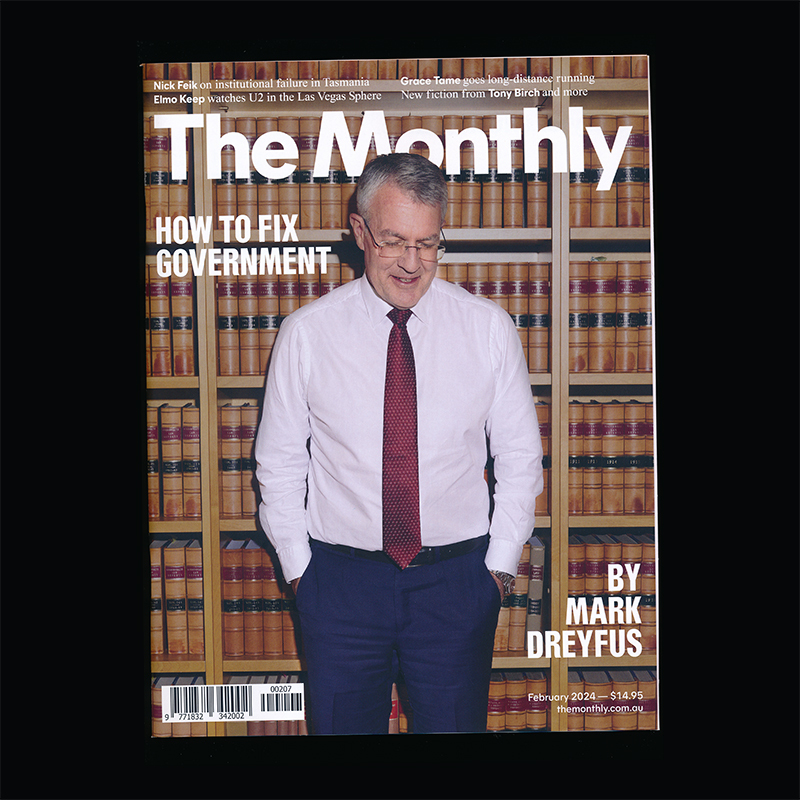
The Monthly February issue 2024
$14.95
The February issue is kicking the year off in style – just as 2023 began with the federal treasurer setting the economic agenda, 2024 will open with an essay from the attorney-general, Mark Dreyfus, articulating a vision for restoring government integrity.
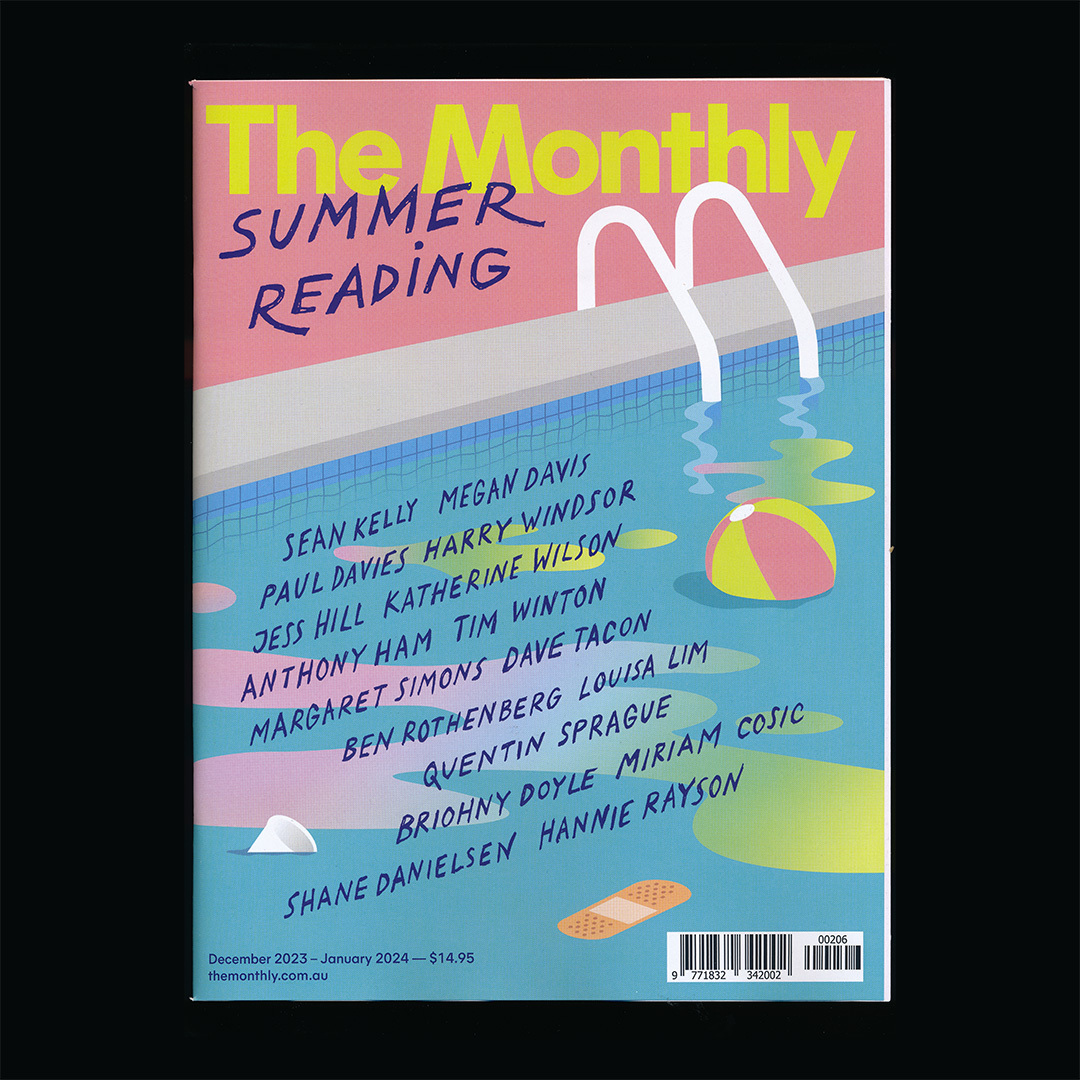
The Monthly December 2023 — January 2024 issue
$14.95
Our annual bumper Summer Reading issue is here to see you through December and January in a wide variety of thoughtful, surprising and entertaining ways.
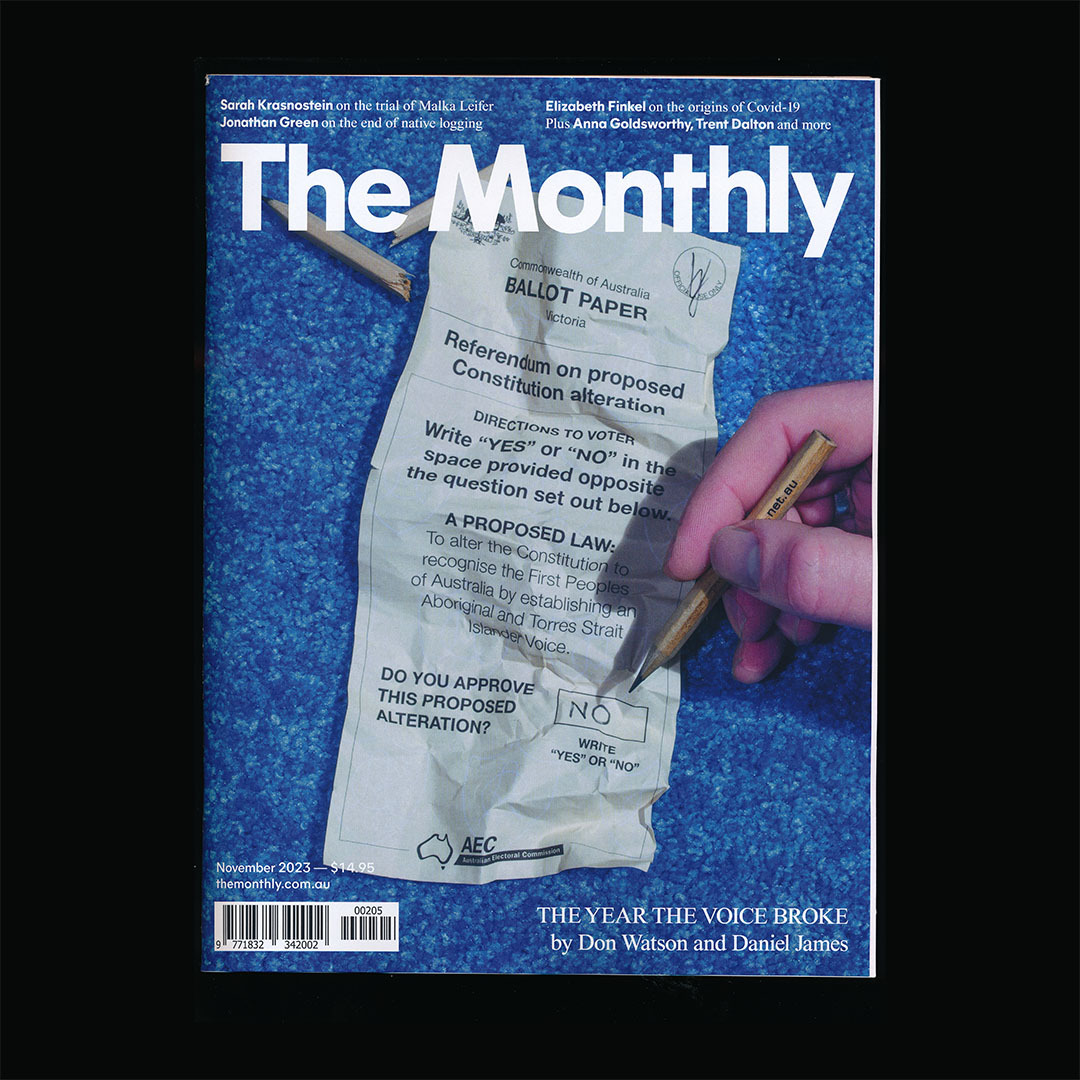
The Monthly November issue 2023
$14.95
The November issue of The Monthly hits newsstands today, and it’s packed with essays taking stock of where Australia finds itself as 2023 winds down.
In the aftermath of the Voice referendum, Daniel James and Don Watson traverse the result with two searing works of commentary.
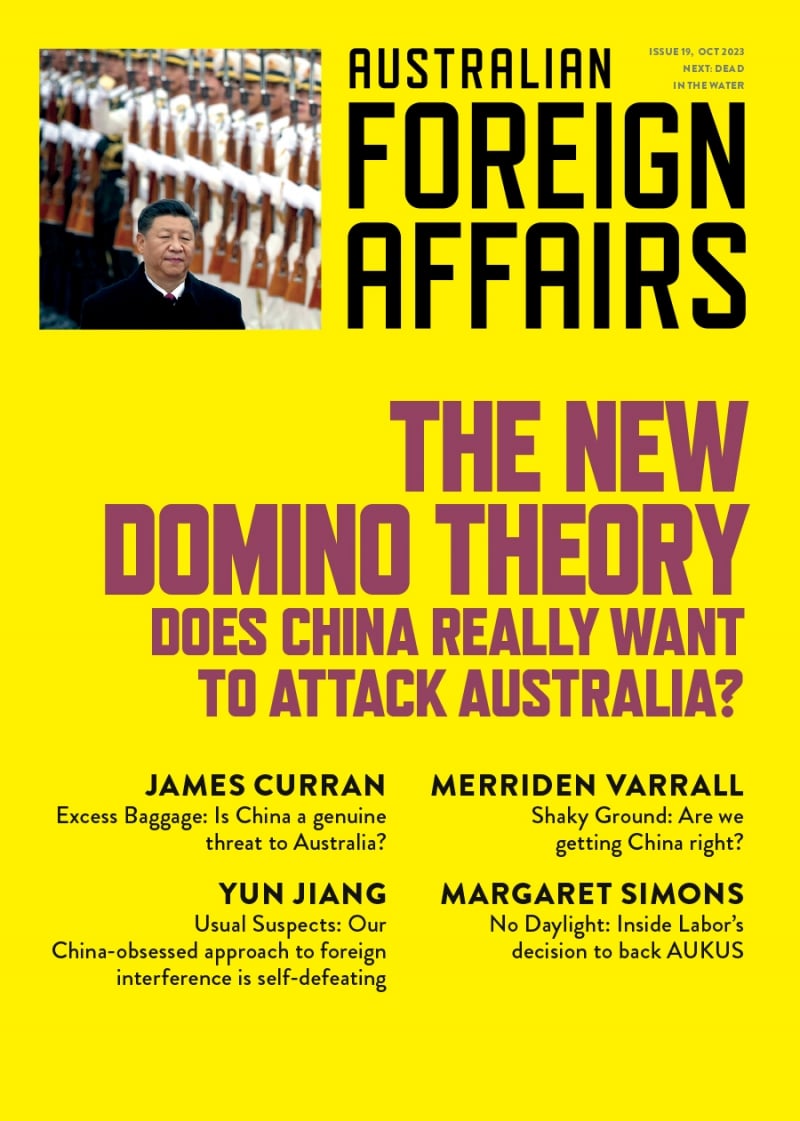
Australian Foreign Affairs issue 19
$24.99
The New Domino Theory
Does China really want to attack Australia?
This issue of Australian Foreign Affairs examines China’s ultimate goals as an emerging superpower, including the extent of its territorial ambitions.
"The New Domino Theory" looks at Australia's place in China’s long-term plans and at the threat – if any – that Beijing poses to Australian security, politics and society.
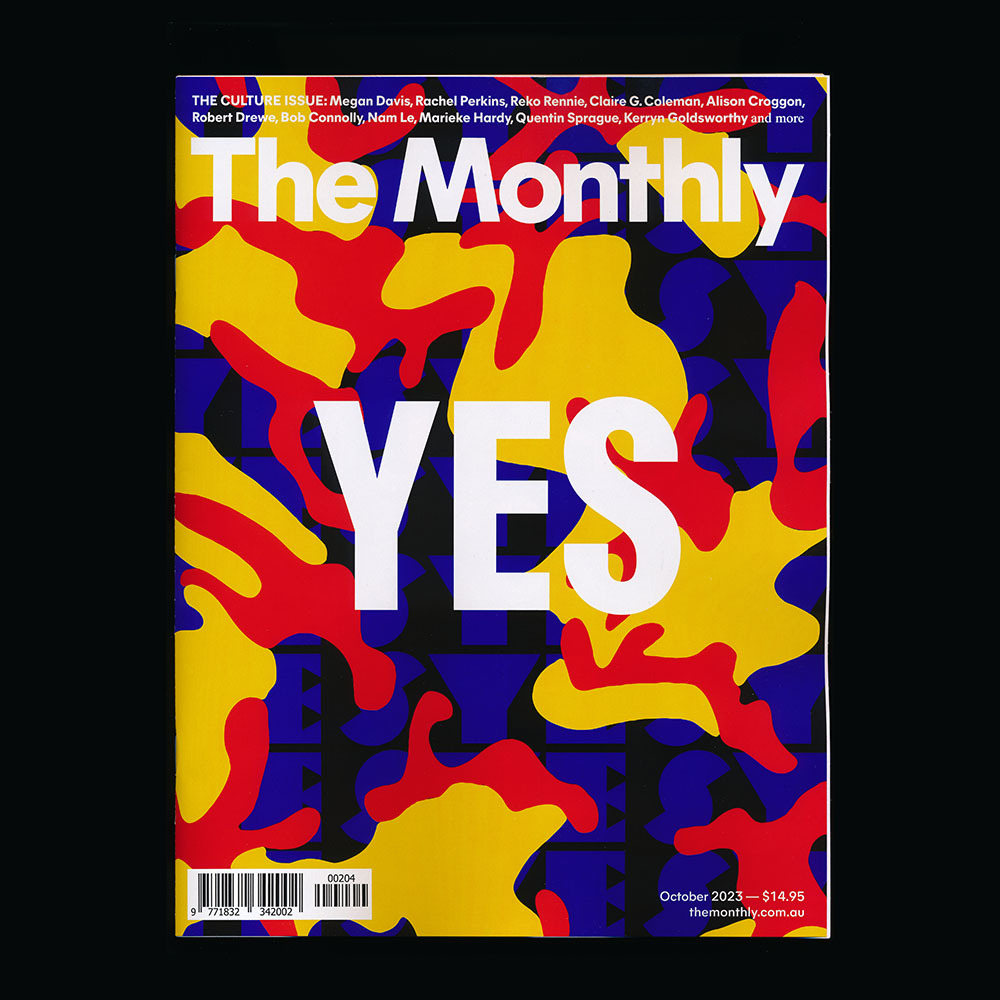
The Monthly October issue 2023
$14.95
October brings The Monthly’s annual Culture issue, celebrating and interrogating the best in arts and culture for today. It’s also a special edition that – on the eve of the referendum for the Voice to Parliament – pins our colours to the mast and shouts “Yes” from the first page.
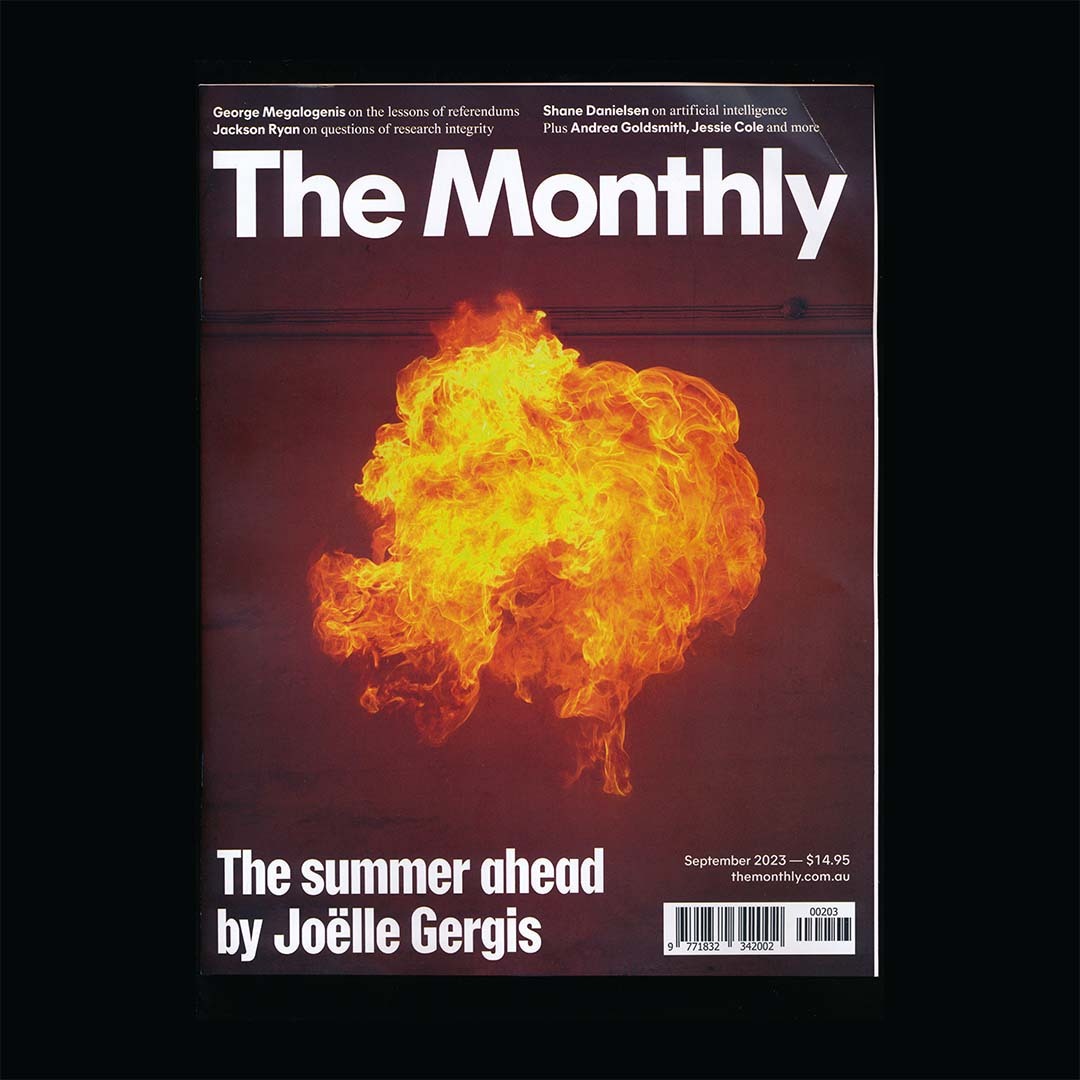
The Monthly September issue 2023
$14.95
This September, The Monthly is looking at the past for lessons, and to the future with trepidation. For the cover essay Joëlle Gergis presents grim prognostications about the upcoming summer, while George Megalogenis reads the tea-leaves on the Voice referendum, Shane Danielsen makes sense of the rise of AI on our screens, and Jackson Ryan investigates how one university has dealt with allegations of research misconduct.
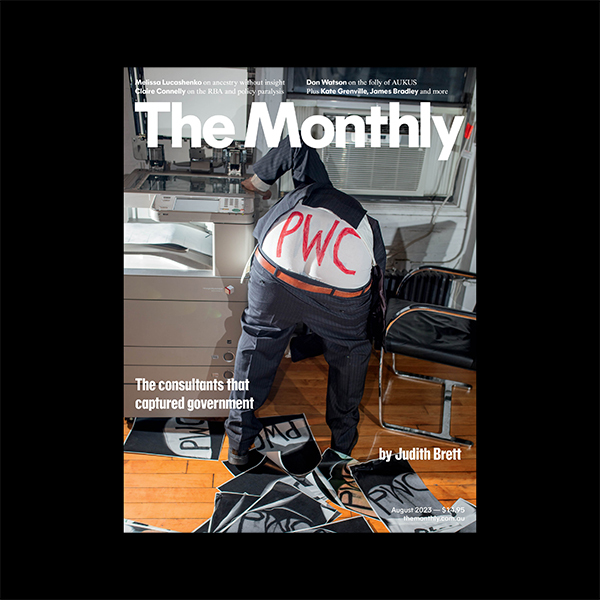
The Monthly August issue 2023
$14.95
The August issue of The Monthly is here, with multiple questions occupying its writers around the function and disfunction of our major institutions. Judith Brett, one of the country’s most astute observers of politics and Australian public life, delivers a cover story that unpacks the whole sordid PwC affair, and what it tells us about the outsourcing of government, of responsibility and of character. There’s also a major essay from Claire Connelly about what we need next from the Reserve Bank of Australia, and how reducing its level of influence in economic policy may be a damaging miscalculation.
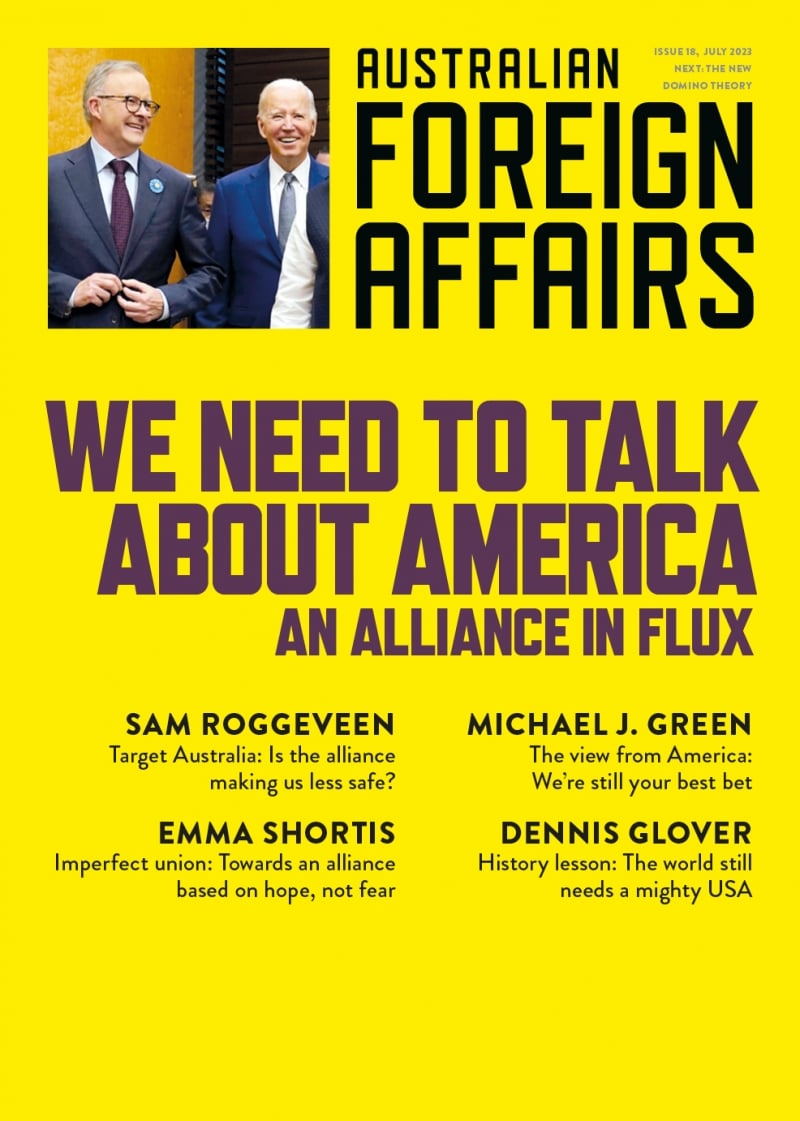
Australian Foreign Affairs issue 18
$24.99
We Need to Talk about America
An Alliance in Flux
This issue of Australian Foreign Affairs examines Australia’s evolving ties with the United States as the power balance in Asia changes and as Washington continues to face bitter domestic divides.
"We Need to Talk about America" looks at the future of the alliance in an era in which the US’s global role and stature – which once seemed so constant – are becoming less stable and less certain.
The Monthly July issue 2023
$14.95
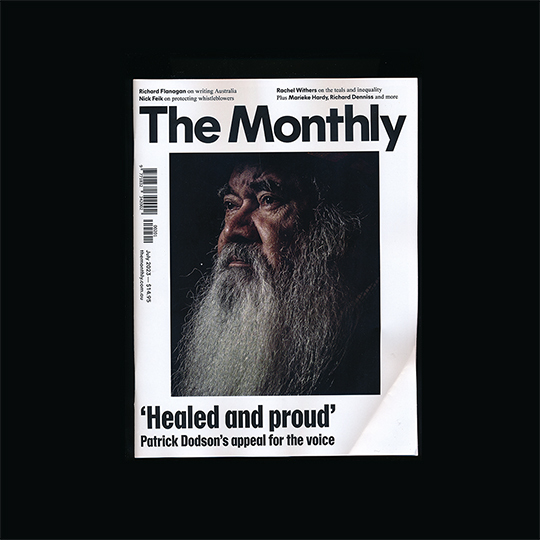
At the heart of the July issue of The Monthly is two major essays on the voice to parliament. Patrick Dodson, the Grandfather of Reconciliation, shares his account of a life’s work fighting for recognition and justice leading up to the referendum later this year. It’s a singular, powerful treatise on why the nation needs to vote “Yes” to move forward. And Richard Flanagan, one of our finest novelists, explores why the symbolism of the vote – often cited as a sign of its inconsequential nature – is vitally important for being able to tell authentic, meaningful stories about who we are as a country. The pair of essays make this edition of the magazine essential reading.
The Monthly June issue 2023
$14.95
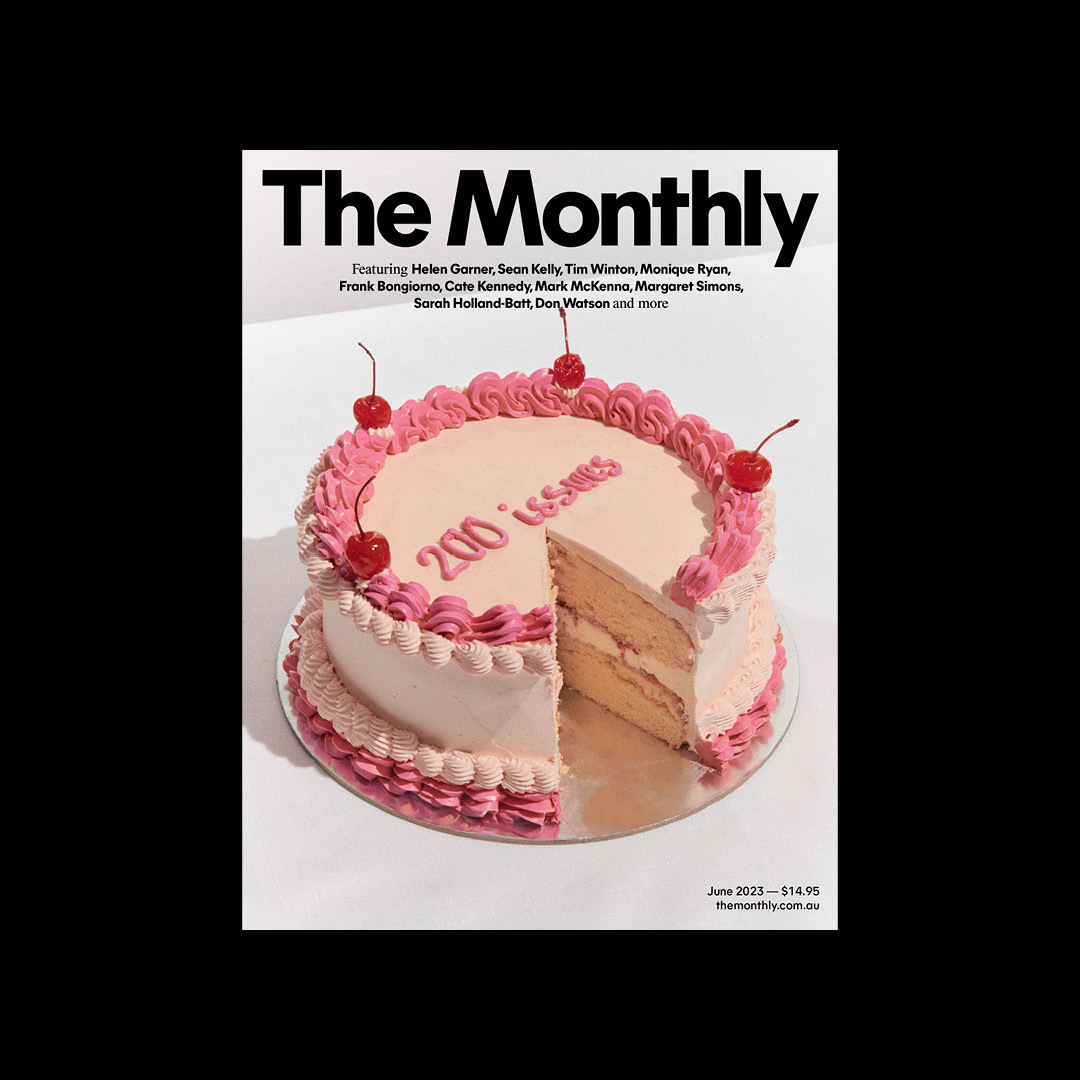
The June issue of The Monthly marks the magazine’s 200th edition, exemplifying why the nation’s only magazine dedicated to politics, society and culture has become an indispensable part of our conversation and our landscape.
Its lead essay is by Sean Kelly, who turns his analytical eye to the Albanese government's first year in office. In the words of Paul Keating back in 1996, “When you change the government, you change the country,” but has Labor’s return to power been matched by the shift that it promised?
The Monthly May issue 2023
$14.95
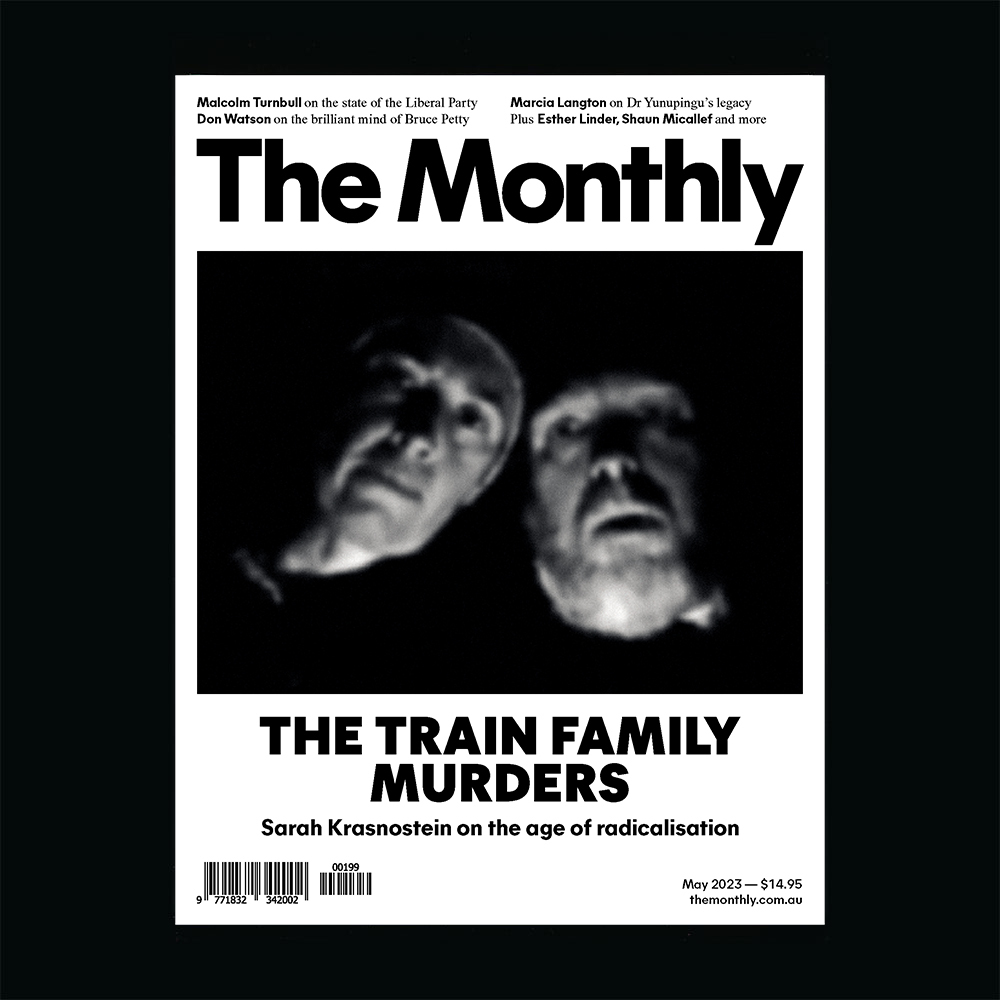
The May issue of The Monthly features a magnificent piece of writing: long-form journalism at its very best. Sarah Krasnostein turns her considerable skills to unfurling the story of Gareth, Nathaniel and Stacey Train, and the circumstances and beliefs that led them to kill two police officers, a neighbour, and ultimately themselves on their property in Wieambilla, Queensland late last year.
The Monthly April issue 2023
$14.95
The April issue of The Monthly takes in questions of local activity and the global arena: from politics, to business, to climate justice and beyond.
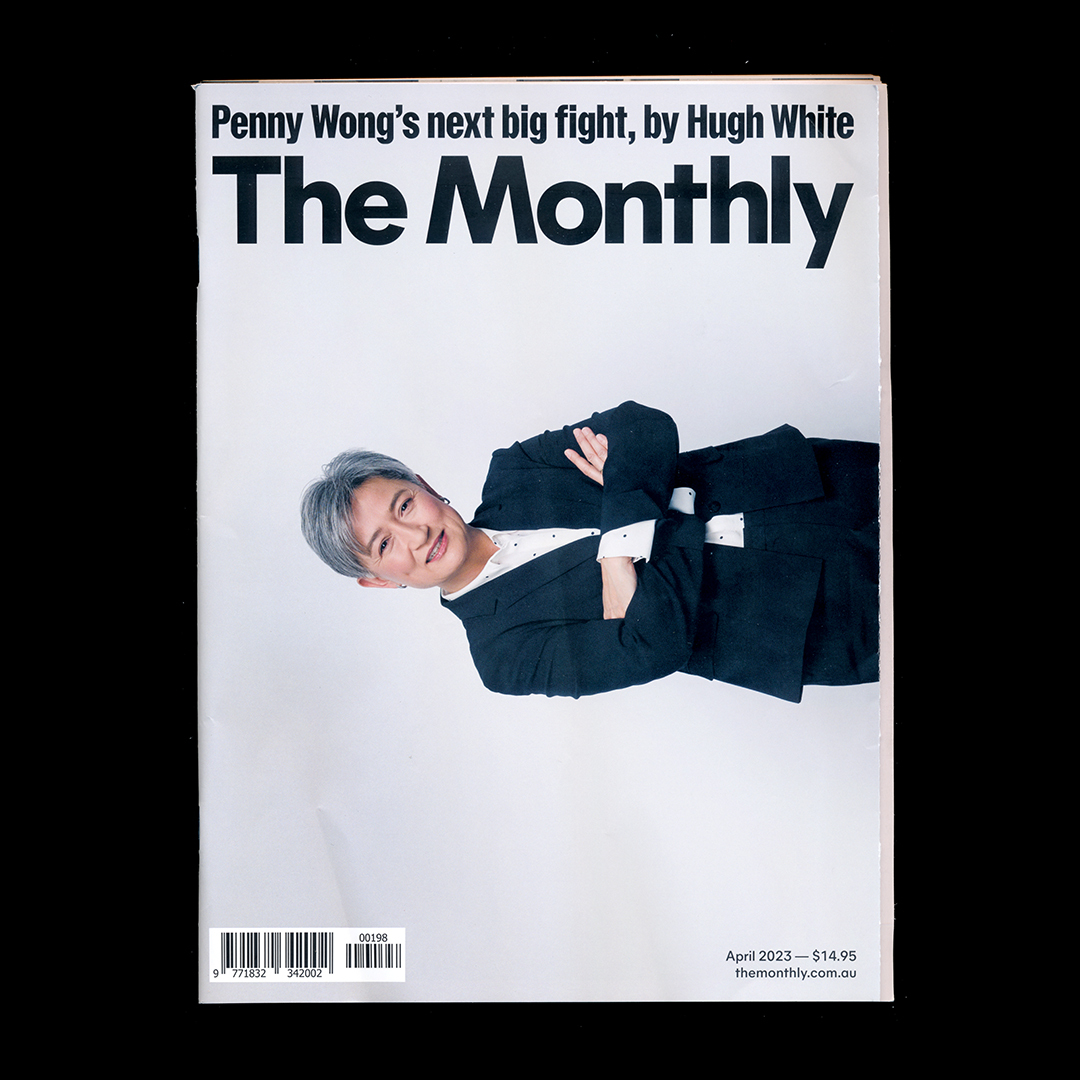
One of our finest analysts of geopolitics and foreign affairs, Hugh White, considers the challenges facing Foreign Minister Penny Wong in her portfolio, and what the AUKUS agreement means for our relationships in the region and beyond. It’s a measured, insightful and urgent analysis of where Wong is coming from and where she might go next.
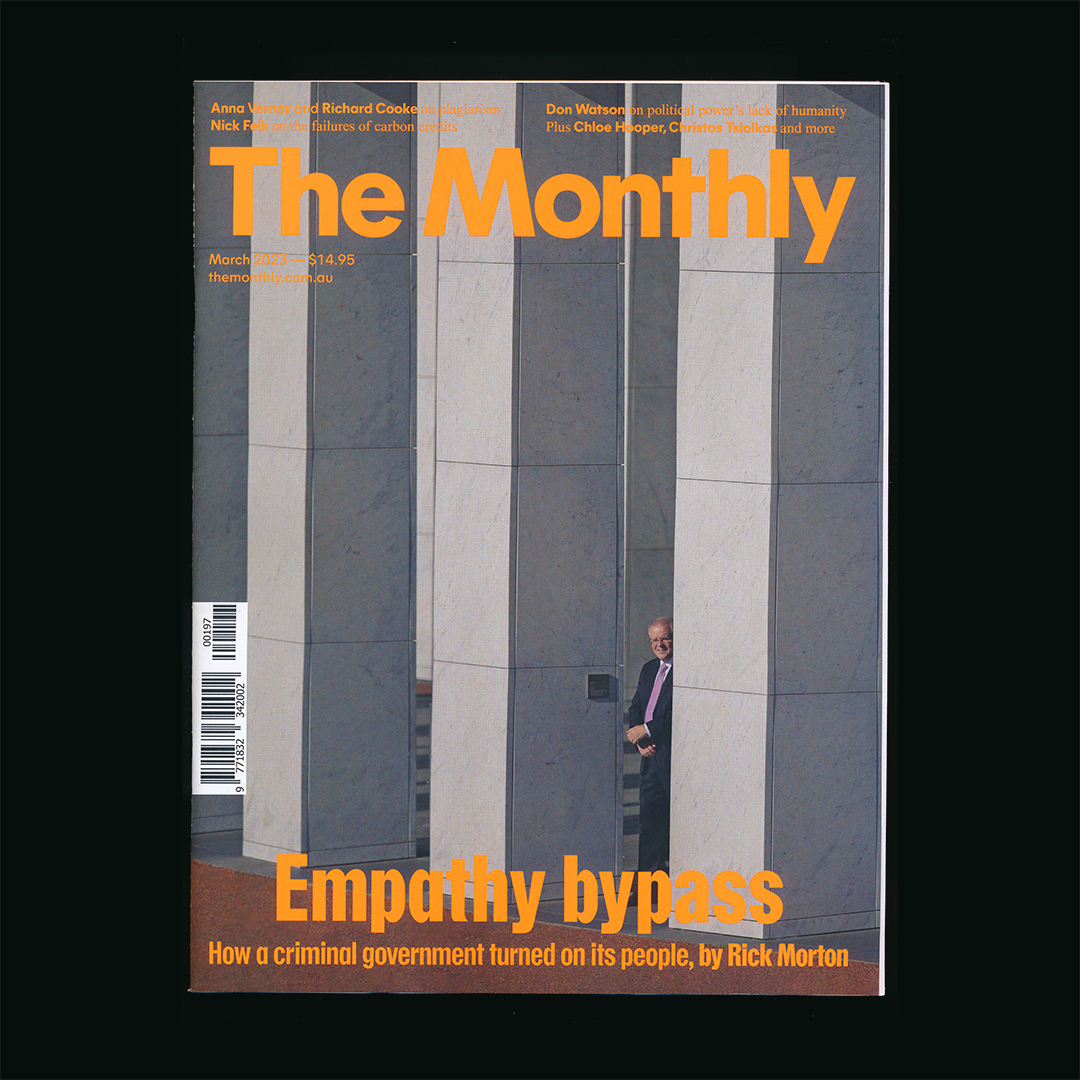
The Monthly March issue 2023
$14.95
There’s something about the criminally dishonest – scammers, grifters and con-artists – that makes for irresistible storytelling: the how, what, why of it all is endlessly fascinating. And the March issue of The Monthly is underpinned by three major essays that tease out some truly wild hustles and lies of recent Australian political and cultural life.
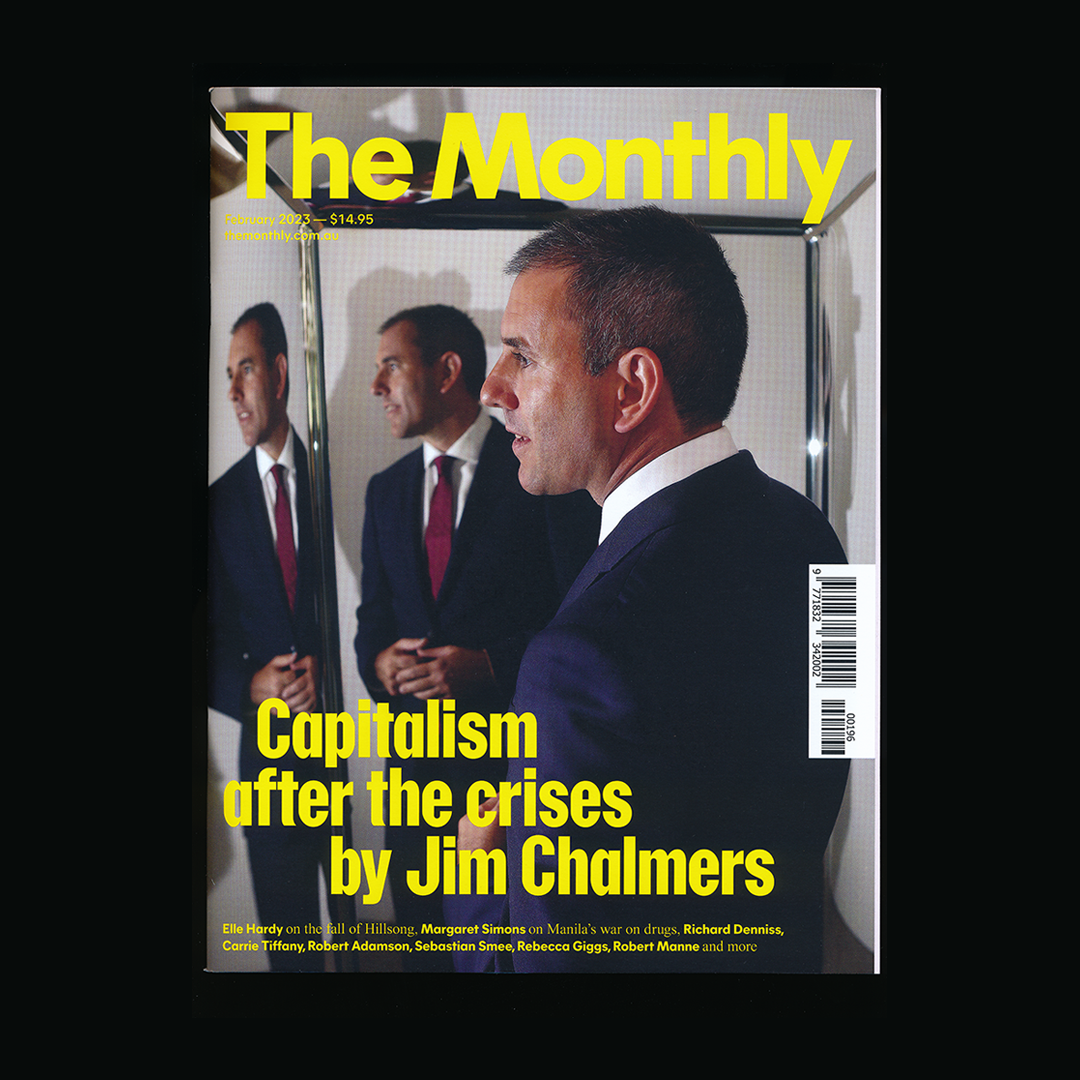
The Monthly February issue 2023
$14.95
The Monthly kicks off 2023 with a February issue that sets the agenda for the year ahead: our cover story, as the nation grapples with rising cost of living and economic uncertainty, is from the federal treasurer, Jim Chalmers. Laying out the challenges facing us – to our economy, our society and our environment – Chalmers argues for the place of values and optimism in how we might rethink capitalism itself. It’s a major essay and one that offers singular insights into how our government is regarding the road ahead.
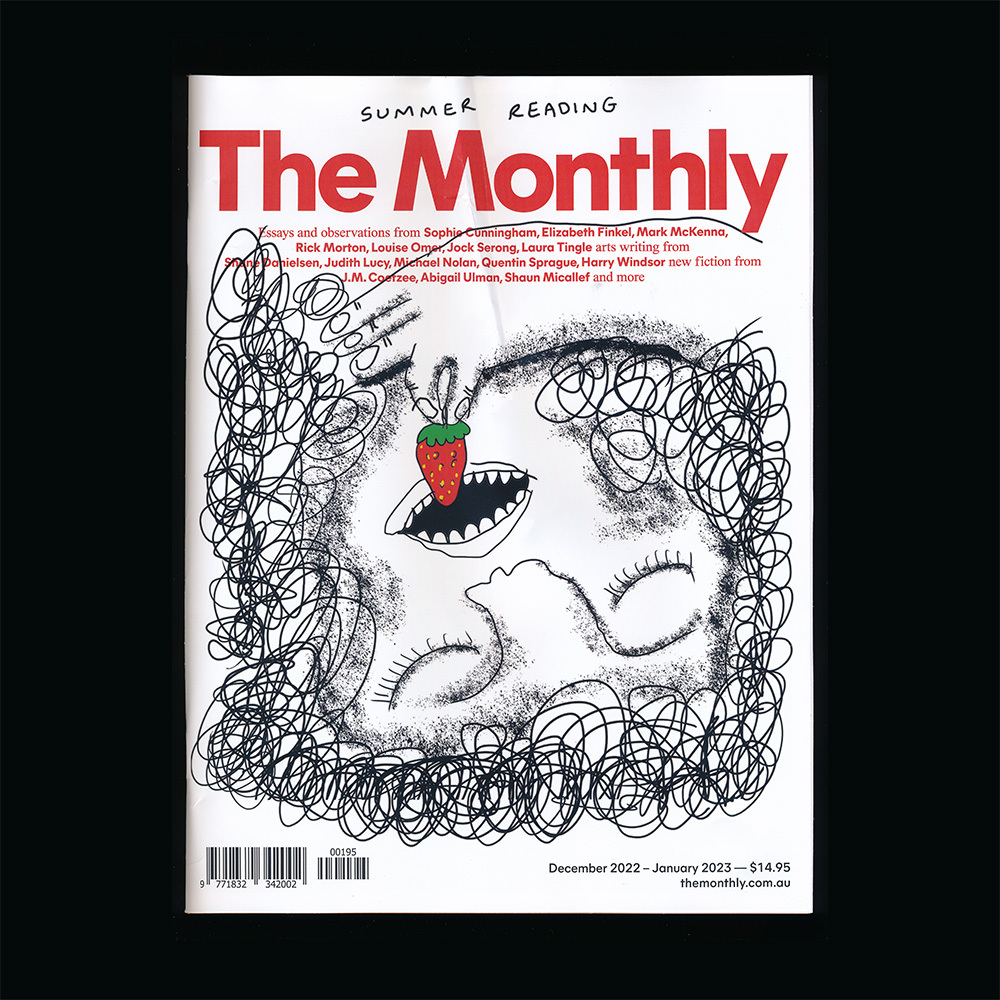
The Monthly December 2022 — January 2023 issue
$14.95
The most reliable indulgence over December/January – if the cricket is rained out, or the Boxing Day sales full of COVID coughs – is the extra reading time. And our annual Summer Reading double issue will get you through those long La Niña afternoons down at the beach. This year’s is an absolute bumper.
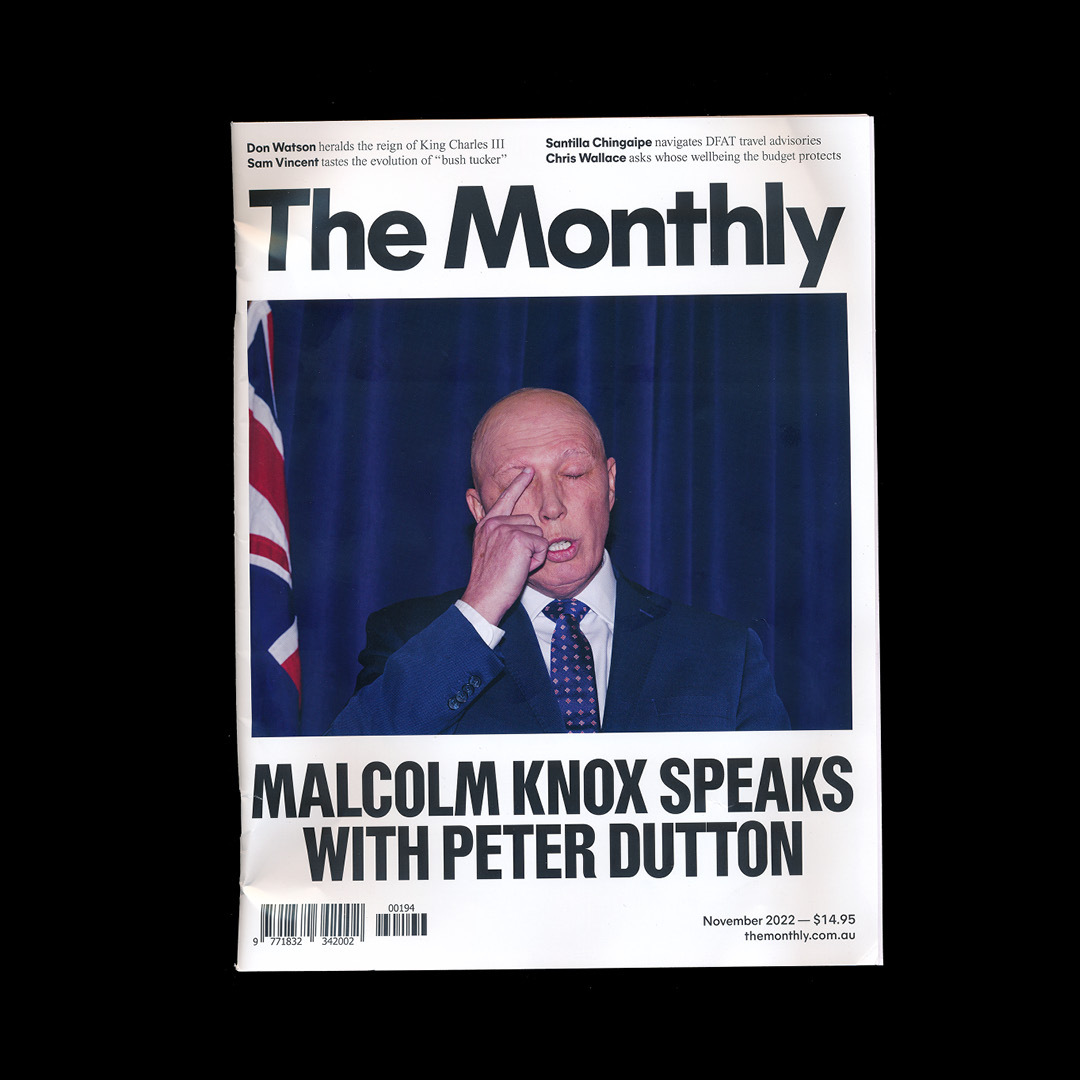
The Monthly November issue 2022
$14.95
The Monthly’s November issue shows the magazine at its very best: a heady mix of considered long-form journalism, incisive political commentary and essential cultural analysis.
In an exclusive interview for the magazine, Malcolm Knox spoke with Opposition Leader Peter Dutton, asking why a man whose key political attribute is consistency is attempting to make over his image.
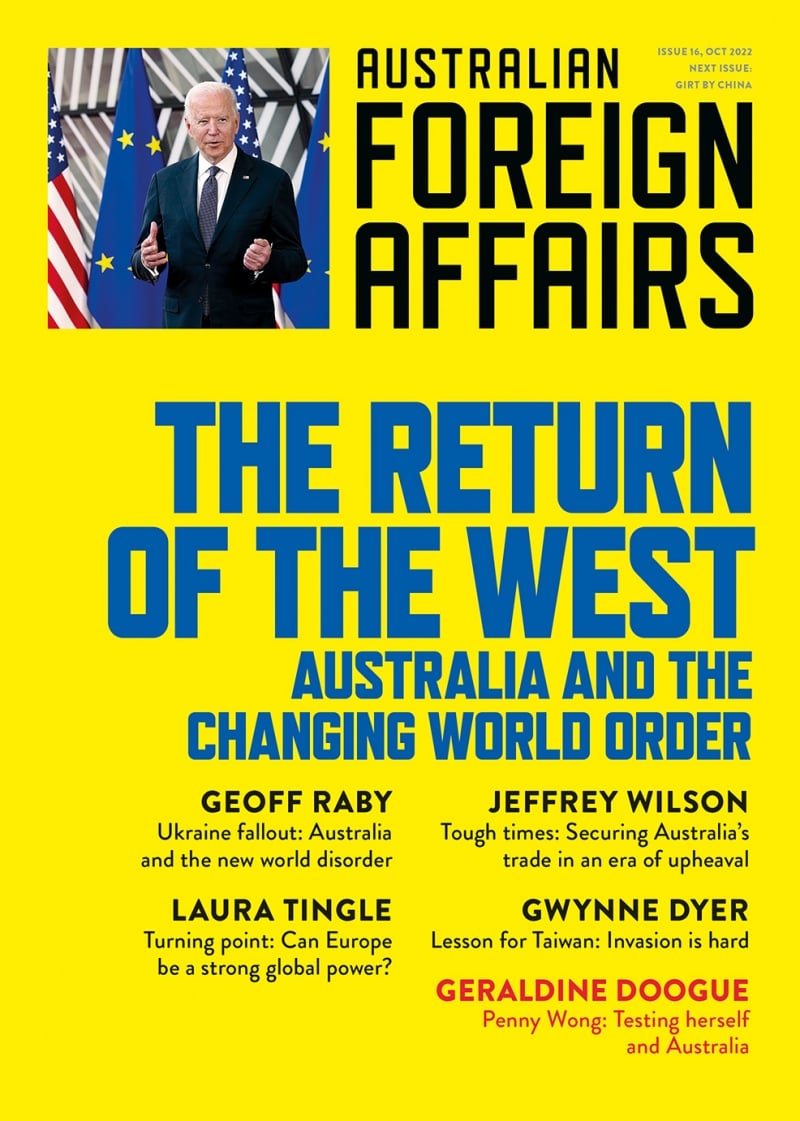
Australian Foreign Affairs issue 16
$22.99
The Return of the West
Australia and the Changing World Order
This issue of Australian Foreign Affairs examines the global upheaval caused by the war in Ukraine, which has heightened the tensions between democracies and authoritarian states, and has led to a more assertive Europe that could represent a new force in world affairs.
"The Return of the West" looks at the challenges for Australia in the post-invasion international order and the changing role of economics, military power, cyber capabilities and strongman rulers.
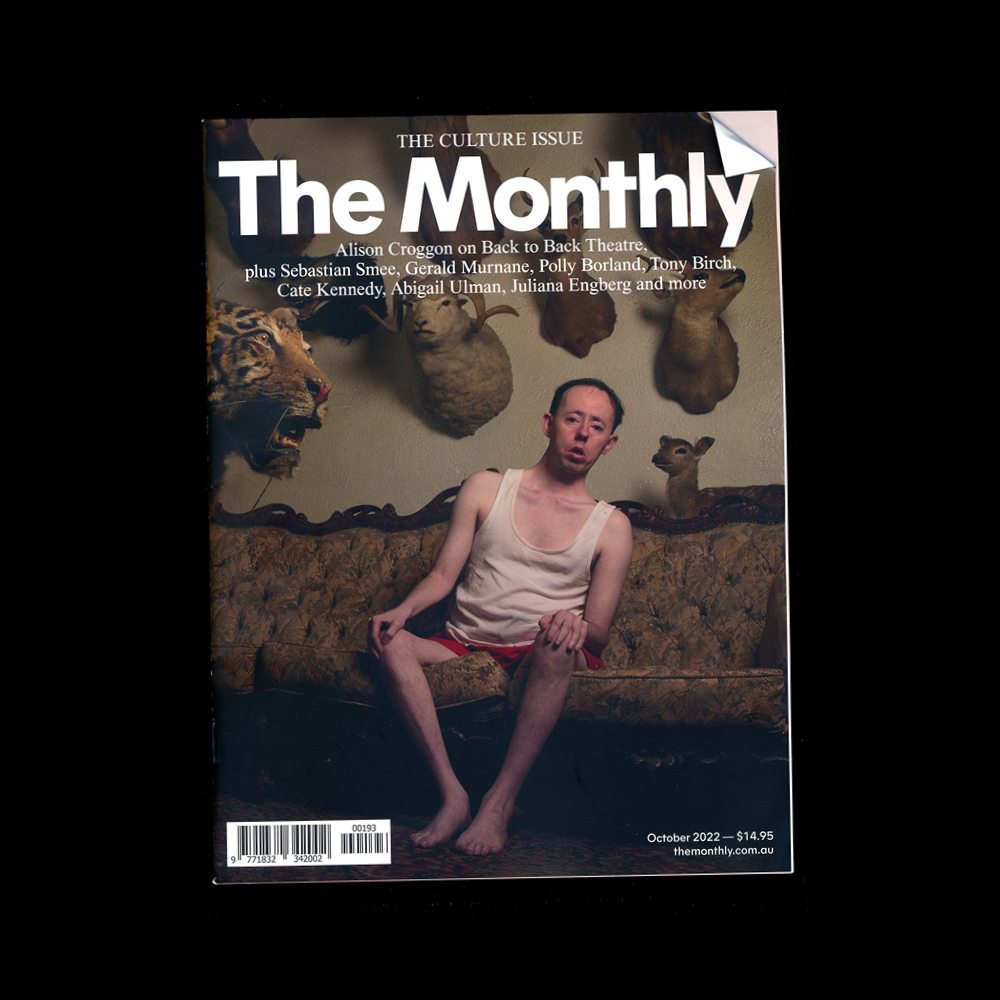
The Monthly October issue 2022
$14.95
This October, The Monthly’s traditional Culture Issue is back, and between the pressures of COVID cancellations and locked-down audiences and a change of federal government heralding promises of significant new arts policy, there’s much to discuss from across our creative sectors.
As they head to Oslo to accept the prestigious International Ibsen Award — theatre’s Nobel Prize — Geelong-based Back to Back Theatre are arguably Australia’s greatest cultural export. Alison Croggon joins them on the journey.
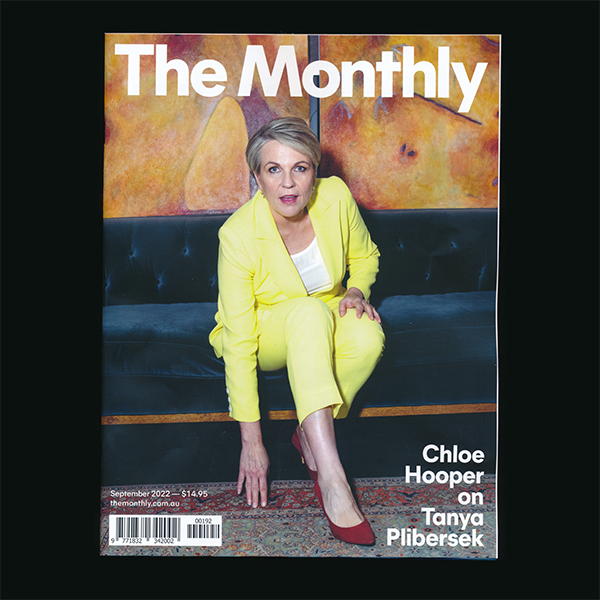
The Monthly September issue 2022
$14.95
The 47th parliament is well and truly under way, and it’s already possible to see key parts of the new government’s agenda taking shape. The Monthly’s September issue has a can’t-miss profile of the newly minted Minister for the Environment and Water, Tanya Plibersek, written by the incomparable Chloe Hooper. Plibersek is one of the most recognisable members of the new government, so what does her new posting say about how the battle for our climate-ravaged country might play out.
Also in the September issue, Sean Kelly turns a forensic eye to the maiden speeches offered by parliament’s newest members: with record numbers of women, First Nations people and independents making for a fascinating crop. All that and Hamish McDonald on China’s relationship with PNG, Jen Mills on the naming (and shaming) of the Somerton man, books, film, TV and more.
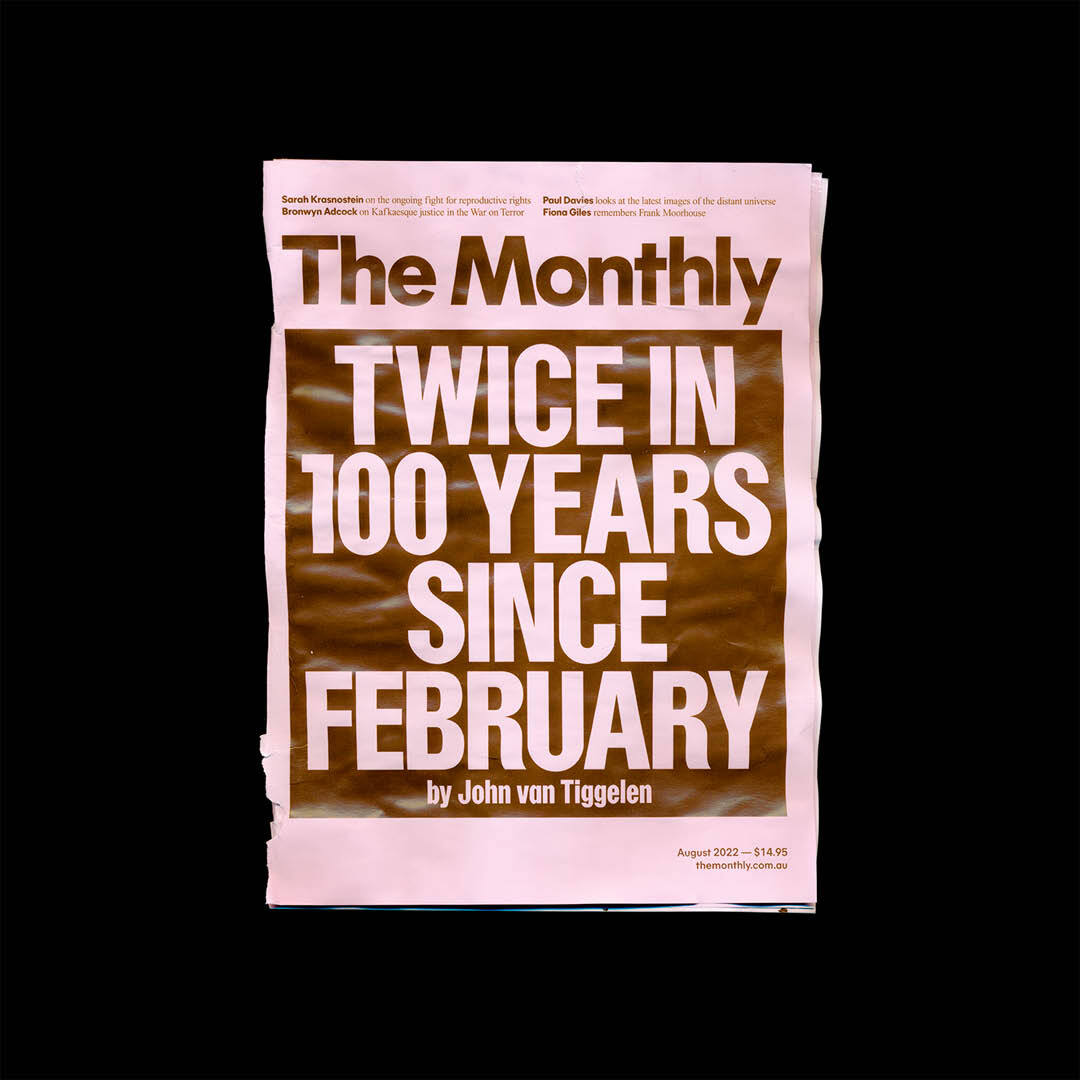
The Monthly August issue 2022
$14.95
As winter drags on and the rain continues to fall, eyes are not just on the skies but also on parts of the country that are still recovering from the last one-in-100-years event. When the floodwaters subside, when the decisions are made about whether to rebuild or rethink, we can be too often guilty of looking away and thinking the story is done. For the August issue of The Monthly, John van Tiggelen takes us to Lismore: to the human toll and the logistical quandaries of seeking higher ground in a time of climate crisis.
Good journalism renders familiar stories urgent, makes us understand them through a different lens. The US Supreme Court unpicking Roe v Wade might be met locally with the confidence that, on abortion, Australia’s position is more secure. But, as Sarah Krasnostein outlines in her essay, the gulf between legislative framework and lived experience in reproductive rights demands we resist complacency. And, 20 years on from the Bali bombing, not only is the story not finished, but some of the legal processes are as tangled in war-on-terror complexities as ever. Bronwyn Adcock talks us through the interminable fate of Hambali.
And if it’s long views you’re after, there are few that are longer than that afforded this month by NASA’s new James Webb Space Telescope, as explained by Paul Davies. We also present a personal tribute to the late Frank Moorhouse by Fiona Giles, and more besides.
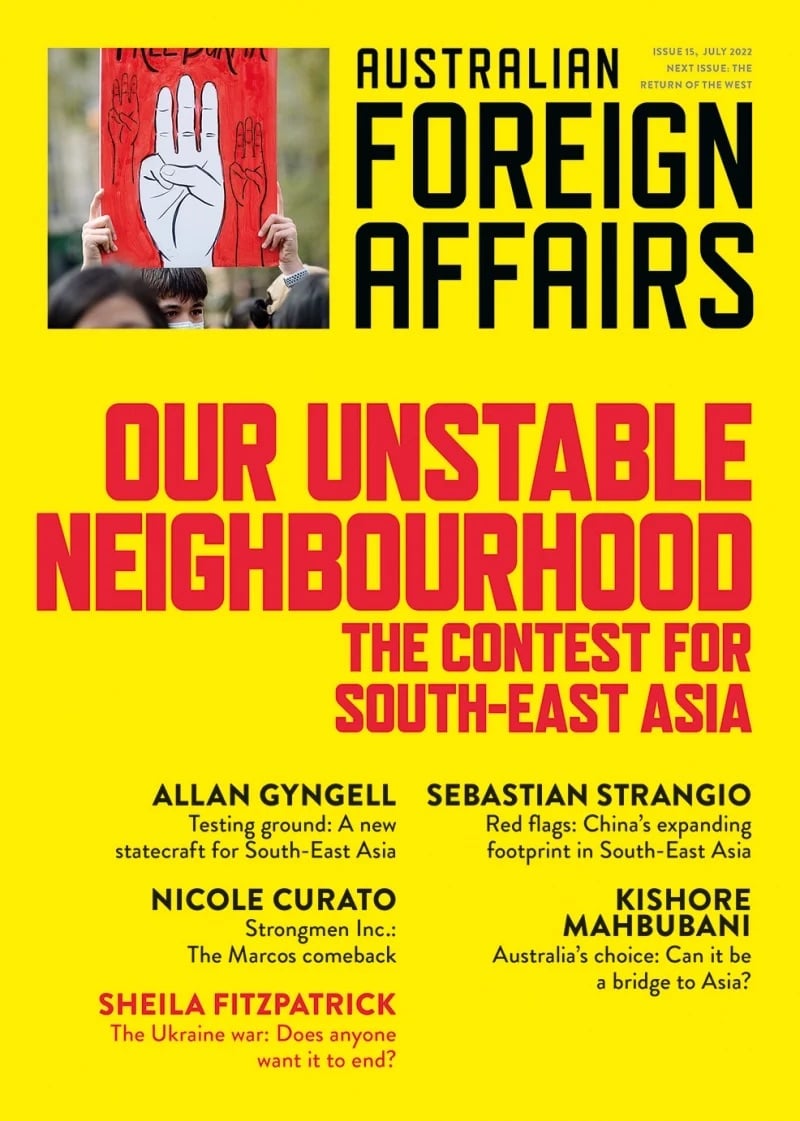
Australian Foreign Affairs issue 15
$22.99
Our Unstable Neighbourhood
The Contest for South-East Asia
This issue of Australian Foreign Affairs examines the challenges confronting South-East Asia as it finds itself at the epicentre of the rivalry between the United States and China.
"Our Unstable Neighbourhood" looks at the fragile state of democracy and the growing threat of instability in the region, as well as the risks for Australia as it navigates ties with nations which have vastly differing interests and outlooks.
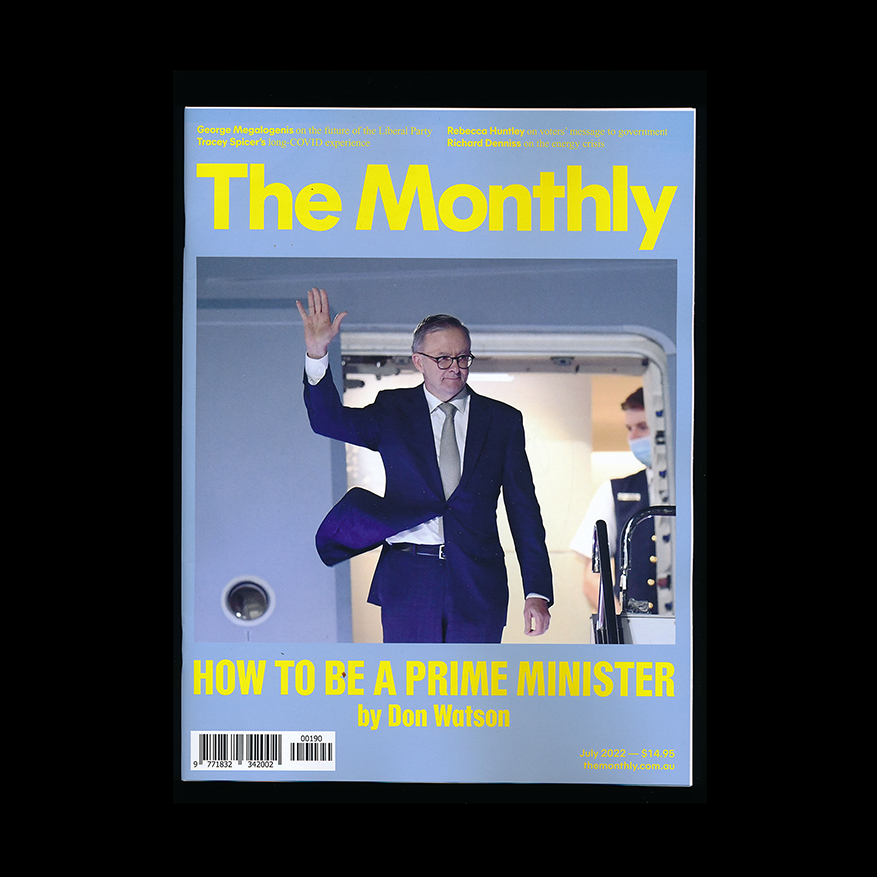
The Monthly July issue 2022
$14.95
The recent federal election result upended Australian politics, and the July issue weighs up the implications. Don Watson looks at the challenging road ahead for the new government. George Megalogenis writes about the future of the Liberal party. And in the broad level of support for climate action Rebecca Huntley sees a way to end the climate wars. (Not so fast, writes Royce Kurmelovs, after attending the fossil-fuel industry’s annual conference.)
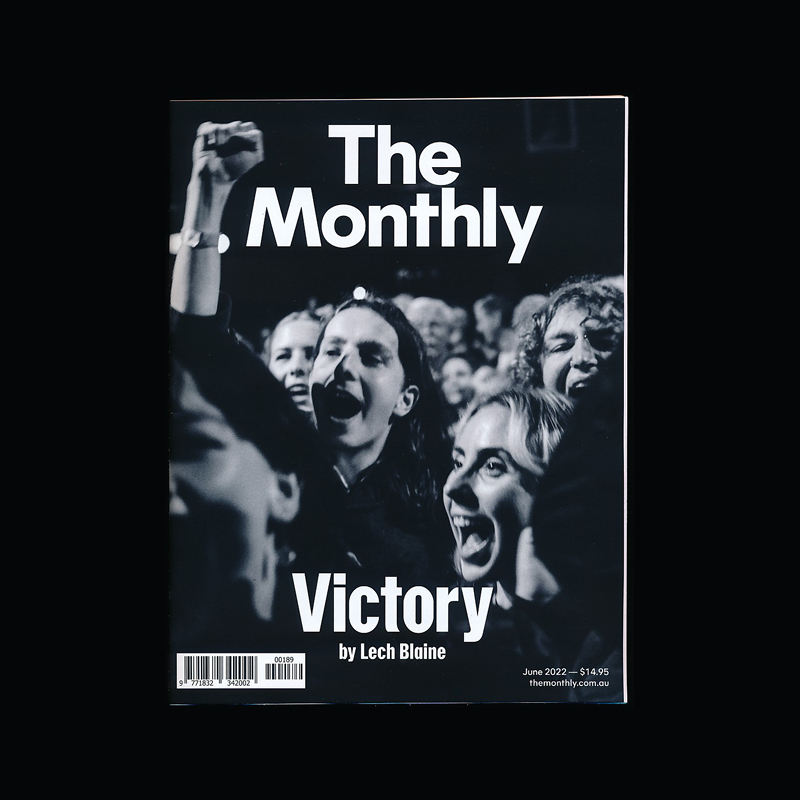
The Monthly June issue 2022
$14.95
Following the 2022 federal election, The Monthly June issue features in-depth analysis of the result. Richard Denniss looks at the major swings and political shifts, and Lech Blaine writes about the colour and drama of the campaign trail, and the performances of candidates and leaders in key electorates.
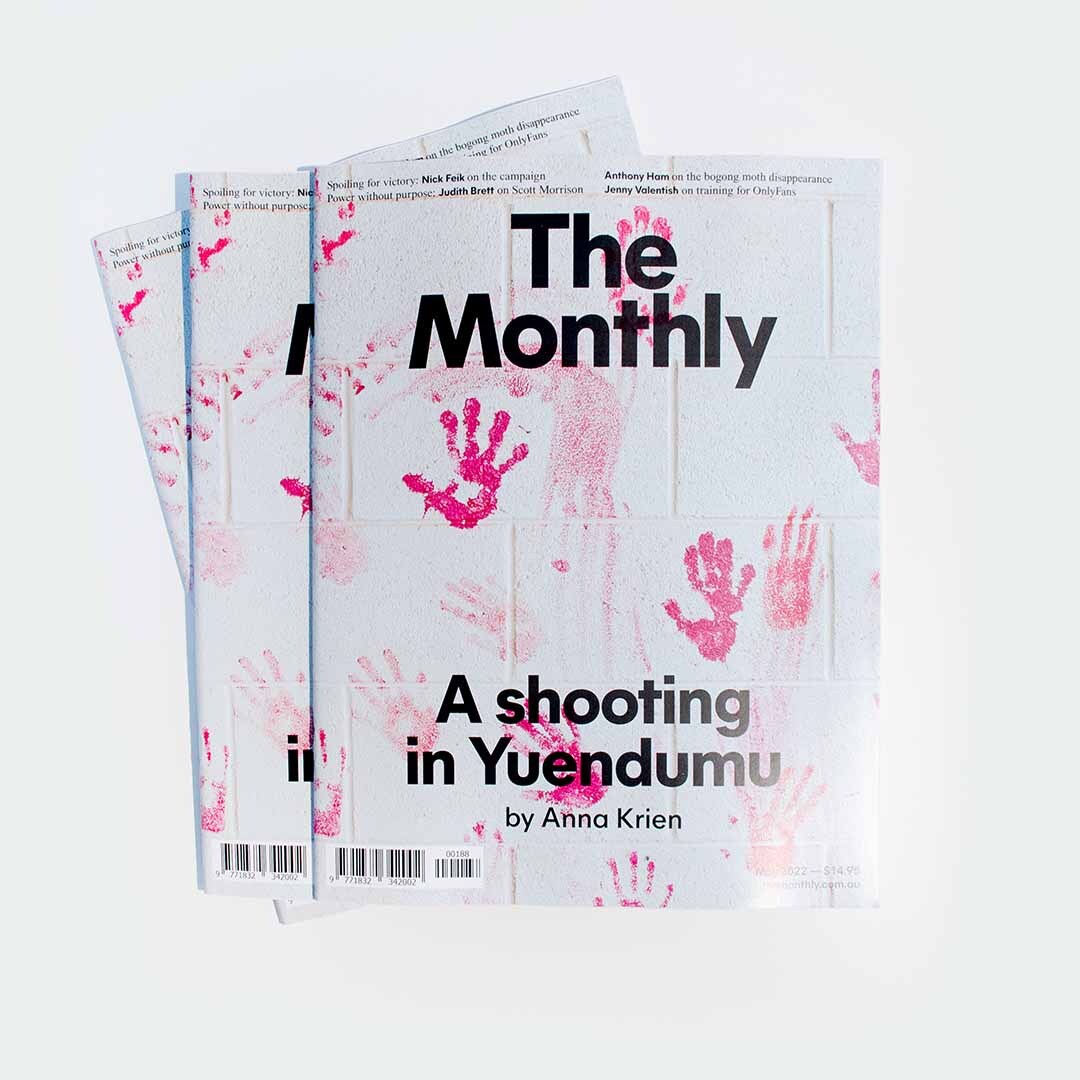
The Monthly May issue 2022
$14.95
It was billed as the trial of the century: Northern Territory police officer Zachary Rolfe was charged over the killing of young Indigenous man Kumanjayi Walker. Anna Krien was at Rolfe’s trial, and her report for the May issue of The Monthly includes stunning new revelations about events leading up to the tragic killing.
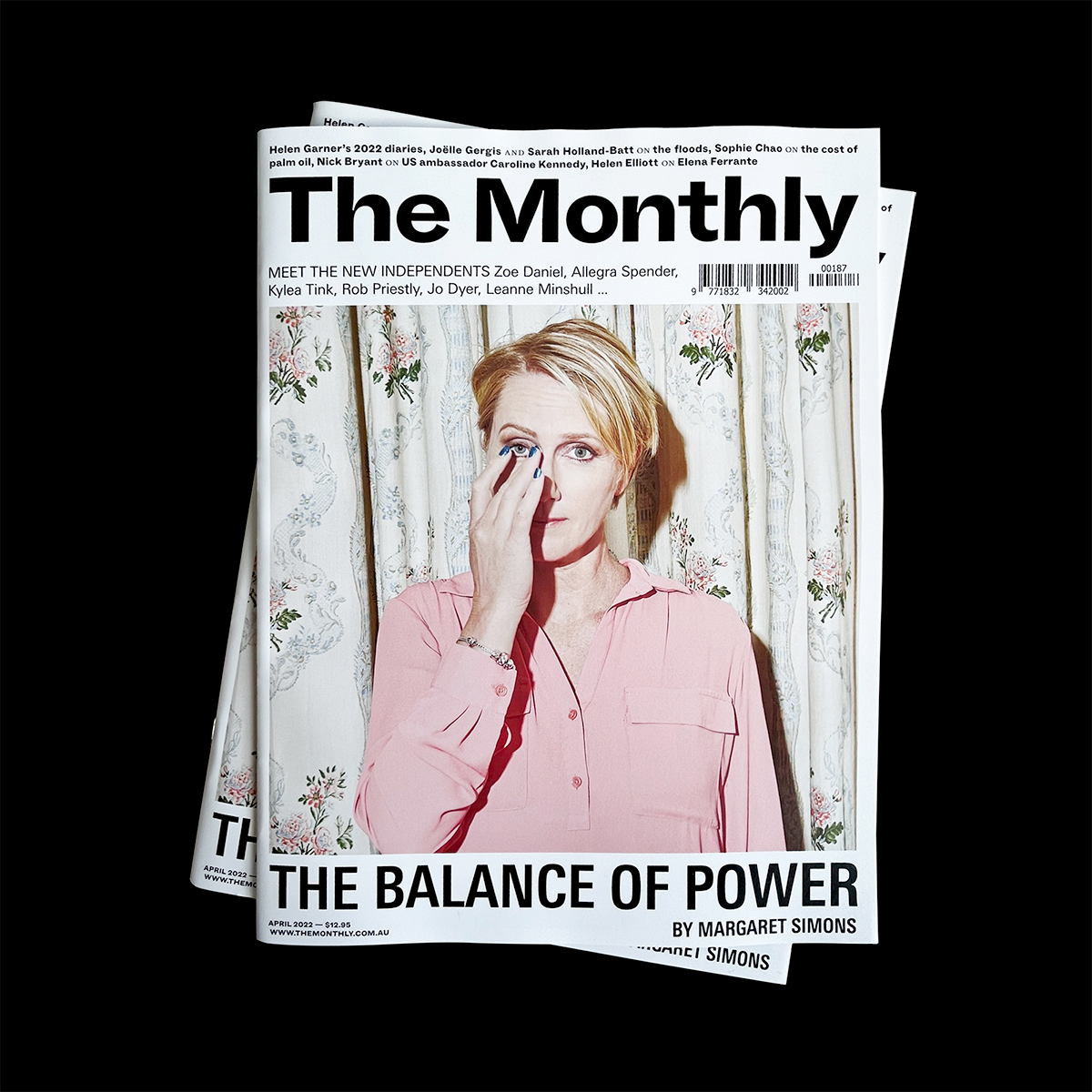
The Monthly April issue 2022
$12.95
There’s a new wave of independent candidates and they threaten to upend Australian federal politics. Margaret Simons meets the most prominent of them, and surveys their policies and prospects for the upcoming election.
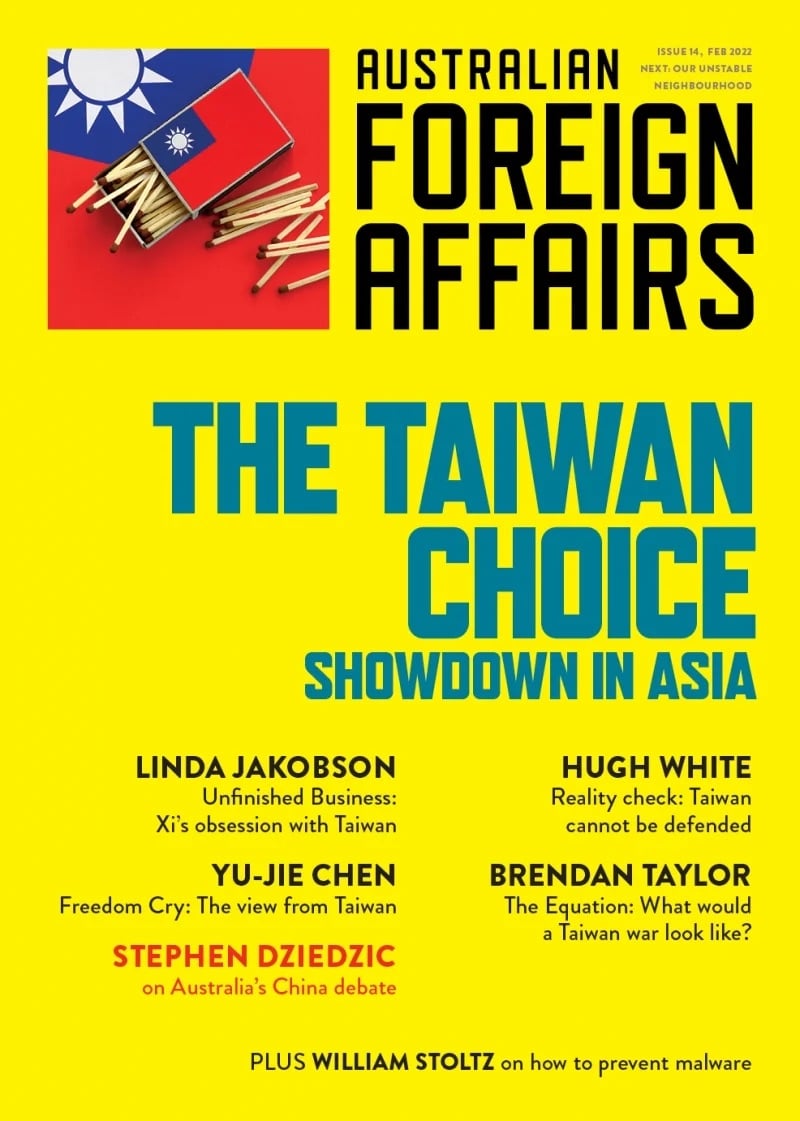
Australian Foreign Affairs issue 14
$22.99
The Taiwan Choice
Showdown in Asia
This issue of Australian Foreign Affairs examines the rising tensions over the future of Taiwan as China’s pursuit of “unification” pits it against the United States and US allies such as Australia. "The Taiwan Choice" looks at the growing risk of a catastrophic war and the outlook for Australia as it faces a strategic choice that could reshape its future in Asia.
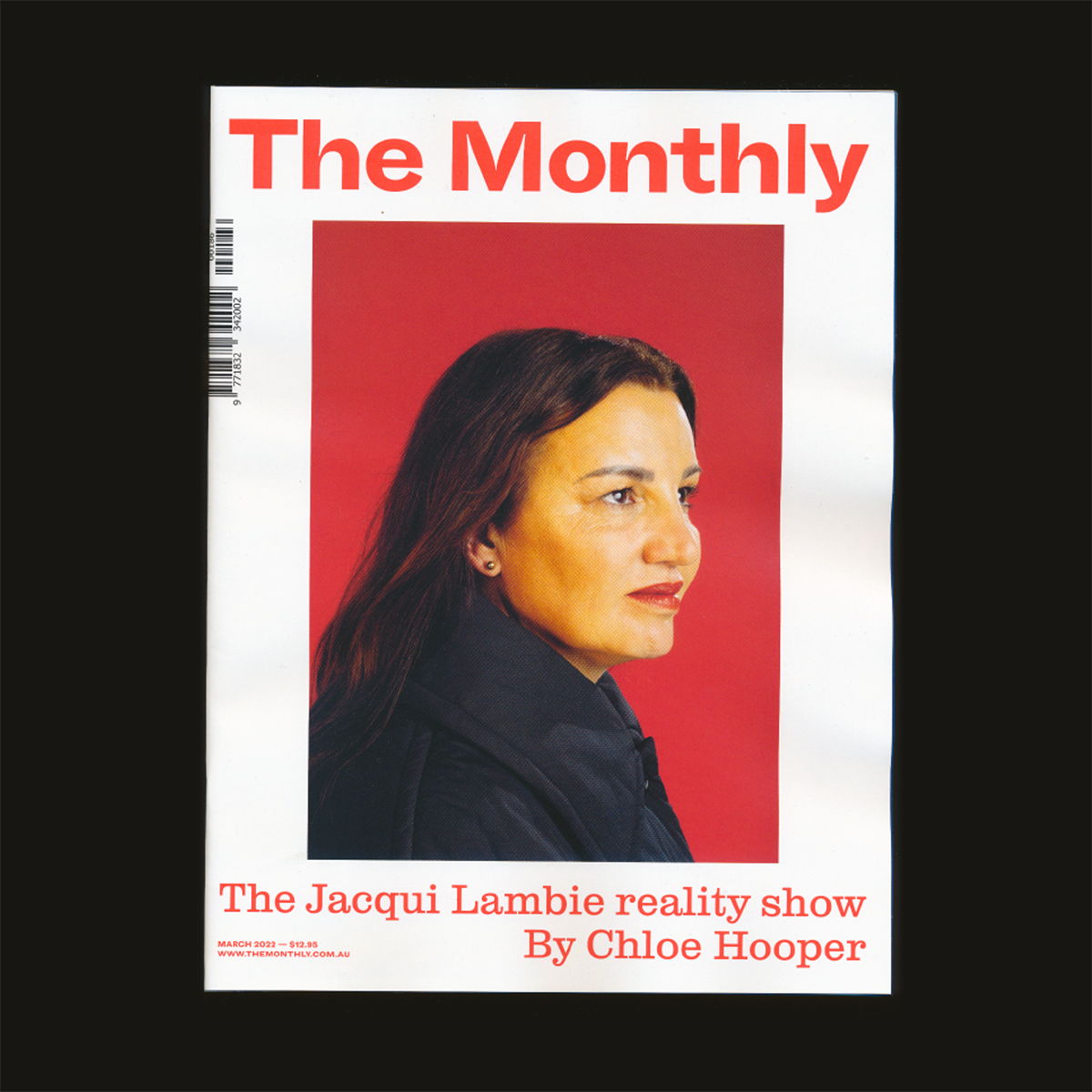
The Monthly March issue 2022
$12.95
One of Australia’s most acclaimed longform journalists, Chloe Hooper, profiles one of Australia’s most intriguing and controversial politicians, Senator Jacqui Lambie. In the lead-up to the federal election, we survey Australia’s overheated real estate market and examine the litany of COVID-related government failures in the aged-care sector.
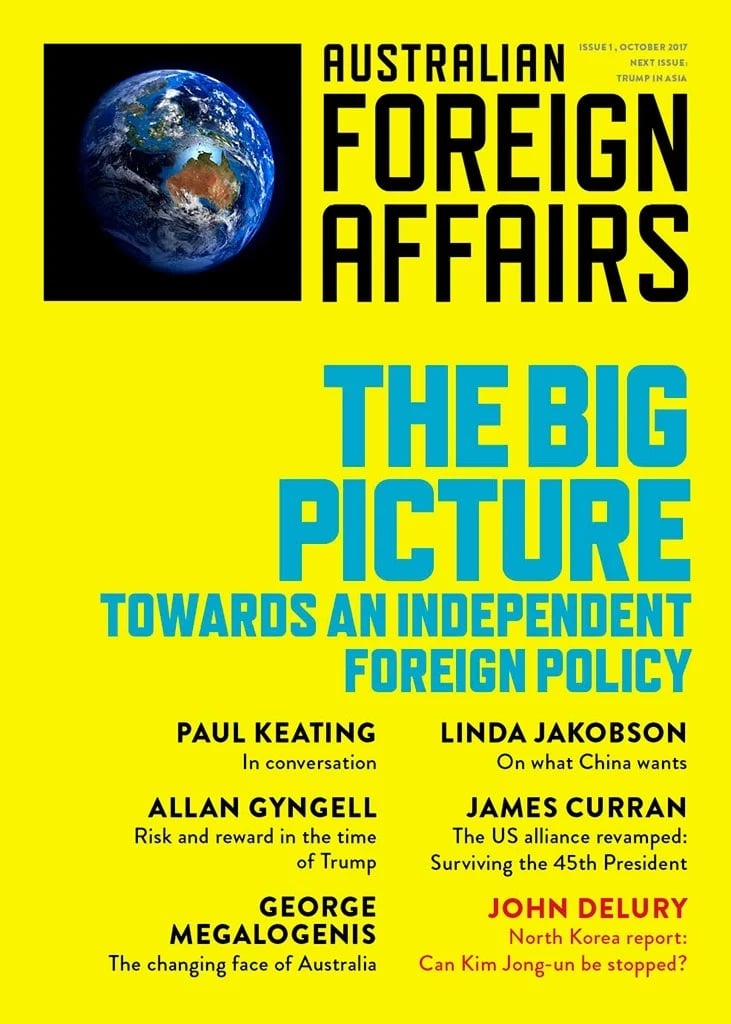
Australian Foreign Affairs issue 1
$19.99
The Big Picture
Towards an Independent Foreign Policy
Australia’s top thinkers on foreign affairs address the most significant foreign affairs dynamics affecting Australia today, including the rise of China and the election of Donald Trump. The world is changing, and so is Australia’s place in it. What do we need to know? What do we need to think about?
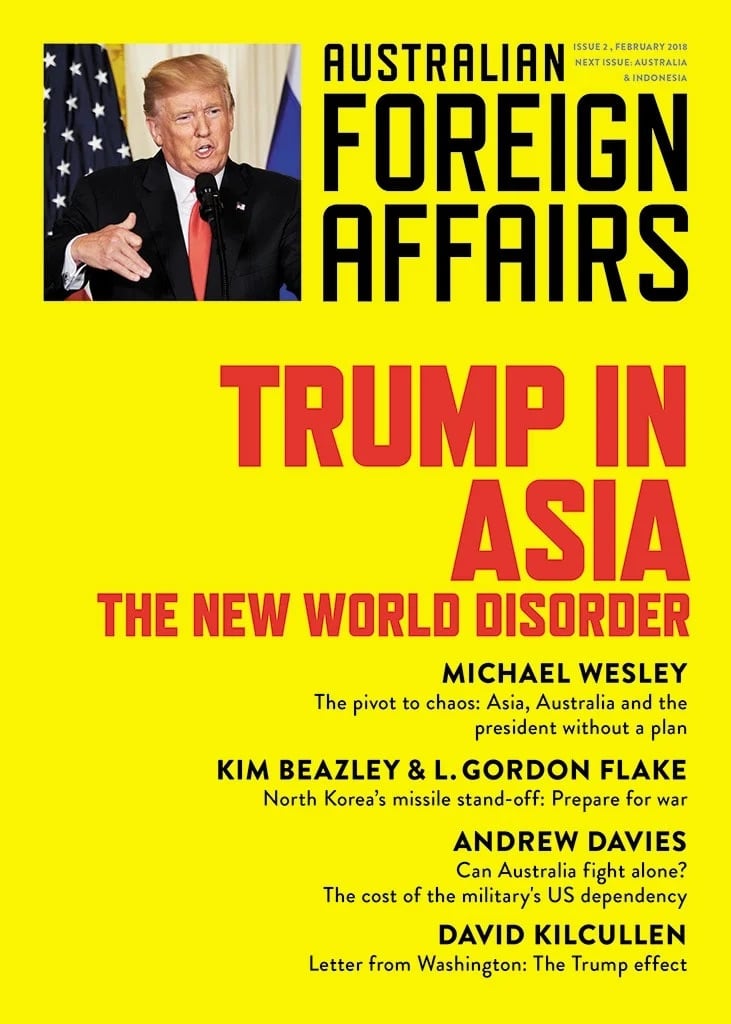
Australian Foreign Affairs issue 2
$19.99
Trump in Asia
The New World Disorder
This issue of Australian Foreign Affairs examines the United States’ sudden shift from the Asia Pivot to America First. It provides insights into Donald Trump’s White House and explores how his unpredictable approach to international affairs is affecting the volatile Asian region.
"Trump in Asia" is essential reading for anyone wanting to understand the issues facing Canberra as Australia’s closest ally recasts its alliances.
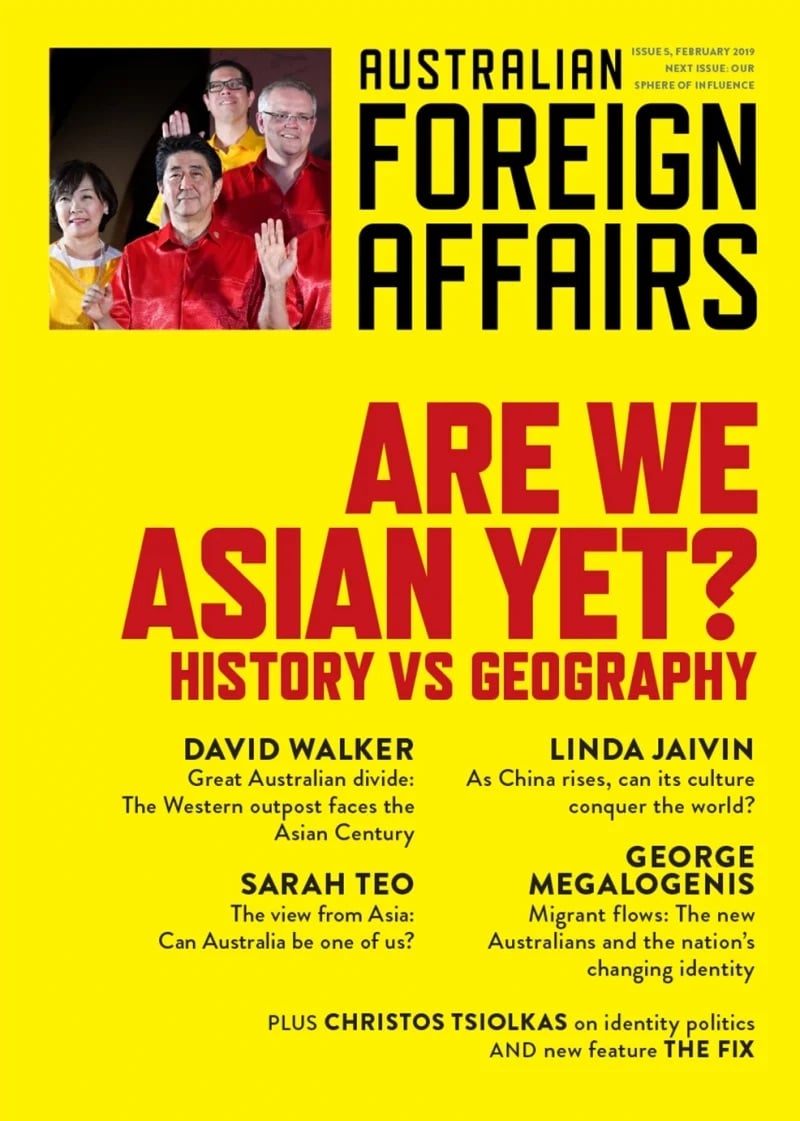
Australian Foreign Affairs issue 5
$19.99
Are We Asian Yet?
History vs Geography
This issue of Australian Foreign Affairs examines Australia’s struggle to define its place in Asia as it balances its historic ties to the West with its geography.
"Are We Asian Yet?" explores Australia’s changing population, outlook and identity as it adjusts to the Asian Century.
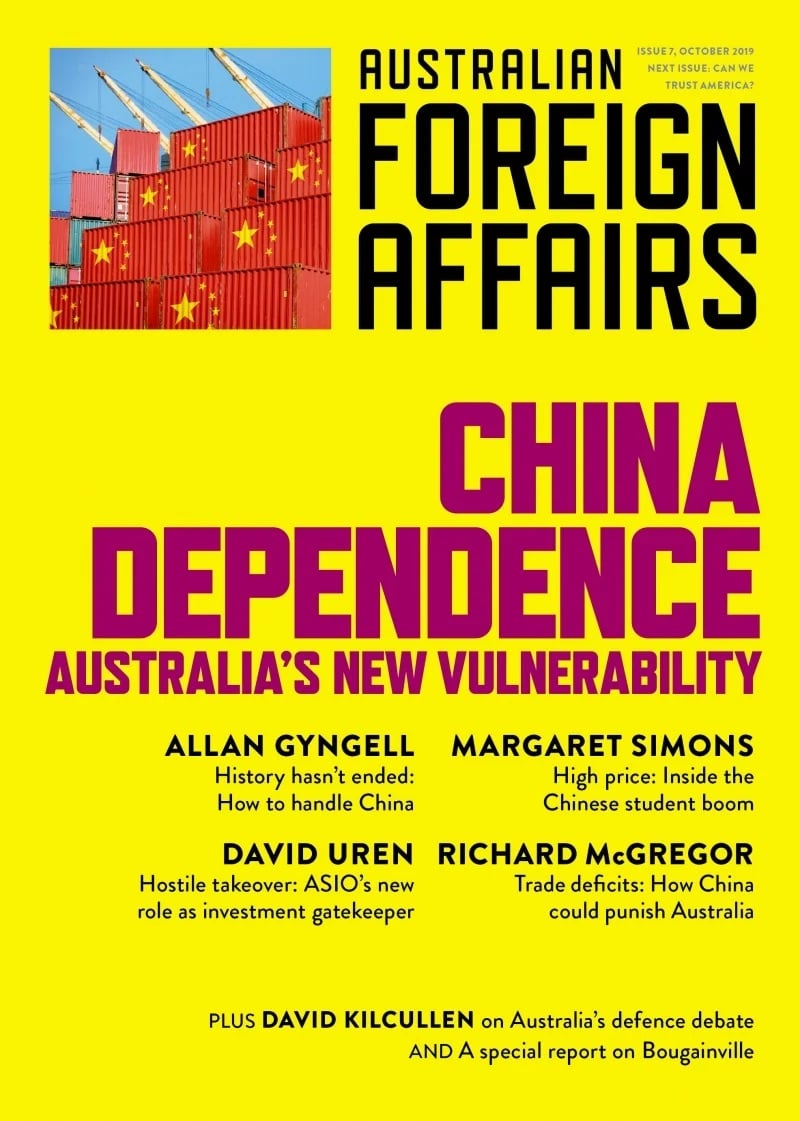
Australian Foreign Affairs issue 7
$19.99
China Dependence
Australia’s new vulnerability
This issue of Australian Foreign Affairs explores Australia’s status as the most China-dependent country in the developed world, and the potential risks this poses to its future prosperity and security.
"China Dependence" examines how Australia should respond to the emerging economic and diplomatic challenges as its trade – for the first time – is heavily reliant on a country that is not a close ally or partner.
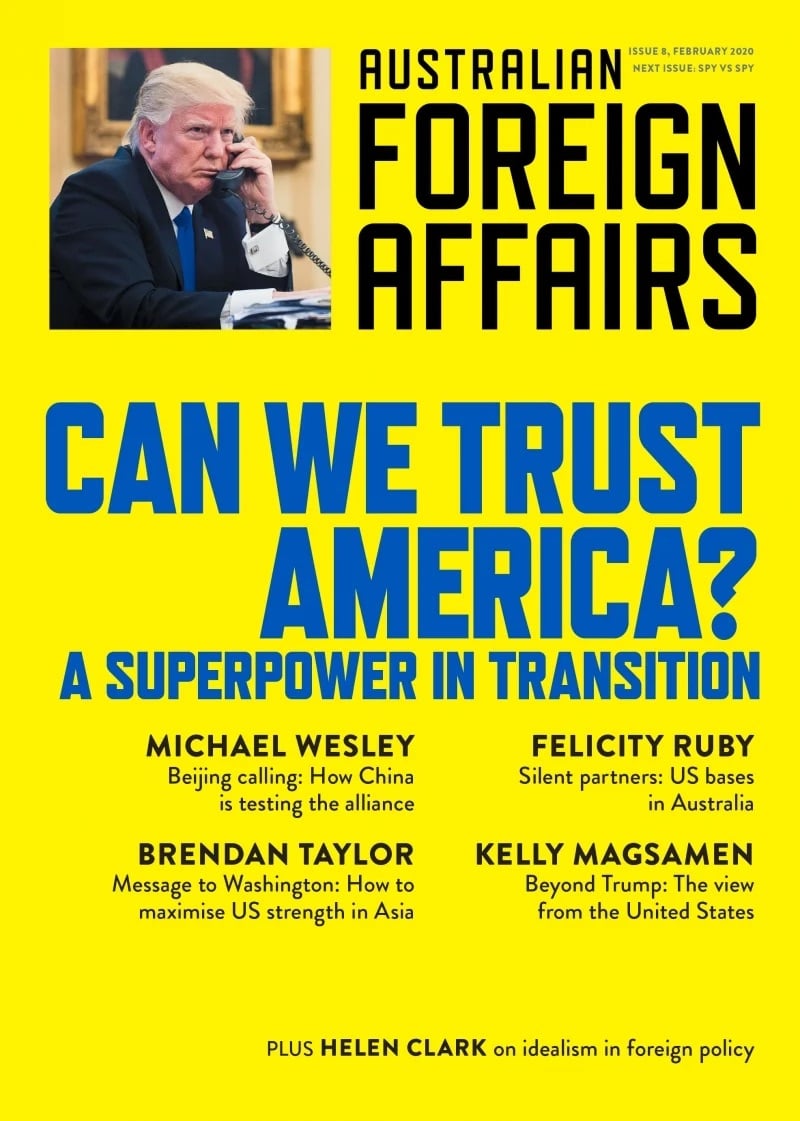
Australian Foreign Affairs issue 8
$19.99
Can We Trust America?
A Superpower in Transition
This issue of Australian Foreign Affairs examines the changing status of the United States as its dominance in the Asia-Pacific faces challenge from China and its “America First” foreign policy marks a shift away from global engagement.
"Can We Trust America?" looks at the uncertainties for Australia as questions arise about the commitment of its closest ally.
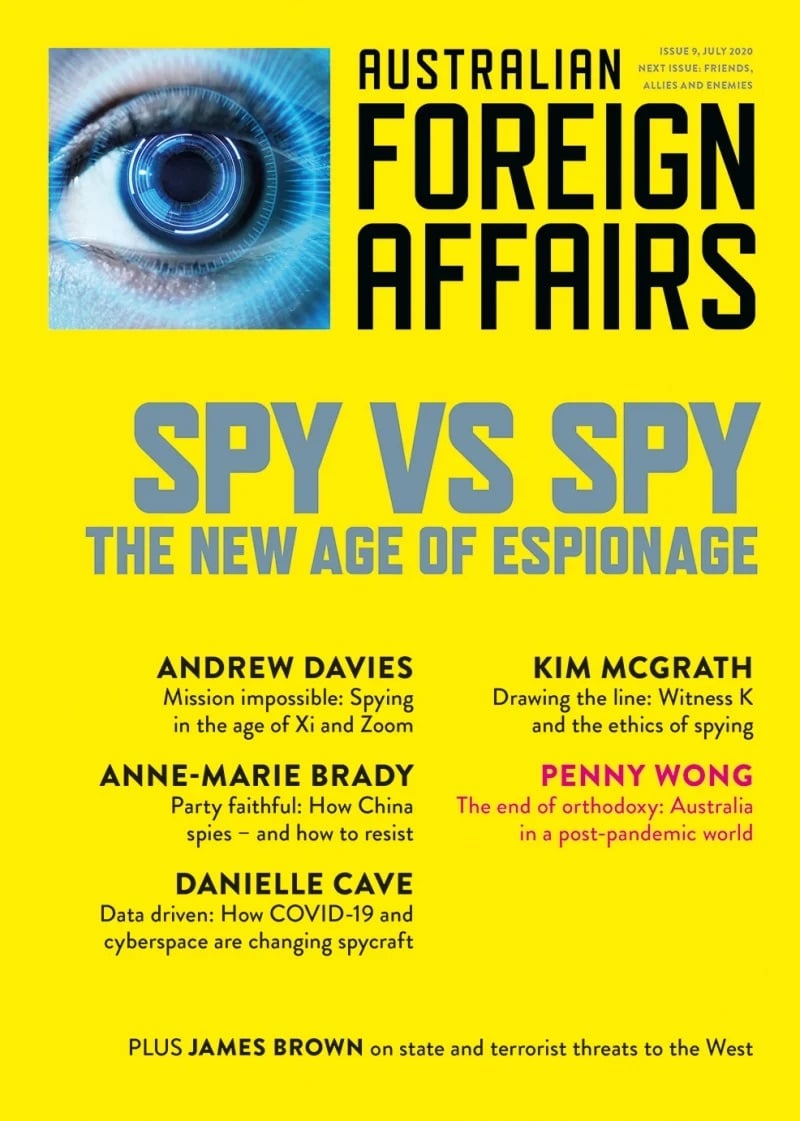
Australian Foreign Affairs issue 9
$19.99
Spy vs Spy
The New Age of Espionage
This issue of Australian Foreign Affairs explores the threat facing Australia as changes in technology enable malign actors to target individuals, officials, businesses and infrastructure – challenges that have only sharpened due to COVID-19.
"Spy vs Spy" examines how Australian agencies can defend against attempts to steal secrets and disrupt the workings of government and society.
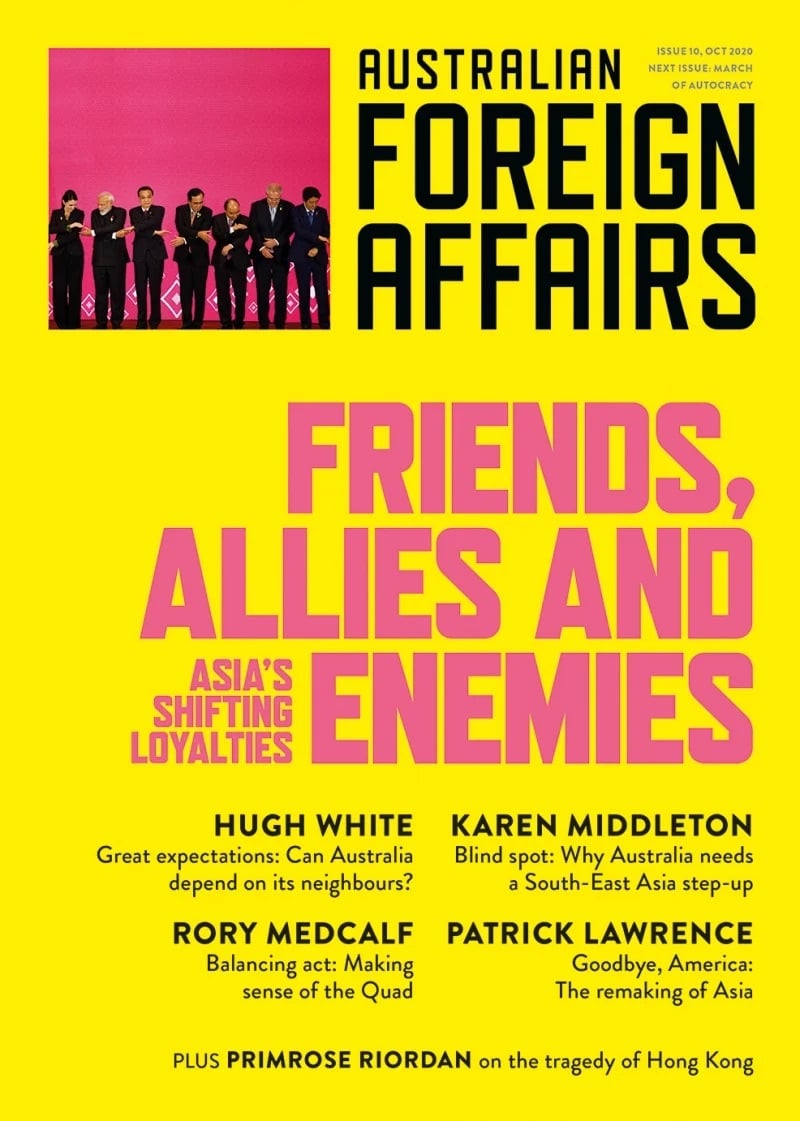
Australian Foreign Affairs issue 10
$19.99
Friends, Allies and Enemies
Asia’s Shifting Loyalties
This issue of Australian Foreign Affairs examines the alliances, blocs and rivalries emerging across the Asia-Pacific as nations adjust to the changing balance of power.
"Friends, Allies and Enemies" considers Australia’s diplomatic options as loyalties shift in an increasingly turbulent region.
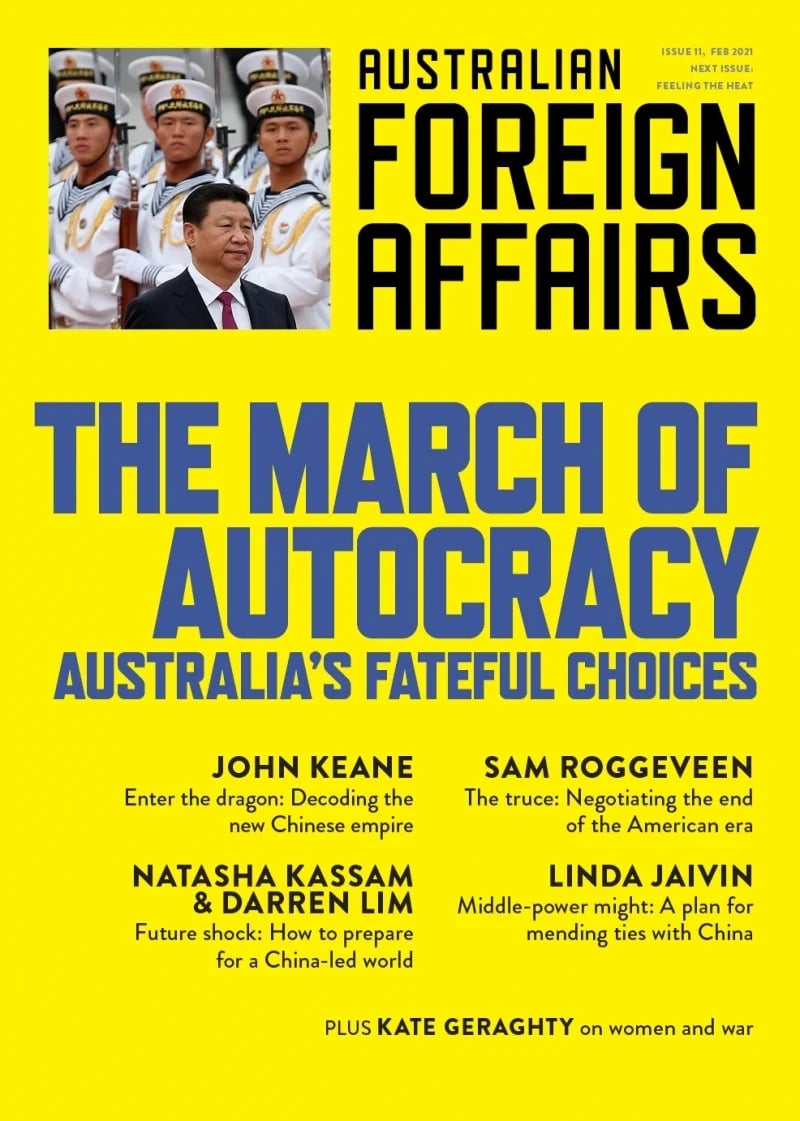
Australian Foreign Affairs issue 11
$19.99
The March of Autocracy
Australia’s Fateful Choices
This issue of Australian Foreign Affairs examines the rise of authoritarian and illiberal leaders, whose growing assertiveness is reshaping the Western-led world order.
"The March of Autocracy" explores the challenge for Australia as it enters a new era, in which China’s international sway increases and democracies compete with their rivals for global influence.
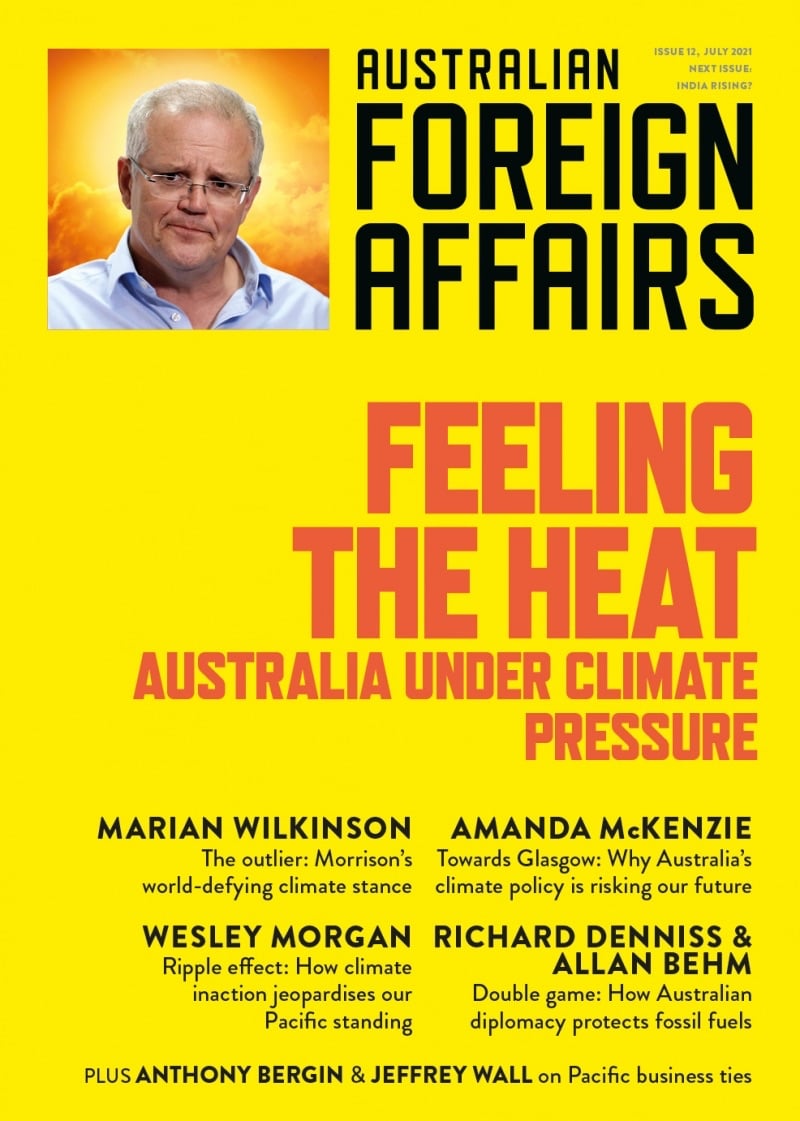
Australian Foreign Affairs issue 12
$19.99
Feeling the Heat
Australia Under Climate Pressure
This issue of Australian Foreign Affairs examines the growing pressure on Australia as global and regional powers adopt tough measures to combat climate change.
"Feeling the Heat" looks at the consequences of splitting from the international consensus, and at how a climate pivot by Canberra could unlock new diplomatic and economic opportunities.
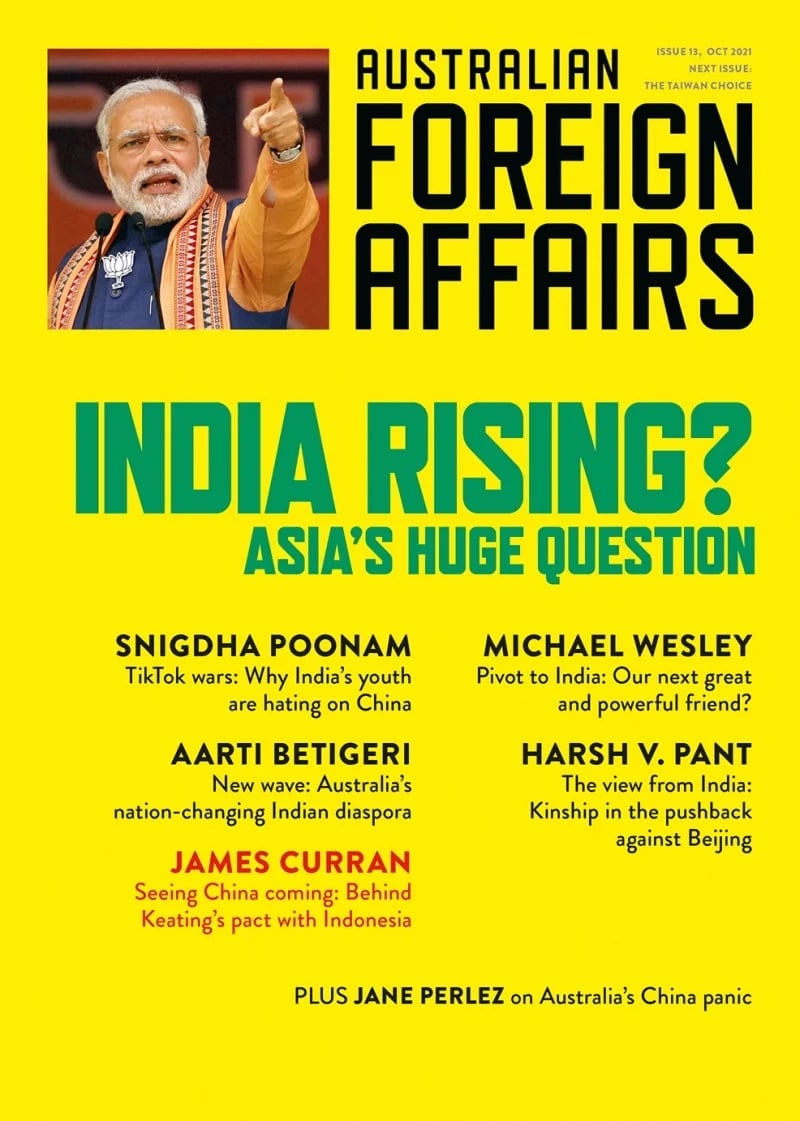
Australian Foreign Affairs issue 13
$22.99
India Rising?
Asia's Huge Question
This issue of Australian Foreign Affairs examines the future of India, a rising giant whose unsteady growth and unpredictable political turns raise questions about its role and power in Asia. "India Rising?" explores the challenge for Australia as it seeks to improve its faltering ties with the world’s largest democracy, a nation whose ascent – if achieved – could reshape the regional order.

The Monthly June issue 2021
$12.95
Following the budget, Richard Denniss puts a gender lens on the government’s new funding measures, and wonders...